

Prime Minister Sanae Takaichi of Japan met with President Donald Trump at the White House on Thursday, 19 March 2026, to reinforce the U.S.-Japan alliance amid escalating maritime security concerns in the Strait of Hormuz, a critical waterway disrupted by the ongoing U.S.-Iran conflict.
During bilateral talks in the Oval Office, President Trump faced criticism after referencing the 1941 Pearl Harbor attack. The comment arose in response to a question regarding the lack of prior warning given to Iran before recent U.S. military strikes. Turning to Prime Minister Takaichi, President Trump remarked, “Who knows better about surprise than Japan?” The quip drew an awkward silence and highlighted the pressure the United States is placing on Japan to expand its naval patrols in the Strait of Hormuz, a request that challenges Japan’s post-war pacifist constitution.
The historical reference to Pearl Harbor, where a surprise Japanese military attack on 7 December 1941 resulted in 2,403 American deaths and prompted the U.S. entry into World War II, is a deeply sensitive point in U.S.-Japan relations. The two nations now maintain a close security partnership, with approximately 45,000 U.S. troops stationed in Japan. However, Tokyo faces demands to support broader U.S. operations related to Iran, including a proposed $550 billion Alaskan oil initiative seen as a tool of economic leverage. Prime Minister Takaichi offered no public response to the president’s remark, maintaining diplomatic neutrality.
The incident underscores the nuanced tightrope Tokyo walks as it balances its alliance commitments with domestic constitutional constraints. While the U.S. seeks greater allied burden-sharing in the Persian Gulf region, Japan’s legal framework limits its military activities to self-defense. The meeting, intended to reaffirm alliance solidarity, instead brought historical sensitivities to the forefront of current geopolitical strategy.
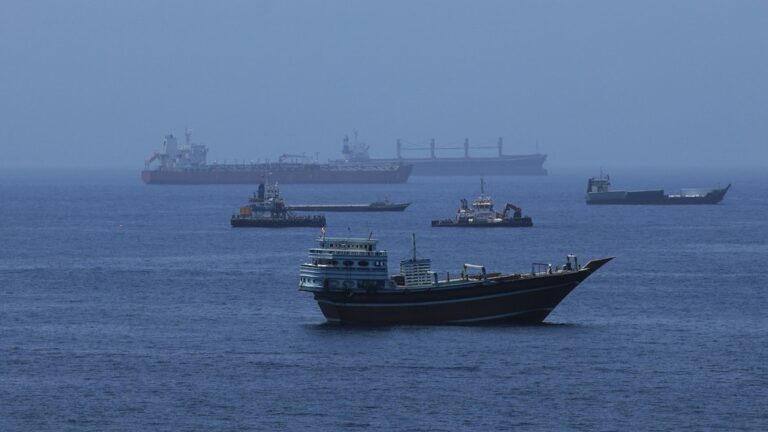
The Strait of Hormuz remains a vital conduit for global oil shipments. Its stability is a paramount concern for energy markets and international trade. How Japan navigates U.S. expectations within its constitutional limits will be closely watched as tensions with Iran persist. The exchange serves as a reminder that even long-standing alliances can be tested by the interplay of historical memory and contemporary security demands.
Comments are closed for this story.