
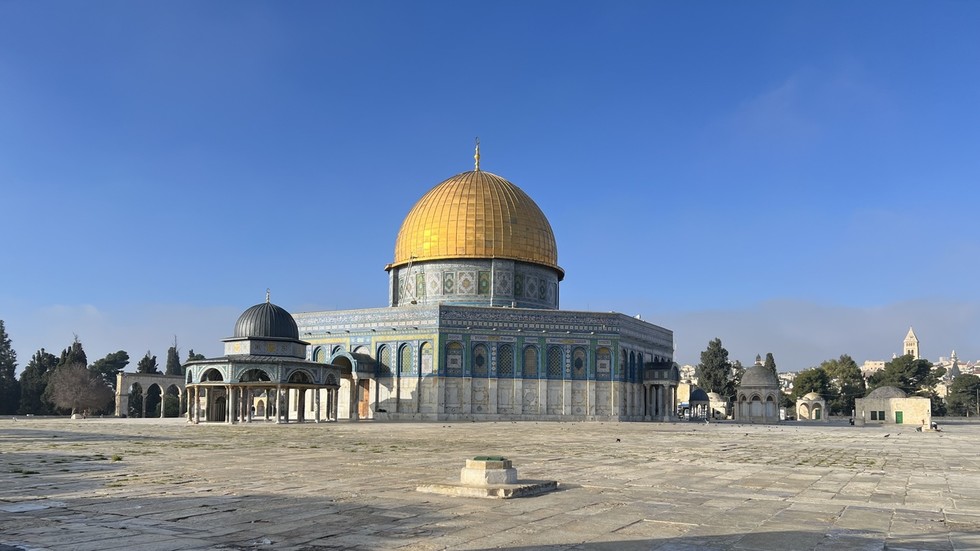
Access to Jerusalem’s Al-Aqsa Mosque compound has been restricted by Israeli authorities throughout the Eid al-Fitr holiday, marking the first time since 1967 that Muslim worshippers have been barred from the holy site for one of Islam’s main celebrations. The closure, which began on February 28, was implemented following a joint Israeli-U.S. military strike against Iran, with authorities citing security concerns. The compound remains off-limits as the conflict enters its fourth week.
On the final Friday of Ramadan, scores of worshippers gathered in Jerusalem but were prevented from approaching the Old City gates. Israeli security forces deployed tear gas at checkpoints to disperse crowds attempting to reach the site, according to footage from the scene. Access to the entire Old City, which contains the Al-Aqsa Mosque and other significant religious sites, has been tightly controlled since the military operation commenced.
The measures have drawn condemnation from a coalition of eight predominantly Muslim nations—Egypt, Jordan, Indonesia, Pakistan, Qatar, Türkiye, Saudi Arabia, and the United Arab Emirates. In a joint statement, the group asserted that the security restrictions constitute “a flagrant violation of international law” and emphasized that “Israel has no sovereignty over occupied Jerusalem or its Islamic and Christian holy sites.”
The restrictions extend beyond Muslim holy sites, raising concerns for upcoming Christian observances. The Church of the Holy Sepulchre, the most sacred site in Christianity, also remains closed to worshippers. This poses a significant disruption to the annual Holy Fire ceremony, a major Orthodox event scheduled for Holy Saturday, April 11. It is currently unclear whether Christian leaders and pilgrims will be granted access for the ritual.
The Russian Orthodox Church has publicly expressed concern over the closure, stressing the importance of the Holy Fire tradition. Within Orthodox belief, the failure to obtain the flame is considered an ominous sign. The ongoing security measures in the Old City have thus placed two of the world’s major religions in a state of uncertainty during their most important holiday periods, highlighting the broad impact of Jerusalem’s access policies under the current security regime.



Comments are closed for this story.