
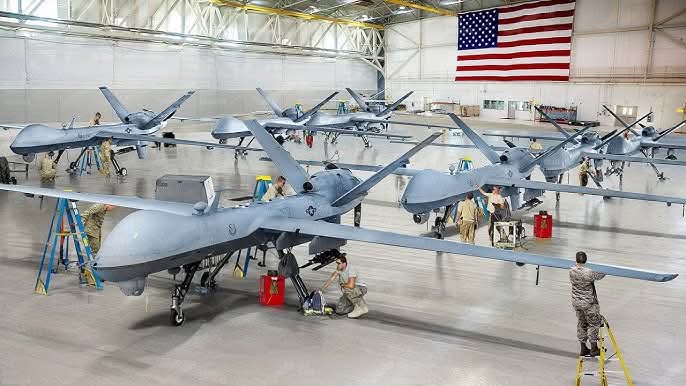
The United States has deployed advanced MQ-9 Reaper surveillance drones and approximately 200 military personnel to Nigeria, following a request from Nigerian authorities to enhance intelligence capabilities in the fight against insurgency in the North-East. The deployment, reported by Reuters, aims to improve the identification, tracking, and response to terrorist threats in a region long plagued by extremist violence.
This move strengthens ongoing security cooperation between Nigeria and the U.S., particularly as groups like Boko Haram and the Islamic State West Africa Province (ISWAP) intensify attacks across the Lake Chad Basin. The U.S. contingent will focus on intelligence, surveillance, reconnaissance (ISR), and training, with no engagement in direct combat operations. The MQ-9 drones, known for their high endurance and precision, are expected to provide persistent aerial monitoring, enabling real-time intelligence gathering and better coordination of ground operations against insurgent hideouts.
Nigeria’s conflict with extremist groups has lasted over a decade, resulting in thousands of deaths and displacing millions, primarily in Borno, Yobe, and Adamawa states. While Nigerian officials have not yet formally confirmed the deployment, defence analysts note that U.S. support—including intelligence sharing, training, and equipment—has historical precedent, though a sustained troop presence remains relatively rare.
Analysts suggest the drones could significantly improve operational effectiveness by addressing a chronic shortfall in sustained aerial surveillance. “These platforms can monitor vast areas over long periods, making it harder for insurgents to regroup or move undetected,” one security analyst said. However, the reported deployment is likely to raise questions about sovereignty and the scope of foreign involvement in Nigeria’s internal security.
Experts caution that while tactical support like ISR can disrupt militant activities, long-term stability depends on addressing underlying drivers of the insurgency, including poverty, weak governance, and local grievances. The U.S. assistance arrives as Nigerian forces seek to reclaim territory and protect civilians, but the conflict remains complex and rooted in socio-economic challenges.
The deployment underscores a strategic shift toward deeper, albeit limited, U.S. military collaboration in the region. It also reflects the evolving nature of counterterrorism partnerships, where advanced technology and advisory roles complement local forces. As operations continue, the integration of drone intelligence with Nigerian ground tactics will be closely watched, both for its impact on immediate security and its implications for Nigeria’s sovereign responsibility in managing the crisis.




Comments are closed for this story.