
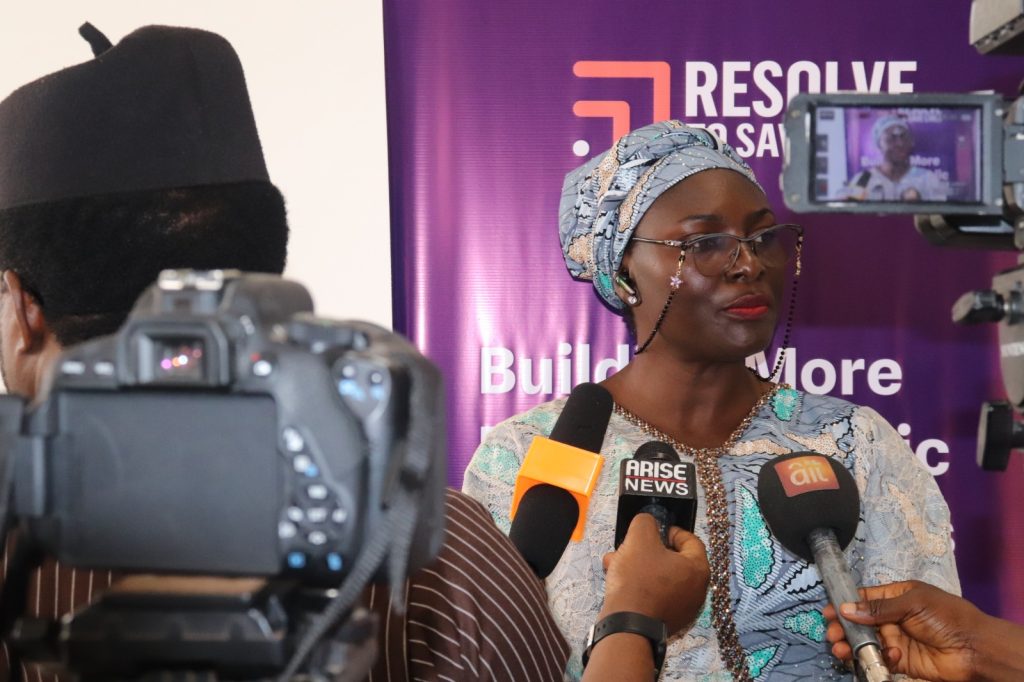
Health experts and Nigerian officials are warning that the country’s disease detection and surveillance networks are becoming increasingly fragile due to a decline in donor support, exposing long-standing structural weaknesses in the public health system.
These concerns were outlined during the formal presentation in Abuja of a new landscape assessment, A System in Transition: Nigeria Country Report. The report, produced by Resolve to Save Lives, evaluates the state of Nigeria’s public health surveillance, laboratory, and specimen transport systems.
Nanlop Ogbureke, Executive Director of Resolve to Save Lives Nigeria, described the report as a critical reflection for the nation’s health security. “This report is not simply a diagnostic exercise. It is a mirror held up to Nigeria’s health security system at a defining moment,” she stated. The assessment finds that systems heavily reliant on donor funding and disease-specific programs are inherently fragile, with recent funding disruptions widening existing cracks. This strain is already affecting surveillance coverage, laboratory processing times, workforce stability, and overall system readiness.
The urgency for increased domestic investment was stressed by Dr. Jeremiah Daiko, Kaduna State Epidemiologist. He noted that outbreaks are first detected and managed at the subnational level, where reduced external support is most acutely felt. “Strengthening our health system in Nigeria has become a priority. For us to survive and strengthen it, we really need funding,” Dr. Daiko said, calling the timing of the report’s findings crucial as donor contributions decrease significantly.
Despite the challenges, the report asserts that Nigeria possesses the foundational capacity for a more resilient health system. The primary obstacle is not a lack of capacity, but rather poor coordination and integration across fragmented systems. Current funding opportunities and ongoing health reforms present a narrow window for Nigeria to transition toward a sustainably financed, nationally owned system. “Decisions made now will determine whether Nigeria’s systems continue to fragment or are deliberately consolidated for the future,” the report warns.
Stakeholders at the event concluded with a call for urgent, coordinated action to bolster domestic financing, integrate health systems, and improve national preparedness for future public health threats.



Comments are closed for this story.