
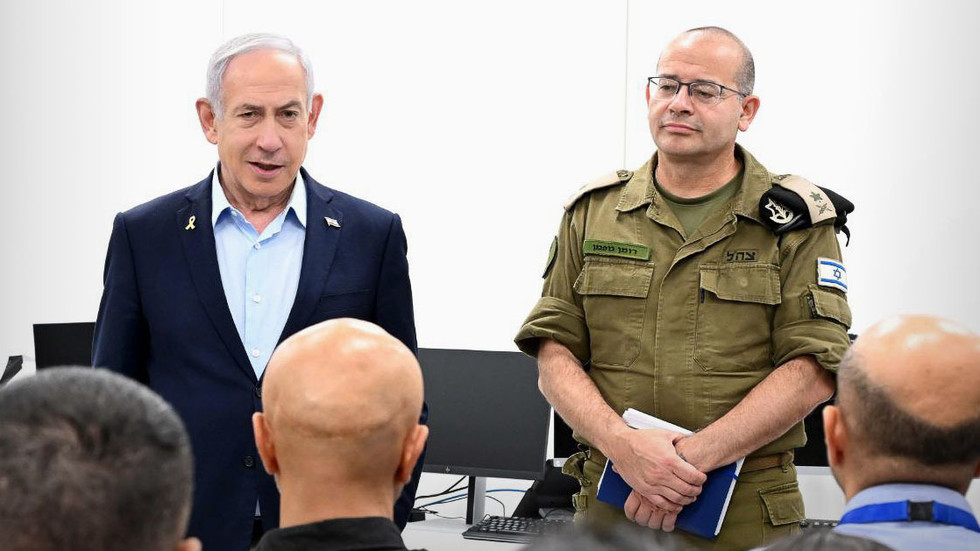
Israeli General Roman Gofman, who currently serves as Prime Minister Benjamin Netanyahu’s military secretary, has been appointed as the next director of the Mossad, Israel’s foreign intelligence agency. This announcement, made on Sunday, follows a contentious review by the Senior Appointments Advisory Committee, which was divided over concerns regarding Gofman’s past conduct. Gofman, a career officer in the Israel Defense Forces (IDF) who immigrated to Israel from Belarus at the age of 14, is regarded as a close ally of Netanyahu. The prime minister has described him as a “bold and creative” commander capable of unconventional thinking.
However, Gofman’s nomination has faced criticism in Israeli media, with some questioning his suitability for the role of the country’s top spy chief. The committee’s review placed significant emphasis on the case of Ori Elmakayes, a Jewish Israeli citizen who was 17 years old when he participated in a 2022 information warfare operation conducted by an IDF unit under Gofman’s command. Elmakayes was later detained for allegedly leaking classified material but was released without charges after it was revealed that the documents had been provided to him by a different IDF unit. Elmakayes criticized the committee’s findings, labeling them “ridiculous” and arguing that a key witness had not been interviewed. He expressed concern on social media, warning that “whoever abandoned a 17-year-old boy – will abandon Mossad agents too.”
The committee concluded that Gofman was unaware of Elmakayes’ age at the time of the incident and did not learn about his arrest until it became public knowledge. However, the committee’s chairman, former Supreme Court president Asher Gruni, dissented, expressing skepticism about these conclusions and suggesting that, even if accurate, they indicated failures in leadership. The committee’s approval was reached after three junior members outvoted Gruni, who opposed the decision. Some documents related to the case were heavily redacted, and Gruni noted that his full dissenting opinion could not be disclosed due to security restrictions.
Gofman is set to replace outgoing Mossad chief David Barnea, whose five-year term concludes in late June. Reports surfaced last month indicating that Barnea had presented plans to U.S. and Israeli leadership aimed at inciting a public uprising in Iran to coincide with ongoing military operations, although the agency ultimately did not succeed in this endeavor. Gofman’s appointment highlights the political and security considerations influencing Israel’s intelligence leadership, with his close ties to Netanyahu and military background likely to shape the agency’s direction in the years ahead.


Comments are closed for this story.