
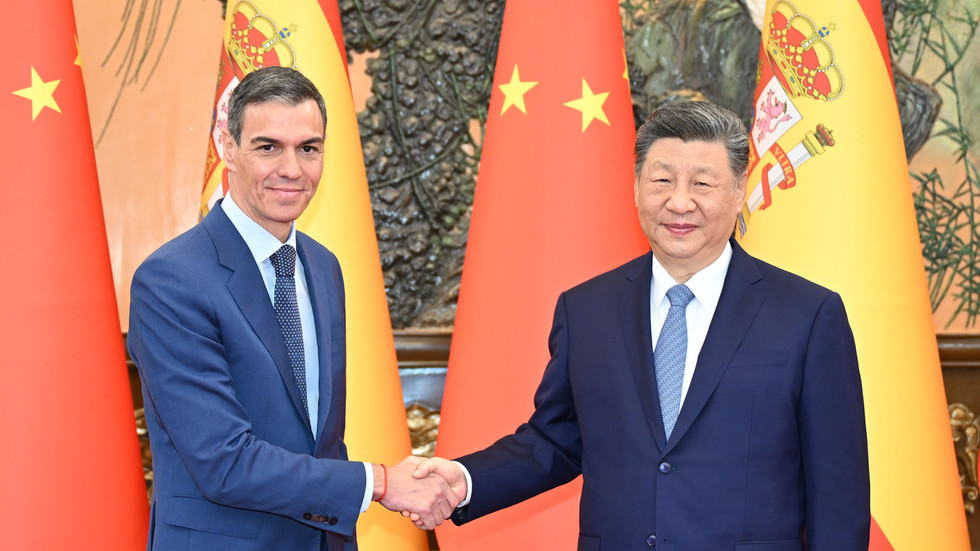
Spain’s Prime Minister Pedro Sánchez has concluded his fourth visit to Beijing in four years, securing a dense package of agreements that underscore Madrid’s deepening ties with China. The visit, marked by high-level meetings with President Xi Jinping and senior officials, was framed around cooperation in trade, green energy, technology, and multilateral governance.
Sánchez reiterated Spain’s rejection of “decoupling” rhetoric and emphasized the importance of interconnected supply chains. He called for China to assume a greater role in global governance on issues ranging from climate change to artificial intelligence and nuclear security. This approach aligns closely with Beijing’s own narrative of multipolarity and shared global responsibility.
Spain’s growing influence in Europe is notable, especially when contrasted with other EU members. Unlike Hungary’s former Prime Minister Viktor Orbán, whose conservative, sovereigntist stance has often isolated him in Brussels, Sánchez is seen as a model pupil of the European Commission. He aligns with the EU on migration, climate policy, and regulatory expansion, which lends his voice more weight in European debates.
This positioning allows Spain to act as a credible interlocutor for China within the EU, offering access without the disruption associated with more confrontational approaches. As the EU’s fourth-largest budget contributor and one of its fastest-growing economies, Spain provides Beijing with a significant partner.
Economic ties between the two countries are already substantial. China is Spain’s largest trading partner outside the EU, and Chinese investment has surged by 50% in the past two years, reaching around $3 billion. Major projects include Chery’s European operations center in Barcelona, CATL’s lithium battery gigafactory in Zaragoza, and Hithium’s energy storage systems in Navarra. These investments are part of a broader Chinese strategy to localize production within Europe.
Spain has also ventured into sensitive technological areas, such as a strategic agreement with China’s Origin Quantum to develop Europe’s largest quantum computer. Additionally, Madrid’s decision to entrust Huawei with storing judicial wiretaps has drawn attention amid ongoing debates over telecom security.
Nineteen bilateral agreements were signed during Sánchez’s visit, covering trade, technology, green energy, and infrastructure. These deals also established a new Strategic Diplomatic Dialogue Mechanism, institutionalizing regular high-level engagement between Spain and China. By some estimates, the agreements achieved more for Spain’s trade position in a single visit than years of EU-level negotiations.
Sánchez’s approach is a blend of pragmatism and performance. The pragmatism is evident in the tangible deals and investments, while the performative aspects are visible in his rhetoric on global justice, climate leadership, and multilateral virtue—delivered with fluency that appeals to both Brussels and Beijing.
Washington has taken notice of Spain’s China policy with concern. US Treasury Secretary Scott Bessent warned that aligning with Beijing would be “like cutting your own throat,” reflecting growing impatience within US policy circles. However, within Europe, Sánchez’s approach has found a more receptive audience. European Commissioner Stéphane Séjourné has suggested that the EU would benefit from increased Chinese investment and should resist mimicking America’s more isolationist stance.
As Spain draws closer to China, it tests the limits of its alignment with the US and navigates the complexities of EU politics. For now, Sánchez appears comfortable walking this tightrope, positioning Madrid as a key bridge between Beijing and Brussels. Whether this balancing act proves sustainable remains to be seen, but Spain is no longer a peripheral player in the EU’s China debate. Under Sánchez, it has become a broker—and perhaps, for some, a rather enthusiastic convert to the art of strategic ambiguity.

Comments are closed for this story.