
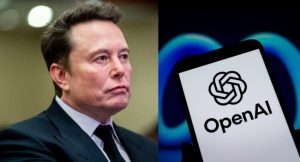
Elon Musk testified on Tuesday in a federal trial that he believes OpenAI’s co‑founder and chief executive Sam Altman and president Greg Brockman betrayed the organization’s original charitable purpose. Musk, who helped launch OpenAI in 2015 and provided early funding, said the pair turned the nonprofit into a profit‑driven enterprise, violating the mission he set for the research lab.
During his opening testimony, Musk described OpenAI as his “brainchild,” emphasizing that he originated the concept, recruited its initial team, supplied the seed capital and intended the organisation to operate as a charity that did not benefit any individual. He warned that allowing a charitable entity to be “looted” would undermine the foundation of charitable giving in the United States.
OpenAI counsel William Savitt countered that Musk was one of the early financiers who encouraged the creation of a for‑profit arm, seeking “the keys to the kingdom.” Savitt argued that Musk sued only after his aspirations to lead the company were rejected and noted that Musk launched his own AI venture, xAI, in 2023.
OpenAI’s lawyers also defended the 2019 formation of a for‑profit subsidiary, saying it was necessary to secure computing power and attract top AI researchers in competition with Google’s DeepMind. They pointed to Microsoft’s $10 billion investment in January 2023 as evidence of the company’s growth model.
Musk’s attorney Steven Molo asserted that OpenAI’s defendants were motivated by greed, citing the influx of investors and the shift away from a purely charitable structure. Musk is seeking $150 billion in damages from OpenAI and Microsoft, with any recovered funds directed to OpenAI’s charitable arm. He also requests that the organisation be restored to nonprofit status, that Altman and Brockman be removed from leadership positions, and that Altman be taken off the board.
Before jurors were seated, U.S. District Judge Yvonne Gonzalez Rogers admonished Musk after OpenAI attorneys complained about his recent posts on X, where he labeled Altman “Scam Altman” and accused him of stealing a charity. The judge cautioned Musk against using social media to influence the case, and both parties agreed to limit online commentary for the trial’s duration.
The proceeding offers a rare glimpse into the internal dynamics that have shaped OpenAI, which evolved from a modest research lab in Greg Brockman’s apartment to a company valued at more than $850 billion. The outcome could affect OpenAI’s plans for a potential initial public offering, raise further questions about corporate governance in AI, and influence public perception of emerging artificial‑intelligence technologies.


Comments are closed for this story.