
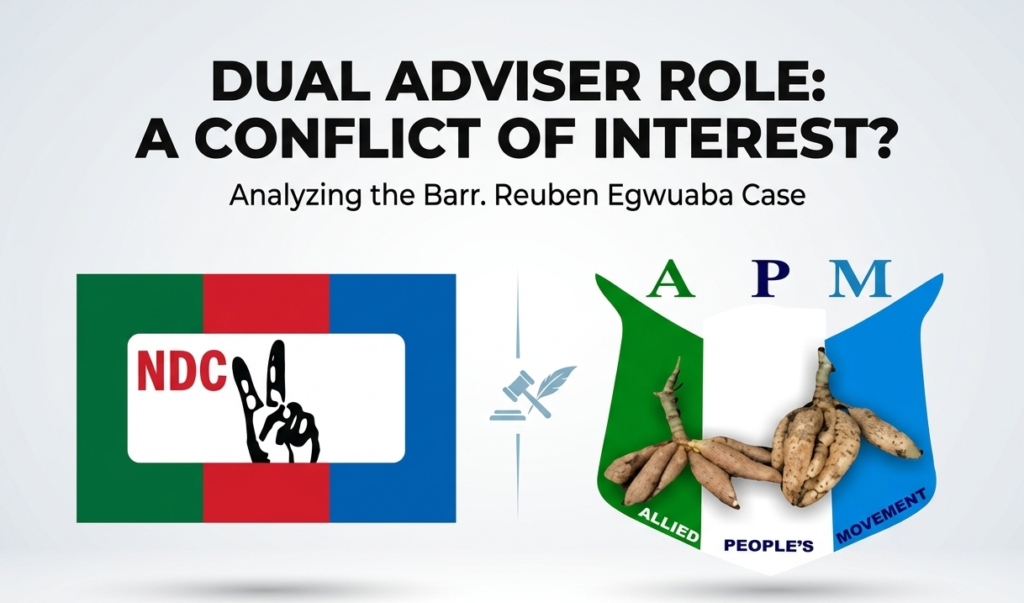
Update: NDC Clears Air on Barr. Reuben Egwuaba Controversy: “He Resigned from APM Last Year”
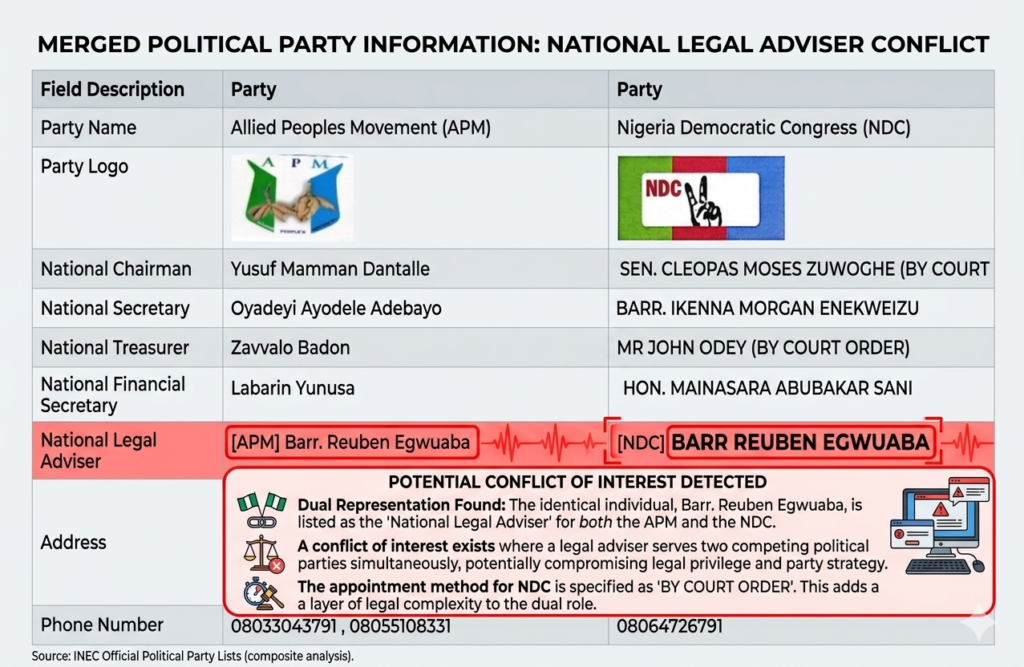
Nigeria’s political landscape is facing heightened scrutiny after official records from the Independent National Electoral Commission (INEC) revealed that Barr. Reuben Egwuaba is currently listed as National Legal Adviser for both the Allied Peoples Movement (APM) and the Nigeria Democratic Congress (NDC), raising significant legal, ethical, and political concerns ahead of the 2027 general elections.
The dual listing, publicly accessible through INEC’s political parties portal, has sparked widespread debate over possible violations of the Electoral Act 2026, questions of political transparency, and the integrity of party leadership structures within Nigeria’s rapidly evolving multiparty system.
Verified records show that the Allied Peoples Movement lists Barr. Reuben Egwuaba as its National Legal Adviser under its recognised national executive leadership, while the Nigeria Democratic Congress also lists Barr. Reuben Egwuaba in the same role, notably under a “BY COURT ORDER” designation. The NDC’s entire leadership structure, including its chairman and secretary, similarly carries the court-order notation, reflecting the party’s judicially driven registration and organisational framework.
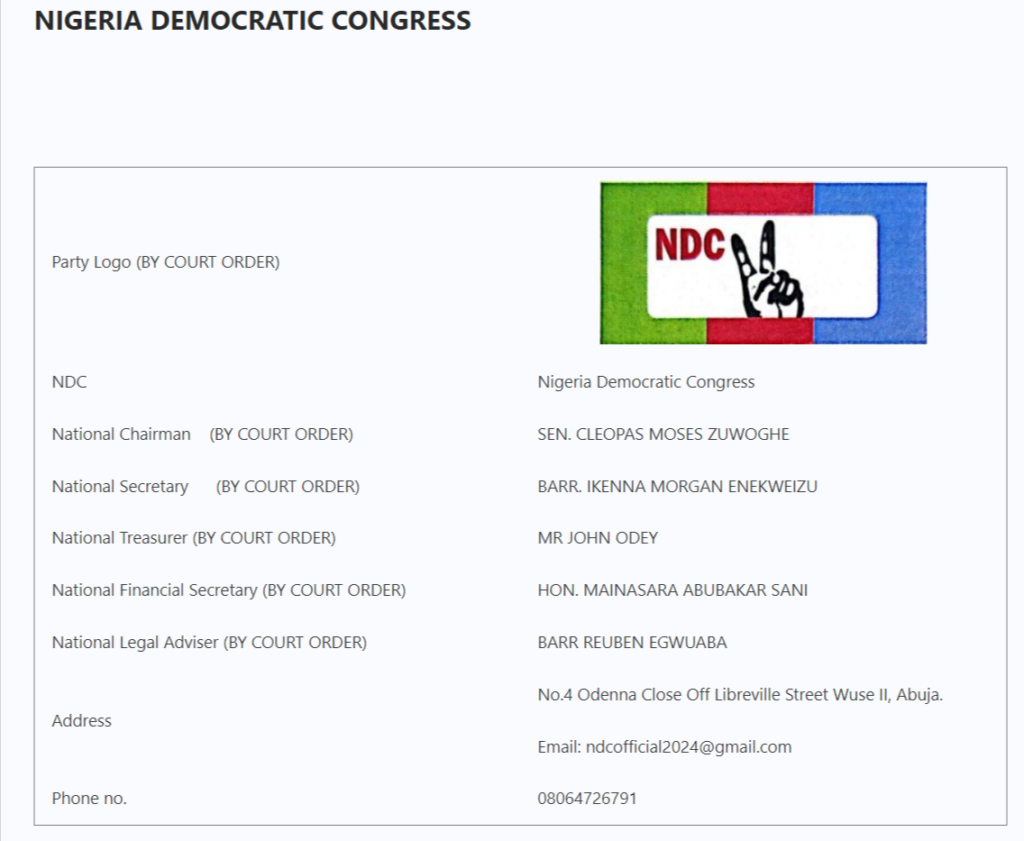
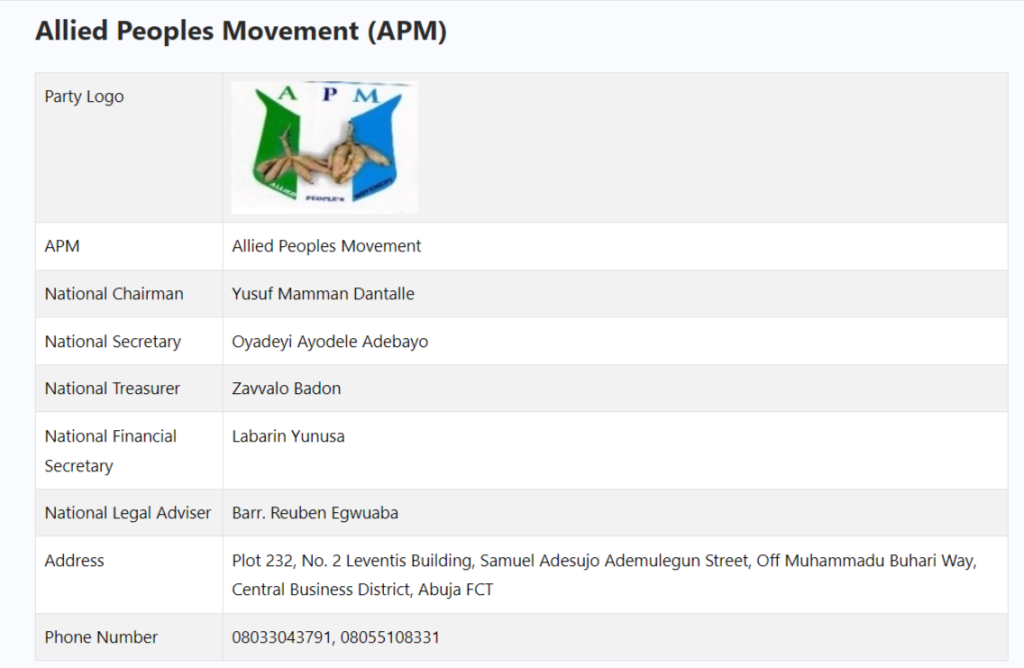
This unusual overlap means Barr. Reuben Egwuaba occupies one of the most sensitive legal positions in two separate registered political parties simultaneously. As National Legal Adviser, the office carries substantial responsibilities, including constitutional guidance, electoral compliance, candidate nomination advisory, legal dispute management, and representation in party-related litigation. Political observers argue that such dual positioning presents an apparent conflict of interest that could undermine confidence in both parties.
The Nigeria Democratic Congress, a relatively new entrant into Nigeria’s political arena, officially secured INEC registration in February 2026 after a court ruling compelled the electoral body to recognise it. The party has been championed by former Bayelsa State Governor Senator Seriake Dickson as a fresh political platform intended to strengthen opposition politics and prevent democratic erosion. However, the party’s court-backed emergence and executive structure have already attracted scepticism from critics who question its long-term institutional stability.
Barr. Egwuaba had previously been publicly associated with the NDC’s legal and compliance processes during its formation, making his continued appearance in APM’s national executive structure particularly controversial.
The timing of this revelation is especially significant following recent amendments to Nigeria’s Electoral Act 2026, which introduced stricter provisions against dual party membership. The law now criminalises simultaneous membership in multiple political parties, prescribing penalties that include fines of up to ₦10 million, imprisonment for up to two years, or both.
While legal analysts note that distinctions may exist between ordinary membership and executive appointments, many argue that serving as a senior national officer in two parties intensifies concerns surrounding legal compliance, political loyalty, and regulatory oversight.
For the Allied Peoples Movement (APM), the issue could raise questions regarding the exclusivity and independence of its legal representation. For the Nigeria Democratic Congress (NDC), the controversy may damage its credibility as a newly established political force seeking legitimacy on the national stage. INEC itself is also likely to face scrutiny over its verification and monitoring systems, particularly regarding how such overlapping appointments remained visible in official public records.
Political stakeholders are now closely watching whether Barr. Reuben Egwuaba will formally resign from one of the roles, whether both parties will update their executive filings, or whether INEC will intervene directly to resolve the matter.
Potential consequences include formal petitions, legal disputes, party-level internal crises, and broader public debates over the effectiveness of Nigeria’s electoral reforms.
As preparations for the 2027 elections gradually intensify, the controversy surrounding Barr. Reuben Egwuaba’s dual listing may serve as one of the earliest major tests of the Electoral Act 2026 amendments and Nigeria’s broader commitment to democratic accountability.
Whether this development is the result of administrative oversight, delayed regulatory updates, or deliberate political manoeuvring, it has already amplified national conversations around party governance, institutional credibility, and electoral integrity.
With APM, NDC, and INEC all now under increased public scrutiny, the resolution of this issue could set an important precedent for how Nigeria manages political compliance and leadership transparency in the lead-up to one of its most consequential electoral cycles.
- Peter Obi quits ADC, cites state agents sowing division
- ADC Announces 2026 Primary Timetable, N100m Presidential Fee
- Bayo Onanuga Blames Peter Obi’s Exit on Opportunism Ahead of 2027 Race
- Kwankwaso Stays in ADC Amid Legal Turmoil, Decamp Option
- Video: Peter Obi, Kwankwaso Officially Join NDC Ahead of 2027


Comments are closed for this story.