
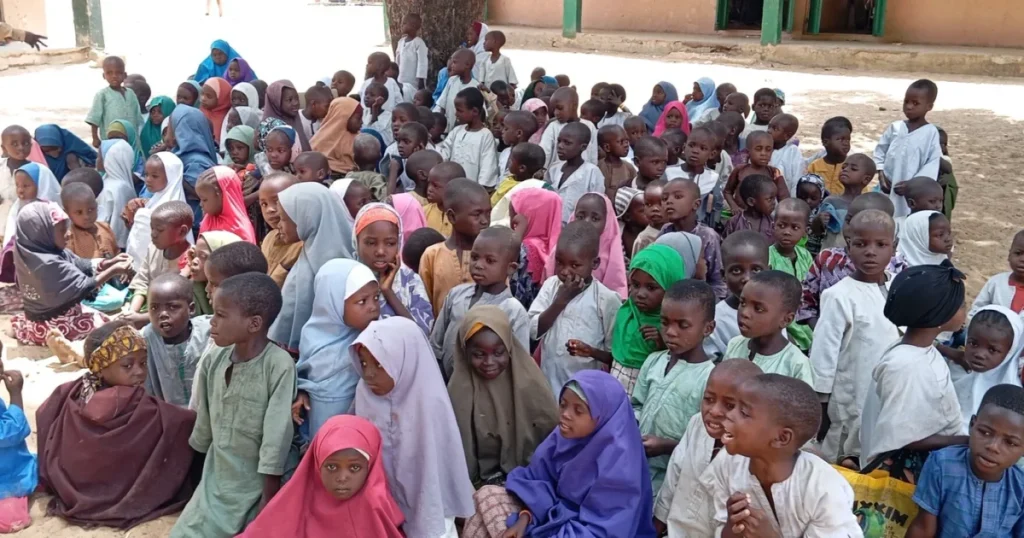
Jigawa, Kano and Katsina states account for nearly 30 percent of Nigeria’s out‑of‑school children, UNICEF warned, highlighting the urgent need for expanded early childhood education (ECE). The United Nations agency estimates that about 18.3 million children are out of school in Nigeria – the highest figure worldwide.
The observation was made by Aisha Abdullahi, an education consultant with UNICEF’s Kano Field Office, during a two‑day dialogue for journalists from the three states. While presenting a paper on foundation learning and skills development, Abdullahi linked the high out‑of‑school rate to poverty, insecurity, cultural barriers and low school‑readiness levels.
She argued that Early Childhood Care, Development and Education (ECCDE) offers a preventative solution that can keep children from dropping out before formal schooling begins. ECCDE targets children from birth to five years, providing cognitive, emotional and social skills essential for later academic success. Research cited by Abdullahi indicates that almost 90 percent of brain development occurs before age 5, and that children who receive early learning are more likely to enroll, remain in school, and complete their education. Conversely, those who miss this window are twice as likely to drop out.
Despite the inclusion of one year of pre‑primary education in Nigeria’s Universal Basic Education (UBE) framework, access to ECCDE remains limited, especially in rural areas. In locations where functional ECCDE centres operate, primary‑one enrolment is up to 40 percent higher and retention rates improve markedly.
The UNICEF expert also highlighted ECCDE’s role in advancing girls’ education. Early exposure can delay pressures such as early marriage and enhance parental engagement, particularly among mothers. However, the dialogue revealed that father involvement in early learning is low, with fewer than 15 percent of fathers actively participating. Stakeholders suggested that increasing male engagement could reduce dropout rates by up to 50 percent, recommending community advocacy, mosque‑based outreach and structured father‑child programmes.
Participants called for immediate policy actions: scaling ECCDE provision across all primary schools, earmarking at least 5 percent of education budgets for early learning, expanding teacher training, and integrating traditional and religious education systems into the ECCDE model.
Strengthening early childhood education through adequate investment and quality delivery is viewed as the most effective pathway to curb Nigeria’s out‑of‑school children crisis, according to UNICEF and local education stakeholders.




Comments are closed for this story.