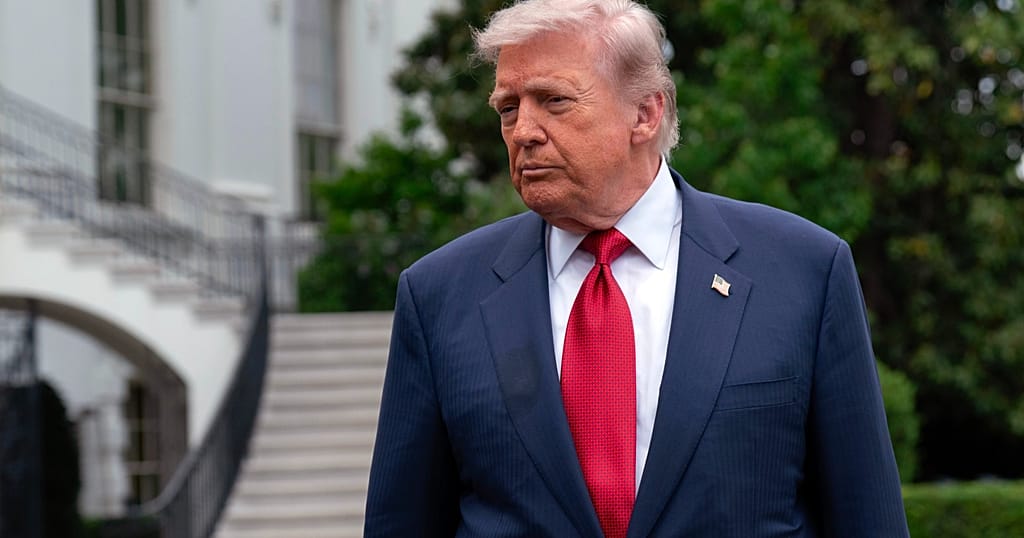
On Monday, United States President Donald Trump dismissed Iran’s latest peace proposal as “totally unacceptable.” This rejection resulted in a sharp increase in oil prices during early Asian trading and reignited concerns about potential renewed conflict in the Middle East. Trump announced his decision on his Truth Social platform, stating that he had reviewed Tehran’s response and found it “not acceptable,” although he did not provide specific details regarding the Iranian offer.
Iran had responded to the United States’ diplomatic outreach on Sunday, warning that it would not hesitate to retaliate against any further U.S. strikes and would not allow additional foreign warships to navigate the Strait of Hormuz. President Masoud Pezeshkian emphasized in a statement posted on X that dialogue does not equate to surrender, asserting that Iran would continue to defend its interests. This impasse caused benchmark Brent crude to rise by 4.65% to $99.95 a barrel, while West Texas Intermediate (WTI) increased by over 4% to $105.50 a barrel, as traders began to factor in the risk of further disruptions to this vital shipping lane. Iran’s partial blockade of the strait, which serves as a conduit for approximately one-fifth of the world’s oil, has already tightened market sentiment.
Israeli Prime Minister Benjamin Netanyahu reiterated that the conflict will not conclude until Iran’s nuclear facilities are dismantled. In an interview on CBS’s “60 Minutes,” he stated that enriched uranium and enrichment sites must be eliminated from Iran before any peace can be considered durable. According to state broadcaster IRIB, Tehran’s counter-proposal, delivered to Pakistani mediators, called for an end to hostilities on all fronts—particularly in Lebanon, where Israel continues to clash with Iran-backed Hezbollah—and for guarantees regarding shipping security.
The United States had reportedly suggested extending the Gulf truce to facilitate negotiations on a broader settlement, including Iran’s nuclear program. The Wall Street Journal, citing sources familiar with the talks, reported that Iran’s draft included a provision to dilute some of its highly-enriched uranium and transfer the remainder to a third country, with assurances that it could be returned if negotiations failed. The lack of a clear roadmap has heightened attention on the Strait of Hormuz, where Iran is reportedly establishing a toll system for vessels and restricting maritime traffic. U.S. officials have warned that Tehran’s control over this international waterway would be “unacceptable,” given its significance to global oil supplies.
The U.S. Navy has intermittently blocked Iranian ports and diverted ships, while Britain and France are preparing to lead a multinational effort to secure the strait following a ceasefire. French President Emmanuel Macron emphasized that France’s role would be a security mission coordinated with Iran, rather than a naval deployment, after Tehran warned of a “decisive and immediate response” to any foreign warships entering the waterway. The diplomatic lull was disrupted on Sunday by fresh drone attacks in the Gulf. The United Arab Emirates reported intercepting a drone launched from Iran, while Kuwait cited “hostile drones” in its airspace, and Qatar’s defense ministry stated that a freighter arriving from Abu Dhabi was struck.
In a statement, the Iranian parliament’s national security commission warned Washington that Iran’s restraint had ended, asserting that any attack on Iranian vessels would provoke a strong and decisive response against American ships and bases. Trump is expected to address the issue with Chinese President Xi Jinping during a planned visit to Beijing on Thursday, according to a senior U.S. official. China remains a major purchaser of Iranian oil, and any shift in its stance could significantly influence the broader diplomatic landscape. The situation remains fluid, with oil markets highly sensitive to developments in the Gulf and the overall Middle East peace process. Continued escalation could further destabilize regional trade routes and impact global energy supplies, underscoring the urgency for renewed diplomatic engagement.