The Colorado River’s massive reservoir, Lake Powell, has hit its lowest summer level ever recorded, sending shockwaves through the Western power grid and raising the specter of a catastrophic ‘dead pool’ scenario. The lake, which supplies electricity to millions of homes, is now just 23.28% full—a stark contrast to its last full mark in 1983.
Federal projections reveal a grim outlook: by next spring, the water level is expected to drop to ‘minimum power pool,’ the threshold below which the Glen Canyon Dam would cease generating electricity. This isn’t a reaction to recent drought measures, the Bureau of Reclamation warns, but a stark signal that the Colorado River remains dangerously fragile. If levels fall further, the river could stop flowing through the Grand Canyon, triggering an environmental disaster. While experts consider a ‘dead pool’ unlikely—federal managers would likely carve new outlets first—the risk has never been more real.
The crisis stems from a relentless drying trend driven by climate change. This year’s winter was catastrophically dry, denying the lake its usual spring refill. Water managers have already tapped reservoirs in Colorado and Wyoming to slow the decline, but predictions show levels will keep dropping until next spring’s snowmelt. A super El Niño could bring a wet fall, but experts say it won’t reverse the long-term drought.
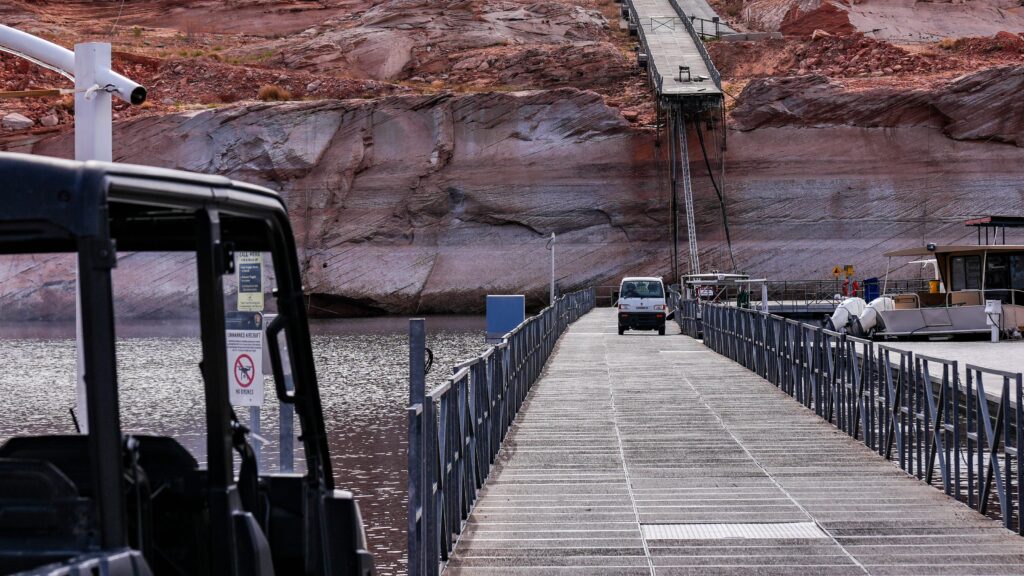
On the ground, the impacts are tangible. Lake managers are extending boat ramps and floating entire marinas to deeper waters. In Page, Arizona, the city built for the dam’s construction, tourism has slumped. Hotel revenue is down 6% from last year, and officials are scrambling to install a low-level drinking water connection for the 7,300 residents. “The dam is a story of resilience,” says city spokesman Adam Geller. “It was never built to withstand a drought like this.”
The low levels are also inflaming tensions among the seven states that share the Colorado River. California, with the largest water allocation, faces growing pressure from Upper Basin states like Colorado and Wyoming, which argue that farmers in the Southwest must cut back. Federal managers have started draining reservoirs like Wyoming’s Flaming Gorge to keep Lake Powell’s turbines spinning, but the solution is temporary. Water leaving Powell flows into Lake Mead, which supplies electricity, irrigation, and drinking water to tens of millions, including California’s vital agriculture.
Some conservation groups are pushing for radical shifts, such as changing crop patterns in desert areas where cheap water has fueled thirsty crops like alfalfa. Others propose piping water from the Mississippi, hauling icebergs, or building desalination plants. But with the states deadlocked on a reduction plan, the system teeters on the edge. “We’ve seen it coming for 20 years,” says Aaron Weiss of the Center for Western Priorities. “Now it’s going to be both really hard and really urgent. Whatever the solutions are, they’re going to have to happen rapidly.”