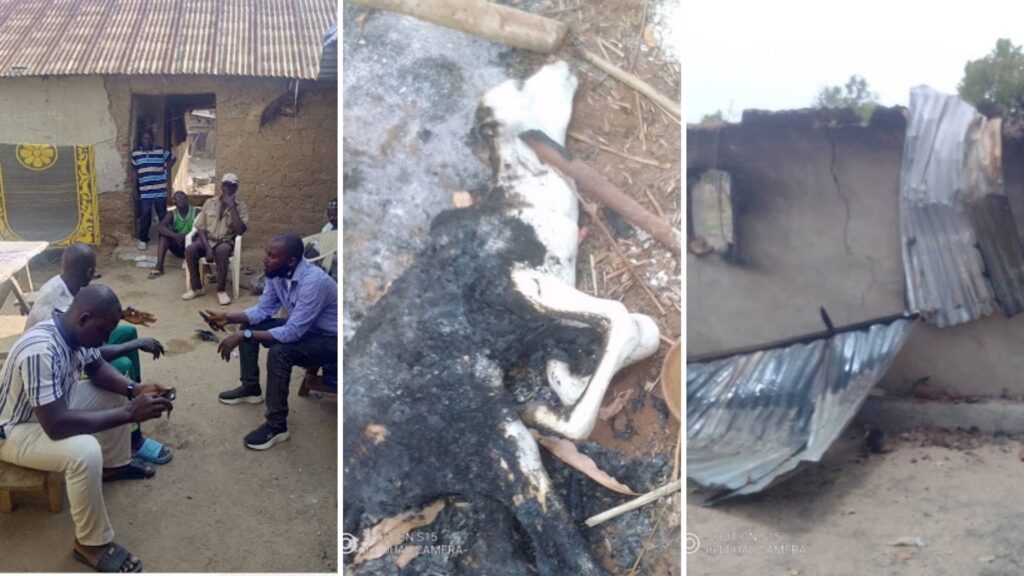
The phone call that Halidu Musa answered on the afternoon of July 30, 2025, began like any other. His father, Musa Yatsu, the vigilante commander of Gurfata village in Abuja’s Gwagwalada district, was on the farm with colleagues. They were verifying reports that herders had once again destroyed crops. But within moments, the conversation turned into a nightmare. Gunshots erupted in the background. Voices screamed warnings of an attack. Halidu listened helplessly as his father struggled to speak through the chaos. It was the last time he would hear his father alive.
By evening, Musa Yatsu was dead. His killing became a defining moment in a chain of violence that residents say has been building for years—fueled by unresolved land disputes, misinformation, weak mediation, and peace agreements that were signed but never enforced.
Interviews with community leaders, farmers, herders, security officials, and grieving families reveal a crisis that did not start with bloodshed. It began with a dispute over land use. The traditional ruler of Gurfata, Adamu Pada, said the immediate trigger came between June and July 2025, when herders allegedly tried to create a passage through cultivated farmland. Farmers rejected the move. A confrontation erupted. It was separated, but not resolved.
A second clash followed soon after. A farmer was attacked with a machete and taken to the hospital, where he died the same day. That death marked a turning point. Fear and suspicion deepened on both sides.
While the community was still mourning, more destruction was reported along the same farming corridor. Vigilantes were deployed to document the damage, believing that official intervention would follow. Instead, they walked into an ambush. Pada said the herders had hidden in the bush and launched a sudden attack. Musa Yatsu was killed. Residents claim at least nine individuals were identified in connection with the attack, but arrests remain disputed. Pada insisted those responsible were known but not arrested. The police maintain a different position.
The Nigeria Police Force, through FCT Police Public Relations Officer Josephine Adeh, said farmer-herder disputes in the area are usually handled through mediation, not prosecution. She explained that both parties are invited for dialogue whenever incidents are reported, and no arrests were made in relation to the recent killings. Residents believe this lack of prosecution has created a sense of impunity, allowing violence to recur.
The violence in Gurfata has left a long, painful trail. Community accounts show that as far back as 2020, residents like Labaran Musa were injured in farmland confrontations. In 2024, Shuaibu Gimba was also injured. In May 2025, Hamza Yakubu was killed. June brought injuries to Abdul Abubakar, Auwal Musa Lana, and Abraham Moses, also known as Manya. The escalation peaked in July 2025. Dahiru Yakubu was killed on July 29. The next day, Musa Yatsu was killed. On the same day, Isa’ac Abubakar sustained gunshot wounds, and Sa’ad Yakubu was also injured. For families affected, these are not isolated statistics. They are repeated losses that have reshaped entire households and deepened distrust in the possibility of lasting peace.
A relative of Dahiru Yakubu said the killings were preceded by years of unresolved disputes over farmland boundaries and repeated crop destruction. Despite repeated complaints to community leaders and police, no lasting solution was achieved.
The herders see the conflict differently. Ibrahim Chiroma, Chairman of Miyetti Allah in Gwagwalada, said the expansion of farmlands has significantly reduced available grazing routes, forcing cattle into closer contact with cultivated land. He argued that this pressure has made coexistence more difficult. He said earlier informal systems of dispute resolution, where farmers and herders directly negotiated compensation for damage, have broken down. He also said livestock deaths caused by suspected poisoning have increased, and that over one hundred cattle may have been lost, though this figure could not be independently verified.
Security agencies and community leaders confirmed that multiple peace meetings were held in Gurfata. The Officer-in-Charge of the State Security Service in Gwagwalada, Sarah Ebeh, said early warning signals usually trigger immediate intervention. She confirmed that a peace accord was reached but declined to disclose its contents, describing it as confidential. She also stated that since the intervention, the SSS had not received any new complaints. Residents dispute this, insisting that tensions remain and cattle continue to enter farmland in some areas.
Efforts to get full responses from the Gwagwalada Area Council revealed partial disclosure. The media aide to the chairman, Ibrahim Yamawo, said the administration intervened in collaboration with security advisers and confirmed that a farmer-herder peace committee was established. However, he acknowledged that no compensation had been made to victims or affected families despite reported losses and destruction. Repeated attempts to obtain further clarification were unsuccessful.
Across all interviews, three recurring issues emerge as central to the escalation. First, misinformation and rumors of retaliation spread quickly between farms and settlements, shaping perceptions before facts can be verified. Pada explained that rumors of impending attacks frequently circulate, creating fear and heightening tensions even before formal mediation can take place. Farmers argue that misinformation is reinforced when reports of farm destruction are delayed or dismissed. Herders say they are also affected by allegations of deliberate cattle poisoning, which fuels suspicion and retaliatory thinking.
Second, peace agreements are weakly enforced. Both sides confirm that accords have been signed at different times, but there appears to be little or no structured monitoring mechanism to ensure compliance or address violations. Third, security interventions are reactive. Authorities tend to respond after violence has already escalated rather than preventing it at the early warning stage.
For Halidu Musa, the crisis is no longer a policy discussion. It is a personal loss that defines the reality of Gurfata. He said his father went to the farm not as a fighter but as a documenter of destruction, believing that official intervention would follow. Instead, he was killed in the line of duty, leaving behind a family and a community still searching for answers.
The Gurfata crisis exposes a deeper governance gap in rural conflict management. Repeated mediation efforts are not matched with enforcement. Early warning systems are not backed by preventive action. Peace agreements exist without accountability mechanisms to sustain them. Today, the community remains caught between competing realities. Farmers insist their land is under pressure. Herders argue that grazing routes are shrinking. Institutions maintain that peace exists, even as residents continue to live with fear and uncertainty. In that gap between agreement and enforcement, the violence in Gurfata continues to find space.
This report was commissioned with support from the Centre for Journalism Innovation and Development (CJID) under a journalism support initiative funded by the Open Society Foundations.