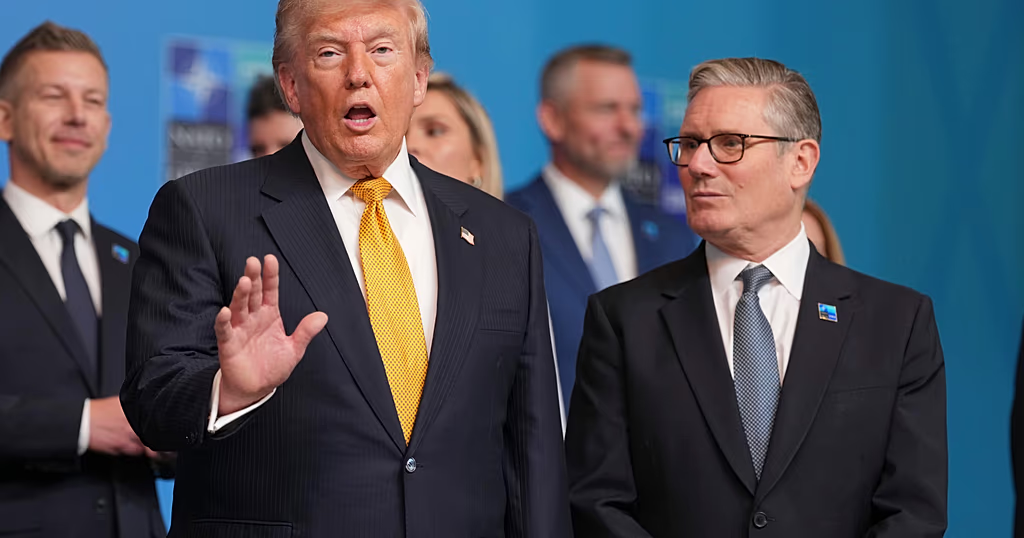
Former U.S. President Donald Trump made a series of controversial remarks during a NATO summit held in Turkey. He criticized the alliance’s members for not backing the United States in its recent conflict with Iran, saying the lack of support was a “big problem.” Trump also revived his long‑standing claim over Greenland, accusing European leaders of resisting his stance. In a separate statement, he declared that Washington should sever Trade ties with Spain, adding, “Spain is a wasted cause. We don’t want to do any trade business with Spain anymore,” a comment that reignited a dispute over Madrid’s defence spending.
Amid escalating tensions between U.S. and Iranian forces, Trump announced that the ceasefire in Iran was “over,” while leaving the possibility of further talks open. The declaration triggered a sharp reaction in global markets: oil prices surged more than five percent to the highest level in weeks, and stock markets around the world fell.
The International Monetary Fund, on the same day, lowered its global growth forecast to 3 percent, citing the ongoing risks posed by the war. The U.S. has carried out extensive air strikes on Iranian targets this week after Iranian forces attacked ships in the Strait of Hormuz, prompting retaliatory strikes against American bases in the Gulf.
NATO leaders, meanwhile, highlighted the strength of the alliance following the Ankara summit. “The alliance is stronger than ever,” said Dutch Prime Minister Mark Rutte, who described a “huge sense of unity” among the leaders. He also reaffirmed NATO’s unwavering support for Ukraine, stressing the commitment to ensure Kyiv receives the assistance it needs in its war with Russia.
Trump has urged NATO members to honour a pledge to increase defence spending as Washington steps back from Europe. In an effort to avoid a new confrontation with the former president, NATO allies announced tens of billions of dollars in new arms contracts on Tuesday.
The developments underscore the complex interplay between U.S. foreign policy, European defence commitments, and the broader geopolitical tensions in the Middle East. As the situation evolves, observers will be watching closely how NATO’s unity holds up and whether the alliance can navigate the challenges posed by shifting U.S. priorities and regional conflicts.