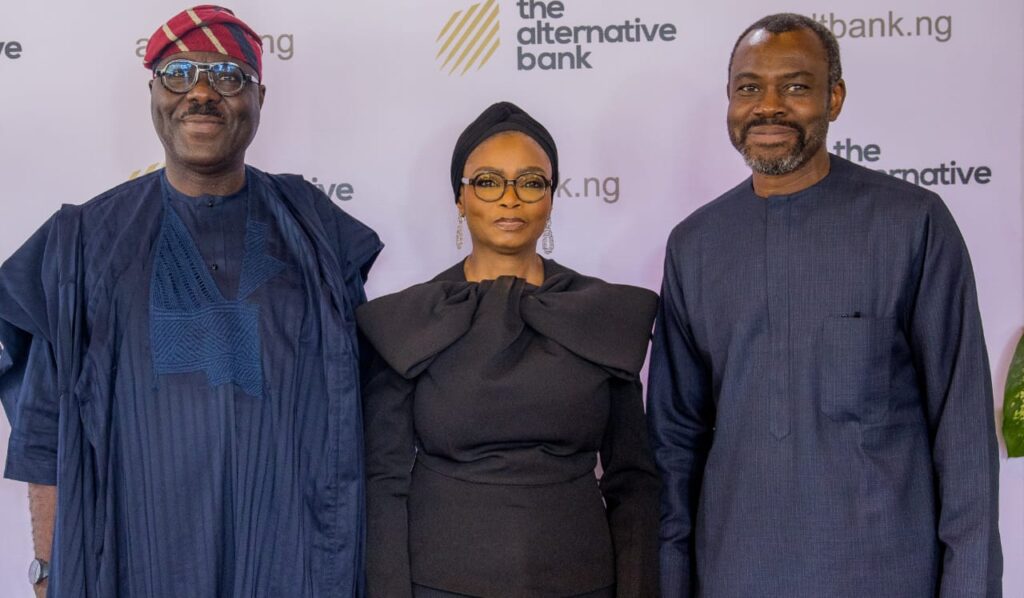
Inside a private hall on Victoria Island, the conversation was not about interest rates or quarterly returns. It was about trust, infrastructure, and the kind of capital that builds roads, factories, and jobs that last longer than a market cycle. The Alternative Bank, known as AltBank, gathered investors, entrepreneurs, and top policymakers for a forum titled ‘Beyond Interest: Capital, Innovation, and the Future of Wealth,’ with a clear mission: to push non-interest finance as a serious engine for Nigeria’s productive economy.
The message was blunt. Nigeria does not have a money problem; it has a patience problem. Muhtar Bakare, Chairman of The Alternative Bank, opened the day with a simple challenge. He argued that the country is not short of effort or even funds, but of the kind of capital that stays put long enough to turn sweat into infrastructure, and infrastructure into stable livelihoods. “What we lack is not effort. We lack capital that stays long enough to turn effort into capacity, capacity into durable jobs and durable jobs into stability. That is why the distinction between extractive and productive capital matters,” he said.
Lagos State Governor Babajide Sanwo-Olu, represented by the Commissioner for Finance, Abayomi Oluyomi, delivered the keynote. He made it clear that the government sees itself not as a rival to private investors but as a launchpad. He pointed to Lagos’s infrastructure push, its recent dual bond issuance, and the Lekki corridor as proof that public action can reshape the risk-reward picture for private money. “The future of finance is not only about the price of capital; it is increasingly about the quality of the economic activity that capital enables. Lagos is not only open for business; Lagos is prepared to do business,” the governor said.
Babatunde Raji Fashola, former Governor of Lagos State and former Minister of Works and Housing, brought a veteran’s perspective. He argued that money tied to real, productive assets and the public good beats cash chased for short-term yield. His advice to investors and institutions: weigh the long-term social returns of where you park your funds, not just the immediate gain.
The business case for ethical capital was laid out by Abubakar Suleiman, a promoter of non-interest banking in Nigeria and board member of Sterling Financial Holdings. He traced AltBank’s rise from a small non-interest window opened by Sterling Bank in 2014 to an institution with assets nearing 500 billion naira and close to a million customers. Suleiman pushed for a “full ledger” approach to investing, one that tracks an allocation’s impact on customers, employees, communities, public infrastructure, and the environment, not just the investor’s bottom line. “The Alternative Bank has shown that non-interest banking can grow, win customers, and generate profit. The business case for ethical capital already exists. Our task is to apply it with discipline,” he said.
He cited WasteBanc, AltBank’s recycling partnership with the Lagos Waste Management Authority, and Nigeria’s sovereign Sukuk programme as proof that values-aligned finance can meet commercial standards while linking capital to tangible, productive assets.
The forum also heard from Dr. Stanley Jacob, Group Chief for Innovation and Technology at Meristem, and Ajibola Tobi-Osho, Executive Director of Tugrande Alliance Limited. Jacob argued that Africa’s real financial hurdle is infrastructural, not a lack of liquidity. He suggested that merging the Pan-African Payment and Settlement System with the tokenisation of real-world assets could give Nigeria a first-mover edge in continental capital markets. Tobi-Osho added that Nigeria has moved past crisis management to macroeconomic stability, but the new bottleneck is capital allocation. Banks are parking record liquidity at the central bank instead of lending to the businesses that create jobs and growth.
The room was packed with heavyweights: Olatunji Mayaki, Chairman of Sterling Bank; Hassan Yusuf, Managing Director of The Alternative Bank; Adesuwa Okunbo Rhodes of Aruwa Capital Management; Tonye Cole of Sahara Group; Aminu Tukur of Noor Takaful; Korede Demola-Adeniyi of The Alternative Bank; Chief Idris Olorunnimbe of the Nigerian Communications Commission; Yemi Keri of the Africa Business Angel Network; Sadiq Dantata of Golden Alchemy; Garba Mohammed of The Alternative Bank; Dr. Adesegun Akin-Olugbade of Luwaji Nominees; Sulaiman Adedokun of Meristem Securities; and Jimi Ogbobine of Agusto Consulting, among others.
The takeaway was clear: the future of Nigerian finance may not be about finding more money, but about changing how money behaves.