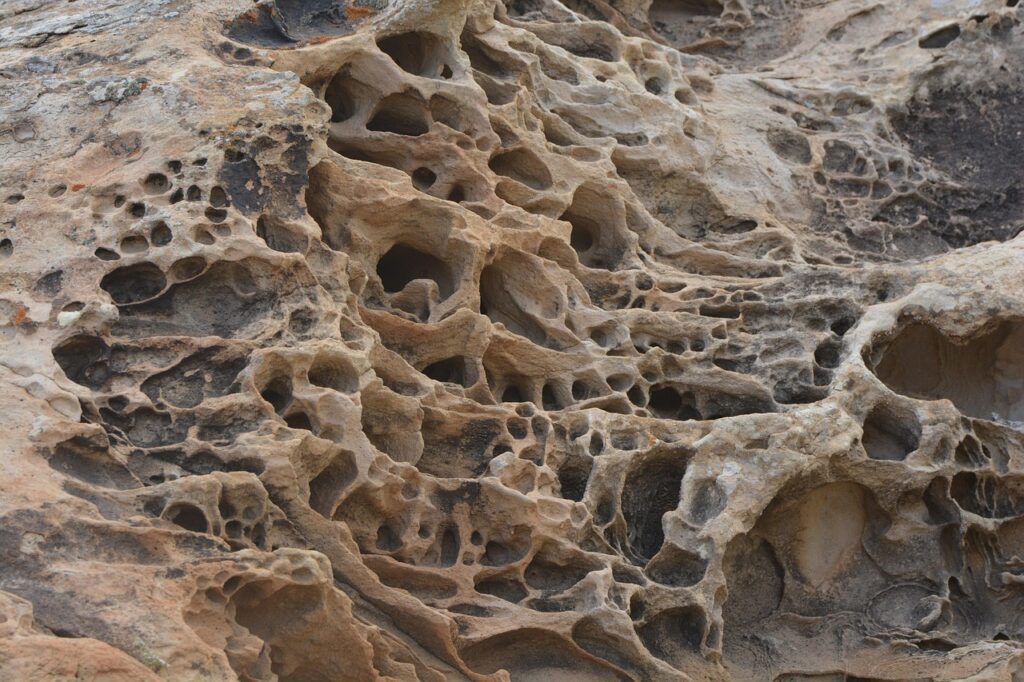
Every rock beneath your feet is a time capsule, a silent witness to millions of years of planetary drama. Petrology, the specialized branch of geology devoted to decoding these stone records, goes far beyond simply classifying colorful pebbles. It is a forensic science, where researchers dissect the composition, texture, and internal architecture of rocks to piece together their turbulent origins and long, slow evolution.
The discipline splits the world of rock into three fundamental families. Igneous rocks are born from fire, crystallizing as molten magma or lava cools. Sedimentary rocks, by contrast, are built layer by layer, as loose sediments are buried, compacted, and cemented over eons. Then there are the metamorphic rocks, the shapeshifters, which are transformed deep underground when heat and pressure force their minerals to recrystallize into entirely new forms.
Within igneous petrology, the drama plays out in two acts. Intrusive rocks like granite cool slowly beneath the surface, allowing large, visible crystals to form. Extrusive rocks such as basalt are born in the chaos of volcanic eruptions, cooling so rapidly that their crystals remain fine-grained. By studying these fiery stones, scientists unlock secrets about the Earth’s internal heat, the churning currents of the mantle, and the very forces that build and reshape continents.
Sedimentary petrology, meanwhile, is the field’s detective branch. These rocks are often packed with fragments of older rocks, fossilized life, and chemical clues about ancient oceans and atmospheres. A single sandstone layer can tell you whether it once lay at the bottom of a shallow sea, the edge of a desert, or the delta of a long-vanished river. This makes sedimentary rocks the best archive we have of past climates, vanished ecosystems, and the slow drift of continents across the globe.
Metamorphic petrology takes on the most extreme conditions. Here, rocks like marble and slate reveal what happens when immense pressure and searing heat, often linked to colliding tectonic plates, squeeze and bake existing stones into something new. These transformed rocks are the fingerprints of mountain-building events and the deep movements of the Earth’s crust, offering a direct look at the immense forces that have sculpted our planet’s surface over geologic time.
To crack these codes, petrologists do not rely on guesswork. They wield an arsenal of high-tech tools, from optical and scanning electron microscopes that magnify crystal structures to X-ray diffraction and geochemical analysis that reveal exact mineral recipes and trace-element signatures. These techniques turn a simple rock sample into a detailed biography, covering everything from its original magma source to the pressure and temperature conditions it endured along the way.
This deep understanding of rock behavior is far from academic. Petrology plays a vital role in finding critical mineral deposits, assessing groundwater resources, and designing foundations for bridges and dams. It also helps scientists predict the hazards that emerge from the ground itself, from volcanic eruptions and earthquakes to landslides, giving communities the knowledge they need to prepare and protect themselves.
In the end, petrology is more than a study of inert materials. It is a conversation with deep time, a method for reading the Earth’s autobiography chapter by chapter. Every grain of sand and every massive boulder carries a story of fire, water, and immense pressure. By learning to read those stories, we gain not only a deeper appreciation for the ground beneath our feet but also the insight needed to manage our planet’s resources and safeguard its future for generations to come.