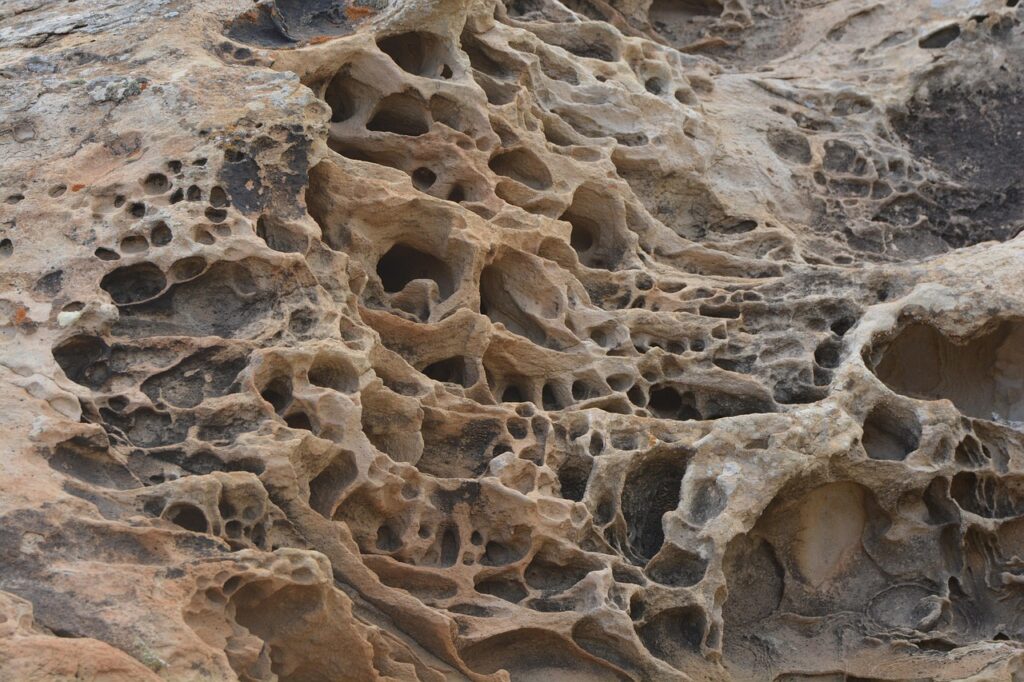
When you pick up a stone, you are holding a time capsule. Most people see a dull, inert object, but a petrologist sees a chaotic saga of fire, pressure, and time. This branch of geology is not just about hammering samples on a mountainside; it is a forensic science that reads the scars of our planet’s violent past. By dissecting the composition, texture, and architecture of rocks, scientists are reconstructing the very engine that drives our continents.
Rocks do not simply exist; they are born. The story always begins in one of three ways. Igneous rocks are the result of molten magma or lava surrendering to cooler temperatures, locking in the chaos of a volcanic eruption or the slow simmer of a deep crustal chamber. Sedimentary rocks are the patient archivists of the Earth, built grain by grain from the debris of older mountains and the remains of long-dead organisms. Then there are metamorphic rocks, which are the ultimate survivors. These are rocks that have been dragged into the depths, squeezed by tectonic forces, and baked until their very atoms rearrange into new, tougher forms.
Within igneous petrology, the drama plays out in two very different theaters. Intrusive rocks like granite live a life of quiet luxury, cooling so slowly miles beneath the surface that they grow massive, visible crystals. Their extrusive counterparts, like basalt, are the firebrands, spewed onto the surface and chilled so rapidly that their crystals remain invisible to the naked eye. By studying these two extremes, scientists can trace the thermal heartbeat of the Earth and understand the mantle plumes that push and pull at our planet’s skin.
Sedimentary petrology, meanwhile, is the closest thing geology has to a time machine. These rocks are the scrapbooks of ancient Earth, preserving ripple marks from long-vanished shorelines and the chemical fingerprints of oceans that existed before life crawled onto land. Every layer of sandstone or shale is a page that records a shift in climate, a mass extinction, or the rise of a new ecosystem. Reading them allows us to see the planet’s past moods with startling clarity.
Metamorphic petrology is the study of transformation under duress. When rocks are buried deep in a collision zone or dragged down a subduction slab, the heat and pressure force them to evolve. A plain limestone becomes a gleaming marble; a muddy shale turns into a fissile slate. These changes are not just aesthetic. They are the direct evidence of mountain-building events and the slow, grinding movement of tectonic plates that have rearranged the globe over eons.
To pull these stories from the stone, petrologists do not rely on guesswork. They wield an arsenal of high-tech tools, from optical microscopes that reveal subtle mineral zoning to scanning electron microscopes that zoom into the nanoscale. X-ray diffraction identifies the precise crystal lattices, while geochemical analysis measures the exact ratios of trace elements, acting like a fingerprint that links a rock to its origin deep within the mantle or near an ancient seabed.
This is not purely academic curiosity. The practical stakes are immense. Understanding rock porosity and fracture networks is the key to extracting groundwater, oil, and critical minerals. Knowing the mechanical strength of bedrock helps engineers design tunnels and dams that do not collapse. And by mapping the fault lines and unstable slopes, petrologists provide the data needed to warn communities before earthquakes strike or hillsides give way.
Petrology, in the end, is an act of deep listening. It is the discipline that turns the silent, solid ground beneath our feet into a loud, complex narrative of planetary evolution. Every rock is a memoir, and the scientists who study them are the biographers of the Earth, ensuring that the lessons of deep time are not lost on the generations that will inherit this world.