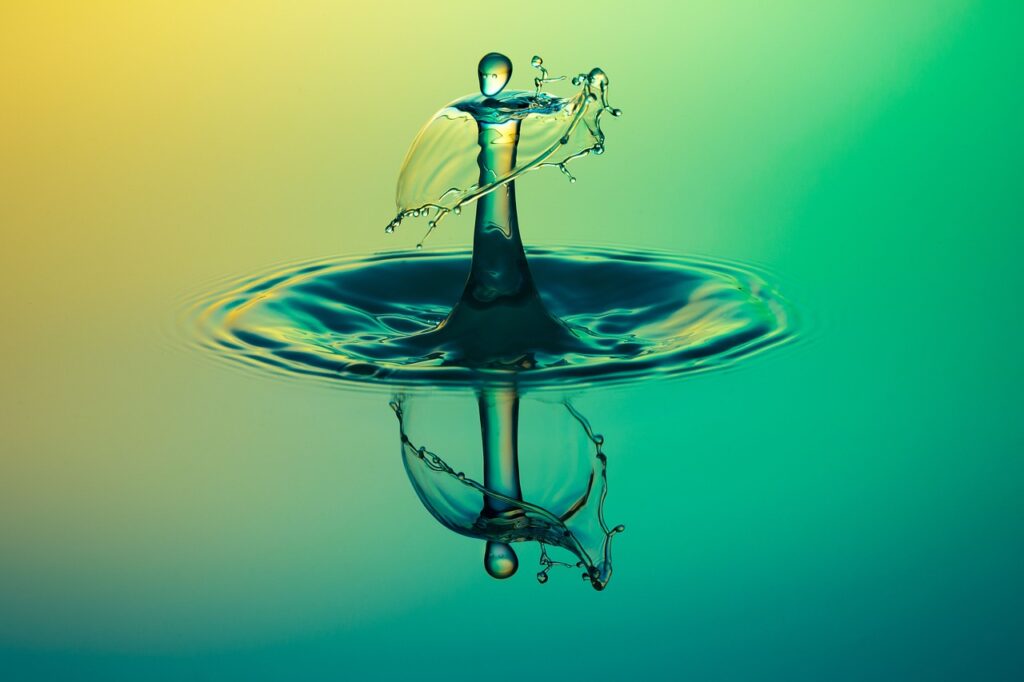
There is a universe hiding in plain sight, right at the boundary where one thing ends and another begins. This is the domain of surface chemistry, a discipline that might sound academic but actually governs everything from the fizz in your soda to the performance of your car’s catalytic converter. It is the study of what happens when materials meet, and the results are nothing short of extraordinary.
At its heart, this science is about the edge of things. When a solid meets a gas, or a liquid meets a solid, the rules change. The atoms at that boundary are not like their counterparts deep within the material. They are restless, unbalanced, and eager to interact. This disruption creates a unique playground where molecules behave in ways that defy their usual character. It is here, at this invisible frontier, that the real action takes place.
One of the most important moves in this dance is adsorption, a process where molecules cling to a surface like travelers seeking shelter. This is not a random event; it is driven by an attraction between the surface and the arriving molecules, forming a thin, often invisible layer. The reverse, desorption, happens when those molecules decide to leave. This push and pull might seem trivial, but it is the backbone of catalysis, the process that speeds up chemical reactions. Without it, many industrial processes would grind to a halt, and life-saving medicines would take far too long to create.
Equally fascinating is the concept of surface energy. Imagine the surface as a taut, stretched fabric, always trying to snap back. This tension comes from the imbalance of forces at the boundary, where molecules have fewer neighbors to hold onto. It is why water forms droplets on a leaf and why mercury beads up into perfect spheres. This “elastic skin” effect is not just a party trick; it has profound implications for how materials are designed and used.
The reach of surface chemistry extends far beyond the laboratory. In materials science, it is the key to crafting alloys and coatings that resist corrosion or conduct electricity with precision. In biology, it explains how cells stick to surfaces, how proteins fold, and even how our bodies recognize foreign invaders. And in environmental science, it is the lens through which we understand how pollutants bind to soil or water, and how we might clean them up.
Perhaps the most striking example of its power is in catalysis. Here, a surface acts as a matchmaker, bringing reactant molecules together and lowering the energy barrier for a reaction. This is not just clever chemistry; it is the reason we can refine crude oil into fuel, produce fertilizers to feed billions, and manufacture plastics that shape modern life. The efficiency of these catalysts hinges entirely on the subtle chemistry happening at their surfaces.
So, the next time you see a raindrop slide off a windshield or a bubble form in a glass, remember that you are witnessing surface chemistry in action. It is a field that quietly underpins our technological world, and as researchers dig deeper, they are uncovering new ways to design materials, clean our environment, and push the boundaries of what is possible. The interface between things is not a line; it is a landscape, and we are just beginning to map it.