There is a particular kind of magic in tracing the curve of a Cyrillic letter or the cadence of a sentence spoken in a Moscow courtyard. Russian studies are not merely an academic pursuit; they are an invitation to step into a world that has long balanced on the edge of two continents, two histories, and two ways of seeing the world. With over 150 million native speakers, the language itself is a living archive, a gateway to understanding a country that defies easy summary.
The Cyrillic alphabet, with its 33 distinct characters, is more than a practical tool for writing. It is a quiet monument to a past that stretches back to Byzantium and the Eastern Orthodox Church. Each letter carries a weight of centuries, and the language’s melodic rise and fall, paired with its notoriously intricate grammar, has long been a puzzle that delights and frustrates linguists. To master it is to hold a key, not just to words, but to a way of thinking.
But the real intrigue begins when we bring numbers into the conversation. Imagine applying a mathematician’s lens to the sprawling pages of War and Peace. Researchers have done exactly that, counting verb forms and mapping their frequencies to reveal Tolstoy’s subtle reliance on the imperfective aspect, a grammatical choice that gives his prose a sense of endless, flowing motion. It is a discovery that would be invisible to the casual reader, yet it changes how we understand the author’s craft.
The analysis does not stop at grammar. By using Markov chains and network theory, scholars have mapped the tangled webs of relationships between characters in Russian novels, turning a literary saga into a visual constellation of connections. These statistical tools offer a fresh vantage point on familiar masterpieces, showing us patterns in human interaction that even the authors might not have consciously intended. It is a marriage of cold data and warm storytelling, and it works.
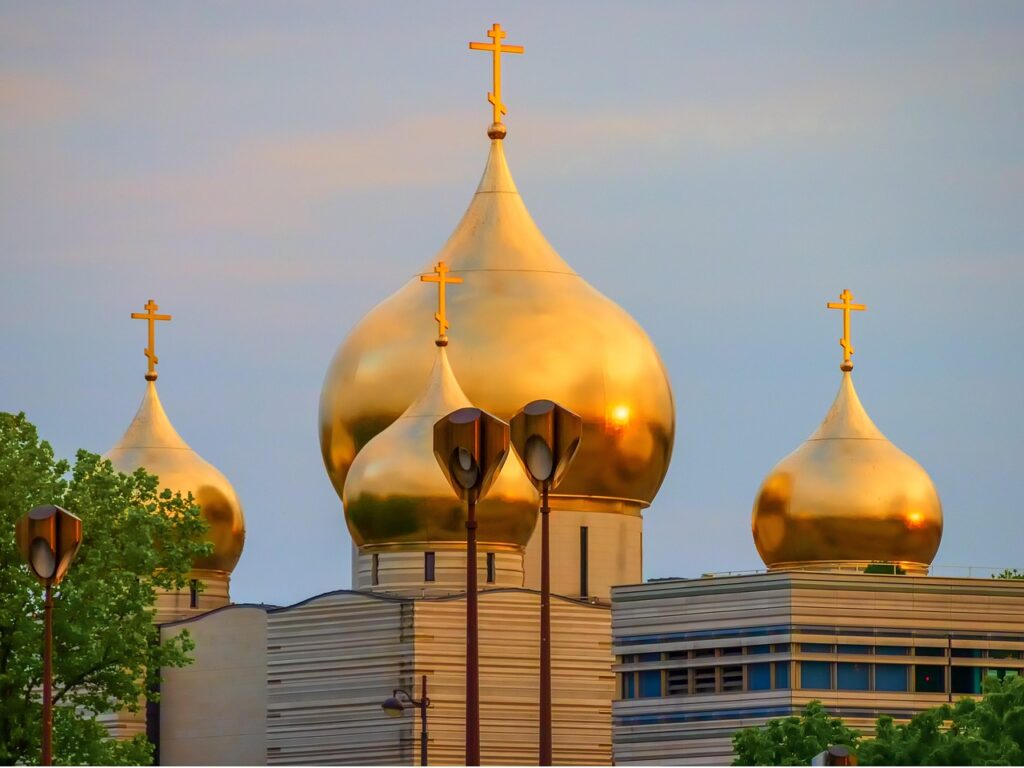
Russia’s position on the map has always been its destiny. Straddling Europe and Asia, the nation has absorbed and refashioned influences from both worlds, creating a culture that feels both familiar and alien. This synthesis is etched into the very skyline: the whimsical onion domes of St. Basil’s Cathedral stand in stark contrast to the imposing, utilitarian blocks of Soviet-era buildings. Each structure tells a story of a people caught between aspiration and pragmatism, between the pull of the West and the weight of the East.
This same tension pulses through the works of Russian artists, composers, and writers. They have spent generations wrestling with the question of what it means to be Russian, torn between a desire for European refinement and a deep-rooted connection to a more elemental, Asian-influenced sensibility. The result is a body of work that is endlessly rich, often contradictory, and always deeply human.
Even the symbols of Russia carry this layered complexity. The double-headed eagle, staring both east and west, has undergone countless transformations since its arrival in the 15th century, each iteration reflecting a shift in political power and national identity. The hammer and sickle, too, speaks to a different era, a different dream. A semiotic reading of these emblems reveals a dense network of associations, a visual shorthand for ideologies that have shaped millions of lives.
To study Russia is to accept that you will never fully arrive at a final answer. The field offers no tidy conclusions, only deeper questions. But that is precisely its reward. Through the careful application of mathematical models and the patient reading of texts, we are slowly uncovering the hidden patterns that lie beneath the surface. And in doing so, we come closer to grasping the enduring mystique of a nation that has always been more than the sum of its parts.