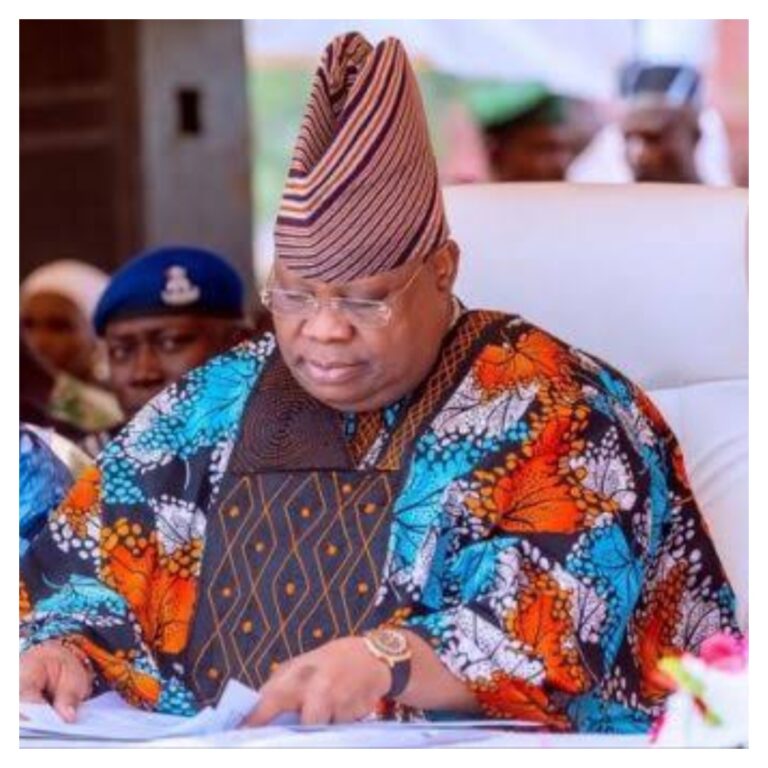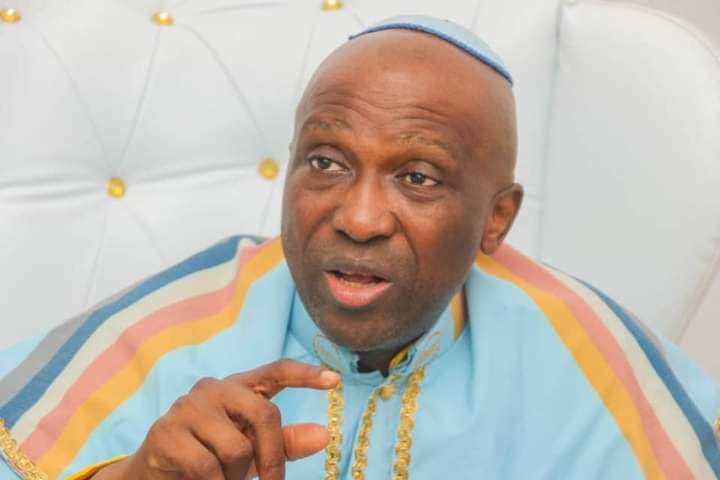
Primate Elijah Ayodele, leader of the INRI Evangelical Spiritual Church, has warned Osun State Governor Ademola Adeleke that President Bola Tinubu is actively working to remove him from office ahead of the upcoming governorship election.
In a statement released by his media aide, Osho Oluwatosin, Ayodele asserted that the All Progressives Congress (APC) intends to deploy extraordinary measures to secure victory. The cleric’s remarks contradict recent political speculation suggesting Tinubu lacks interest in the contest, speculation fueled by the president’s directive to the Economic and Financial Crimes Commission (EFCC) to unfreeze Osun State government accounts.
Ayodele insisted the president is closely monitoring the election and remains determined to unseat Adeleke. He urged the governor to disregard claims of presidential neutrality and to mobilize all available resources to retain his position. According to Ayodele, a defeat would create significant legal and political hurdles for Adeleke, making judicial recourse difficult.
“The APC will use money, influence, power, forces, and the presidency,” Ayodele stated. “It won’t be easy at all; it will be very serious.”
The warning adds a layer of spiritual and political tension to an already competitive electoral environment. While the presidency has not publicly commented on Ayodele’s claims, the unfreezing of state accounts had been interpreted by some observers as a goodwill gesture or a signal of federal non-interference. Ayodele’s intervention reframes that action, suggesting it may be a tactical move within a broader strategy.
Osun State has a history of closely contested gubernatorial races, often decided by slim margins and subsequent litigation. The involvement of federal institutions and the deployment of state resources have frequently shaped outcomes. Ayodele’s track record of political pronouncements, some of which have aligned with subsequent events, lends weight to his warnings among supporters, though critics view such predictions as strategic positioning.
For Adeleke, the advisory underscores the high stakes of the election. His administration’s ability to withstand pressure from federal agencies and the ruling party’s machinery will likely define the credibility of the electoral process. Civil society groups and election observers have called for transparency and adherence to electoral guidelines to prevent manipulation.
As the election approaches, the focus shifts to the Independent National Electoral Commission (INEC) and security agencies to ensure a level playing field. The outcome will not only determine Osun’s leadership for the next four years but also signal the balance of power between state and federal authorities in Nigeria’s evolving democracy.