

More than 40 per cent of the world’s population lives within 100km (about 60 miles) of the coast, yet our knowledge of Earth’s oceans is tiny. In some ways, it’s easier to stick humans into space than to send them to the crushing pressures of the planet’s watery depths.
While our understanding of the oceans is improving all the time, we still have plenty to learn… and there are some mysteries that have scientists completely stumped.
1. Why are orcas killing great white sharks?
Something weird has been happening off the coast of South Africa. Since 2017, great white sharks have been washing ashore with their livers ripped out. But who murdered these majestic apex predators?
Reports over the years suggested the grisly findings coincided with increased sightings of a pair of male orcas (otherwise known as killer whales). The pair are known as ‘Port’ and ‘Starboard’ because of their distinctive collapsed dorsal fins (Port’s is collapsed to the left, Starboard’s to the right).
And then, in May 2022, both a drone and a helicopter pilot operating over Mossel Bay witnessed Starboard hunting great whites alongside four other orcas. One of their kills was even captured on camera.
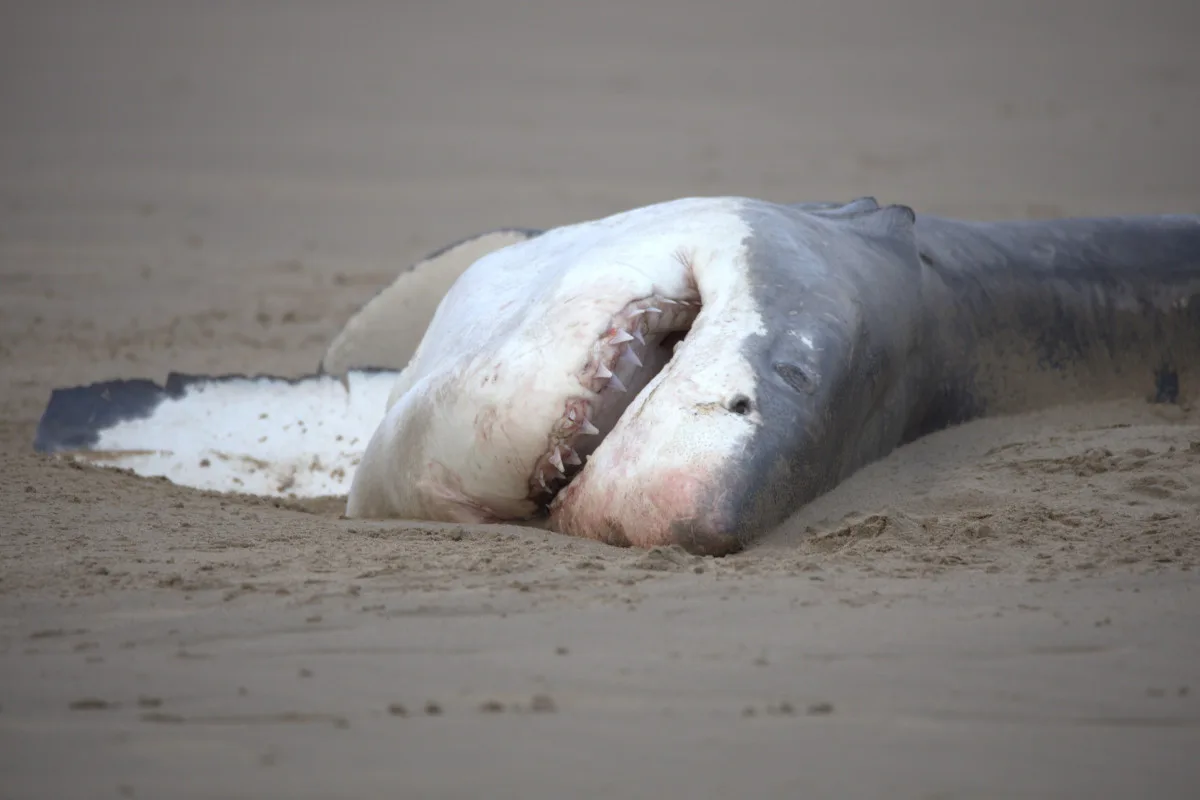
In June 2023, Starboard was then seen operating alone, taking just two minutes to kill a juvenile great white. It is unknown whether or not Port is capable of similar solo feats. Either way, it appears that the duo appear to enjoy snacking on a bit of fishy foie gras.
During a hunt, the orcas flip the unfortunate shark onto its back to induce a trance-like immobile state, before ripping it open and devouring its oil-rich liver.
This behaviour raises questions about how these predation events might impact the area’s intricate ecosystems, as there is evidence that the great whites flee in response to the attacks.
But why did orcas start hunting great whites in the first place? We already know that orcas can be pretty specialist hunters, and in different parts of the world there are populations that prefer to eat fish, seals or sharks.
“In previous years we had orcas coming to South Africa to hunt dolphins. But in 2015 they were documented hunting sevengill sharks for the first time, before being recorded predating on great whites in 2017,” says Leigh de Necker, marine biologist and senior research assistant for Wildtrust’s Shark & Ray Protection Project.
“We don’t know why these shark-hunting specialists are here, and the science can’t keep up with how quickly things are changing. There are theories, but no science to back it up as yet.
“Some people are saying it’s because fisheries are impacting the orcas’ prey source, which is causing them to move. But maybe the orcas have found a hotspot and decided not to leave as there’s an abundance of resources to exploit.”
2. Where did Earth’s water come from?
The planet we call home is about 70 per cent ocean, with a surface area of some 360 million kilometres (about 220 million miles) and an average depth of 3,682m (12,080ft), making it the largest habitable area of Earth.
Whichever way you look at it, that’s a lot of water! But the bizarre thing is that while we know that Earth formed around 4.5 billion years ago, we still aren’t completely sure where all that water came from.
Scientists do, however, have some thoughts about how our planet got so soggy.
“Broadly, you can split the theories into two different types,” says Dr Helena Bates, a postdoctoral researcher in meteorite science at the Natural History Museum, London.
“The first thing is that Earth formed in a region of space where there was material like rocks and things like that, but also water in some form.
“The second theory is that Earth formed in a region of space where it was too hot to have any kind of water. And the water that we have on Earth now was delivered post-formation by other bodies in the Solar System.”
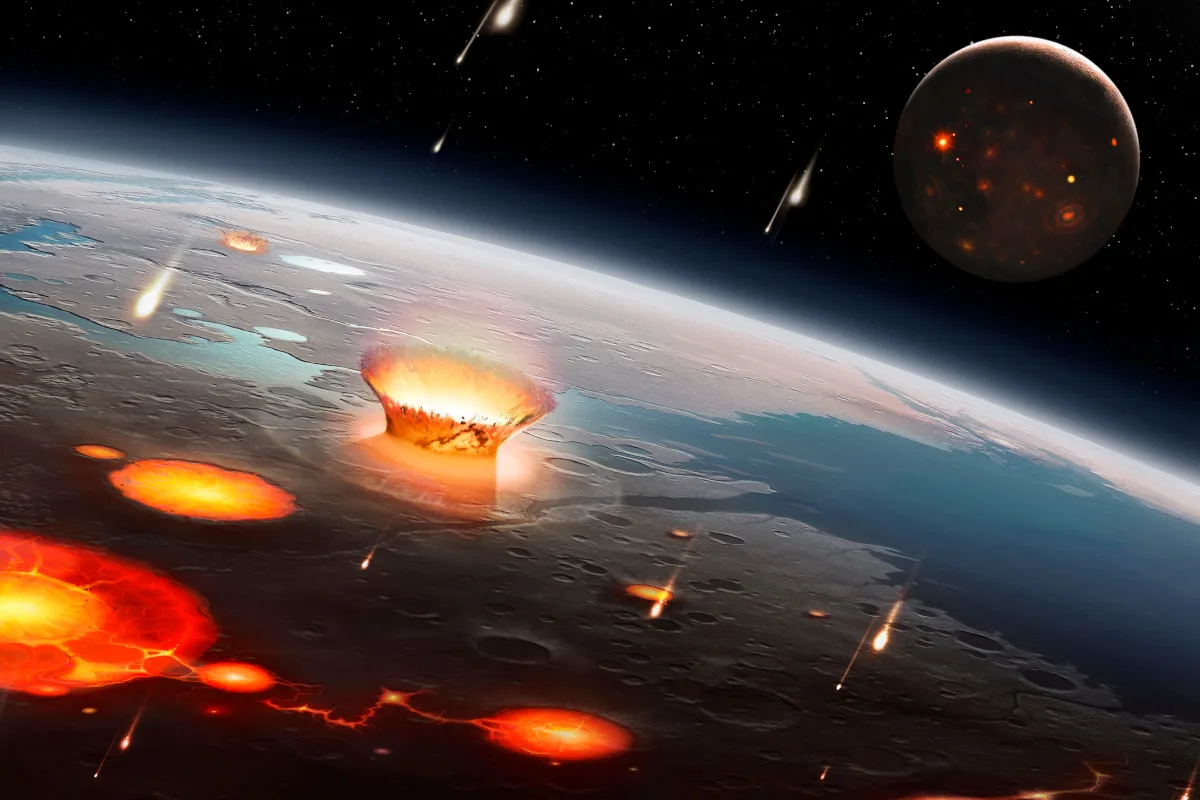
While it might seem unbelievable that all of Earth’s water could have splashed down from meteorites and other space rocks, the theory does make sense.
This is because one type of meteorite, the ‘carbonaceous chondrites’, can be made up of 10 per cent water, and early in the life of Solar System there was far more bombarding going on than there is today.
By studying meteorites that land on our planet’s surface, we can gain a better picture of where Earth’s water came from.
“Learning more about comets and asteroids that fall to Earth as meteorites and micrometeorites can tell us a lot about the distribution of water around the Solar System,” says Prof Sara Russell, a professor of planetary sciences at the Natural History Museum.
“The main technique used is to look at the ratio of hydrogen and its heavy isotope, deuterium. In particular, comets tend to have quite high deuterium to hydrogen ratios and so give a distinctive fingerprint.”
According to Bates, most scientists agree that Earth probably got wet due to a combination of things. “I don’t know if we’ll ever work it out,” she says. “But that’s the joy of it!”
3. Who – or what – made the Yonaguni Monument?
Off the coast of Yonaguni, the southernmost of Japan’s Ryukyu Islands, lies a weird rock formation. It was discovered by scuba diver Kihachiro Aratake in 1986, while he was trying to seek out some spots to watch hammerhead sharks.
The unusual monument features perpendicular stacked…