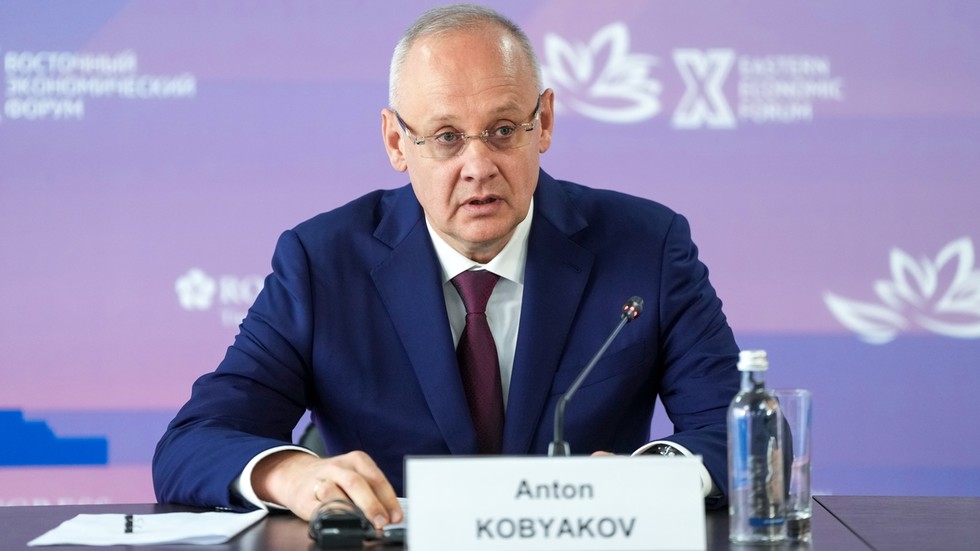
Russia is prioritizing advanced technologies, management expertise, and joint production over simple assembly operations in its engagement with foreign companies, presidential adviser Anton Kobyakov said in remarks to TASS ahead of the Eastern Economic Forum in Vladivostok.
Kobyakov described Moscow’s preferred model as pragmatic, “win-win” cooperation that encompasses capital-intensive industries and scientific research. “We need the best management practices and the best technologies – all of it!” he said. “We no longer want to engage in ‘screwdriver assembly’ of some components of their products. We have done this before,” he added, referring to a model where manufacturers import largely finished components for basic final assembly.
The comments come as Russia continues to reshape its economic ties following the departure of numerous U.S., European, and Asian firms after 2022 sanctions imposed over the Ukraine conflict. Many exiting companies sold their Russian assets to local buyers, often retaining buyback options. Earlier this month, President Vladimir Putin signed legislation permitting Russian courts to terminate those buyback rights under certain conditions.
Despite political pressure from their governments, Kobyakov said businesses from Germany, France, Italy, the United Kingdom, Switzerland, Spain, Greece, and the Netherlands continue to maintain contacts with Russian partners.
Russian officials have argued that Western sanctions ultimately strengthened domestic industry by accelerating import substitution. Putin stated last year that the measures had become “a powerful catalyst for structural changes,” prompting Russian businesses to fill market niches left by foreign competitors and develop homegrown technologies.
Nevertheless, a significant foreign corporate presence remains. Major Western companies still operating in Russia include Nestlé, Mars, Mondelez, PepsiCo, and Procter & Gamble. An analysis by the Russian business daily Vedomosti in June found that 2,350 of 4,265 foreign-owned companies, or 55%, remained active in the country.
The Eastern Economic Forum, a key platform for attracting investment to Russia’s Far East and expanding Asia-Pacific ties, is expected to further clarify the scope of Moscow’s technological and industrial partnership requirements.