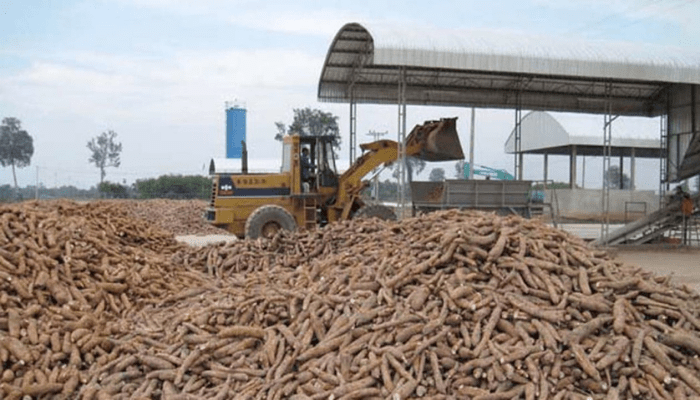
Small and medium-sized cassava processors in Nigeria are struggling to raise the capital needed to build or scale operations despite the sector’s compelling investment profile, according to findings from the Nigeria Cassava Investment Accelerator (NCIA). In engagements with commercial banks, development finance institutions, and impact investors, the NCIA identified weak investment readiness as the primary barrier, noting that processors frequently fail to provide evidence that their businesses can support the financing they seek.
The readiness gap manifests across four critical areas: market feasibility, commercial viability, operational capacity, and financial Health. These deficiencies are often compounded by incomplete business plans and unaudited accounts. Addressing these gaps, the accelerator asserts, is entirely within the processors’ control and represents the most direct path to unlocking capital.
On market feasibility, the NCIA stresses the need for verifiable evidence regarding market size, growth trajectories, substitutes, and product competitiveness at the derivative level. High-quality cassava flour, starch, ethanol, and other by-products each possess distinct buyers, pricing dynamics, and commercial economics. Competitiveness against substitutes must be demonstrated on both price and quality. Engagements with off-takers indicate that price alone rarely secures a buyer switch; consistent quality, validated through trials and adherence to buyer specifications, is the decisive factor.
Commercial feasibility presents two persistent constraints: unsecured demand and unreliable feedstock. Funders require commercial commitments covering a substantial share of projected output. Learnings from equity investors and lenders suggest commitments above 60 percent of planned production — with defined volumes, specifications, and terms — provide confidence that revenue projections rest on identifiable customers. Conversely, a single buyer accounting for more than 30 to 40 percent of sales exposes the business to material risk if that relationship falters. On the supply side, cassava’s high perishability — 48 to 72 hours post-harvest, according to the FAO — makes feedstock reliability paramount. Commercial lenders typically expect a processor to produce roughly 40 percent of its own feedstock, with the balance secured through structured outgrower schemes or aggregators rather than the spot market.
Operational feasibility demands a credible execution model. Funders discount processors that cannot demonstrate capability, looking for critical technical functions staffed by experienced production, quality, maintenance, and feedstock personnel with proven cassava expertise. Product scope also informs risk perception; greenfield projects are better served launching with one or two core derivatives before expanding into more technically complex lines. Consistent quality must be underpinned by proper standardization, with permits secured or well advanced and standards such as SON, NAFDAC, HACCP, and ISO 22000 embedded through documented quality systems and standard operating procedures.
Financial credibility remains the most visible readiness gap. Many processors approach funders without audited financial statements or the underlying records necessary to assess performance. Demonstrating readiness begins with credible financial documents and models before focusing on attractive returns. Development finance institutions also emphasize meaningful sponsor equity as a signal of commitment and a cushion against early setbacks. For greenfield projects lacking historical performance, projections must be evidenced through feasibility studies, supplier quotations, pilot results, and comparable operating benchmarks.
The evidence across these four pillars converges in a single instrument: a credible, evidence-backed business plan. Such a plan demonstrates that the market can absorb output, that demand and feedstock are secured, that operations can deliver, and that the economics hold. Processors who achieve this level of readiness are significantly better positioned to meet investor expectations and secure the growth capital the sector requires.