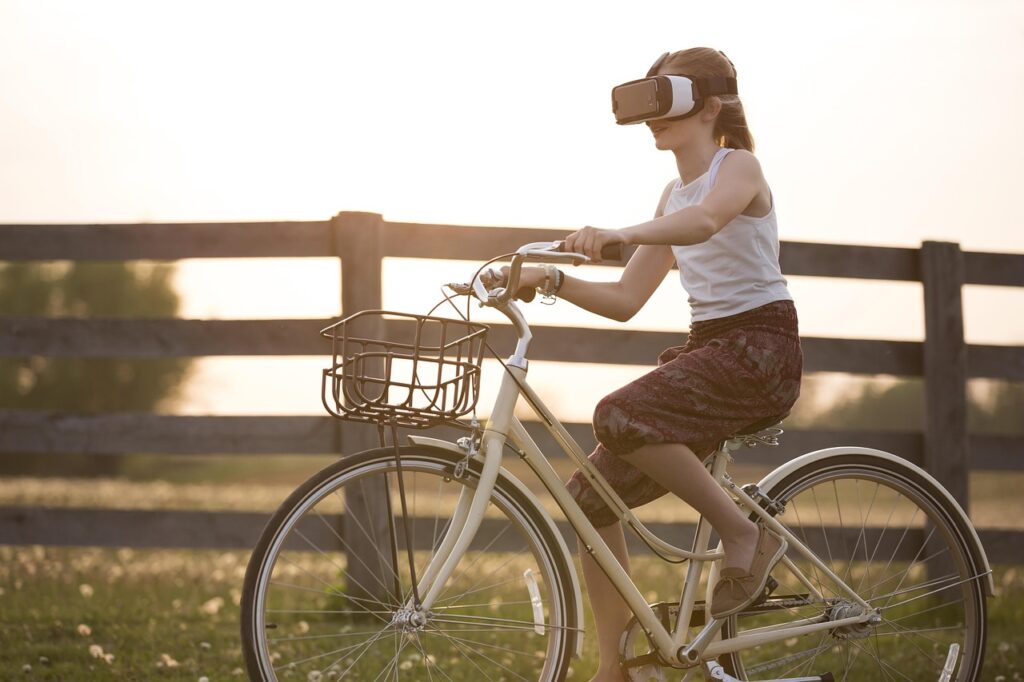
The first time you slip on a virtual reality headset, the world doesn’t just change—it dissolves. The walls of your living room vanish, replaced by a digital universe that feels so tangible your brain forgets it’s a lie. This isn’t a gimmick. It’s a carefully engineered illusion that has been quietly evolving since the 1960s, and today it’s breaking out of the gaming den to reshape how we heal, learn, and connect.
At its core, VR is a masterclass in deception. The hardware—a head-mounted display, motion sensors, and handheld controllers—works in concert to hijack your senses. The display fires two slightly different images at your eyes, a trick called stereoscopy that conjures depth out of thin air. Add in spatial audio that shifts as you turn your head and motion parallax that tracks your every step, and the result is a profound psychological state known as “presence.” It’s the moment your brain stops questioning the simulation and simply accepts it as reality.
But presence isn’t magic; it’s math. Developers often rely on a formula that weighs sensory stimulation, interaction, and realism against the twin enemies of distraction and latency. Crank up the first three factors, minimize the last two, and you get an experience so convincing that your heart rate spikes when a virtual cliff appears at your feet. That precision is what separates a cheap tech demo from a transformative tool.
Nowhere is that transformation more evident than in therapy. Psychologists have discovered that VR offers a controlled battlefield for the mind. A patient with a paralyzing fear of heights can stand on a virtual skyscraper, knowing they’re safe while their brain learns to cope. Veterans grappling with PTSD can revisit triggering scenarios under a therapist’s guidance, slowly defusing the trauma. It’s exposure therapy on steroids, and the results have been nothing short of remarkable.
Education is another frontier. Instead of reading about the pyramids, students can walk through them. Instead of memorizing the anatomy of the heart, they can hold a beating virtual organ in their hands. The immersion doesn’t just make learning fun—it makes it stick, improving retention in ways that textbooks never could.
Yet the road to this digital promised land is uneven. The tech industry’s heavyweights, particularly in the United States and China, are pouring billions into VR, thanks to deep pockets and a steady pipeline of engineering talent. But in regions with sparse infrastructure or limited investment—think remote island chains or areas with poor soil for tech growth—adoption lags far behind. The irony is that the very communities that could benefit most from virtual classrooms and remote healthcare are often the ones left out of the revolution.
We are standing at the edge of a new era, one where the line between the physical and the simulated grows thinner by the day. The science is complex, the technology is demanding, but the potential is staggering. As we refine the algorithms and shrink the hardware, we’re not just building better games or sharper visuals. We’re building a bridge to a future where the only limit to experience is our imagination. And if that sounds like science fiction, just remember: the future has a way of arriving before we’re ready for it.