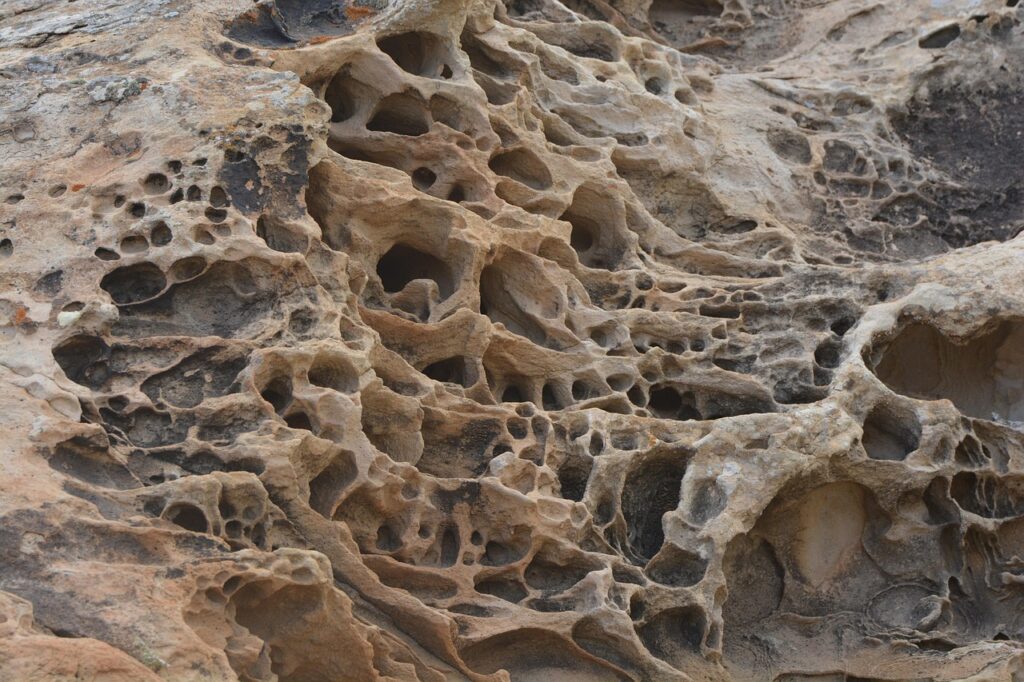
Most people walk past rocks without a second glance. To a petrologist, though, that gray boulder is a time capsule, a chemical diary of the planet’s most violent and ancient moments. Petrology, a core branch of geology, goes far beyond simply naming stones. It is the forensic investigation of how rocks are born, how they transform, and what they reveal about the Earth’s restless interior.
At its heart, petrology is the study of rock composition, texture, and structure. But the real goal is deeper: understanding origin and evolution. Petrologists are part detective, part historian. They use tools like high-powered microscopes, geochemical fingerprinting, and geophysical imaging to reconstruct the immense pressures and temperatures that forged the ground beneath our cities.
The rock world splits into three great families. Igneous rocks are born from fire, solidifying from molten magma or lava. Sedimentary rocks are built from the slow accumulation of debris, layer upon layer, often trapping fossils and clues to ancient climates. Metamorphic rocks are the shapeshifters, created when existing rocks are crushed and heated deep underground, their minerals rearranging into new forms.
Within igneous petrology, the focus is on rocks like granite, which cools slowly deep beneath the surface, and basalt, which erupts and hardens quickly on top. These rocks are not just pretty countertops; they are windows into the Earth’s thermal engine, revealing how heat moves from the core to the crust and how continents drift.
Sedimentary petrology reads the planet’s memory. Each sandstone layer or limestone deposit is a page in a history book. By analyzing grain sizes, mineral content, and organic traces, scientists can reconstruct ancient river systems, vanished oceans, and the rise and fall of prehistoric ecosystems. It is a discipline that connects geology directly to biology and climate science.
Metamorphic petrology, meanwhile, focuses on transformation. When tectonic plates collide, rocks are shoved into crushing environments where they bend, recrystallize, and change identity. Marble and slate are the famous results. These rocks are tectonic witnesses, telling us about mountain-building events and the slow, powerful movements of Earth’s plates over millions of years.
The technical toolkit of a modern petrologist is impressive. Optical microscopy reveals mineral textures, while scanning electron microscopy zooms into crystal structures. X-ray diffraction identifies mineral phases, and geochemical analysis measures trace elements that act as fingerprints of formation conditions. Together, these methods turn a simple rock sample into a detailed biography.
Beyond pure science, petrology has real-world muscle. It guides the search for critical minerals, from copper to lithium, that power our technology. It helps engineers assess ground stability before building dams or tunnels. And it plays a vital role in hazard assessment, helping predict landslides, volcanic eruptions, and earthquake-prone zones by understanding the strength and behavior of underground materials.
In the end, petrology is more than a dusty academic pursuit. It is a discipline that connects the deep past to our daily lives. Every mountain range, every ocean floor, every grain of sand on a beach is part of a continuous, dynamic story. Petrologists are the readers of that story, reminding us that the solid ground we take for granted is anything but static. It is alive, moving, and endlessly telling us about the world we live on.