To study Russia is to step into a hall of mirrors where Byzantine echoes, Soviet shadows, and Eurasian winds all refract into a single, complex image. At the heart of this puzzle lies a language spoken by over 150 million people, a linguistic gateway that promises more than just grammar drills. Russian, with its distinctive Cyrillic alphabet of 33 letters, is a living artifact of history, a script forged in the fires of Byzantium and the Eastern Orthodox Church. Its melodic cadence and notoriously intricate syntax have long lured linguists, who see in its structure a cipher for understanding the Russian mind.
But the most intriguing revelations are emerging from an unexpected place: the intersection of literature and mathematics. Researchers are now applying statistical models to the towering works of Tolstoy and Dostoevsky, and the results are rewriting our understanding of their genius. A deep dive into the verb conjugations of War and Peace, for instance, reveals Tolstoy’s deliberate reliance on the imperfective aspect—a grammatical choice that paints a world in perpetual motion, never quite finished, always flowing. It’s a technique that mirrors the novel’s sweeping, chaotic rhythm of life.
Beyond grammar, scholars are using Markov chains and network theory to map the hidden social webs within Russian novels. By visualizing character interactions as complex systems, they are uncovering patterns that traditional literary analysis might miss. These mathematical lenses offer a fresh perspective on how Russian prose builds its worlds, showing that the country’s literary heritage is not just a product of inspiration but also of intricate, almost algorithmic design.
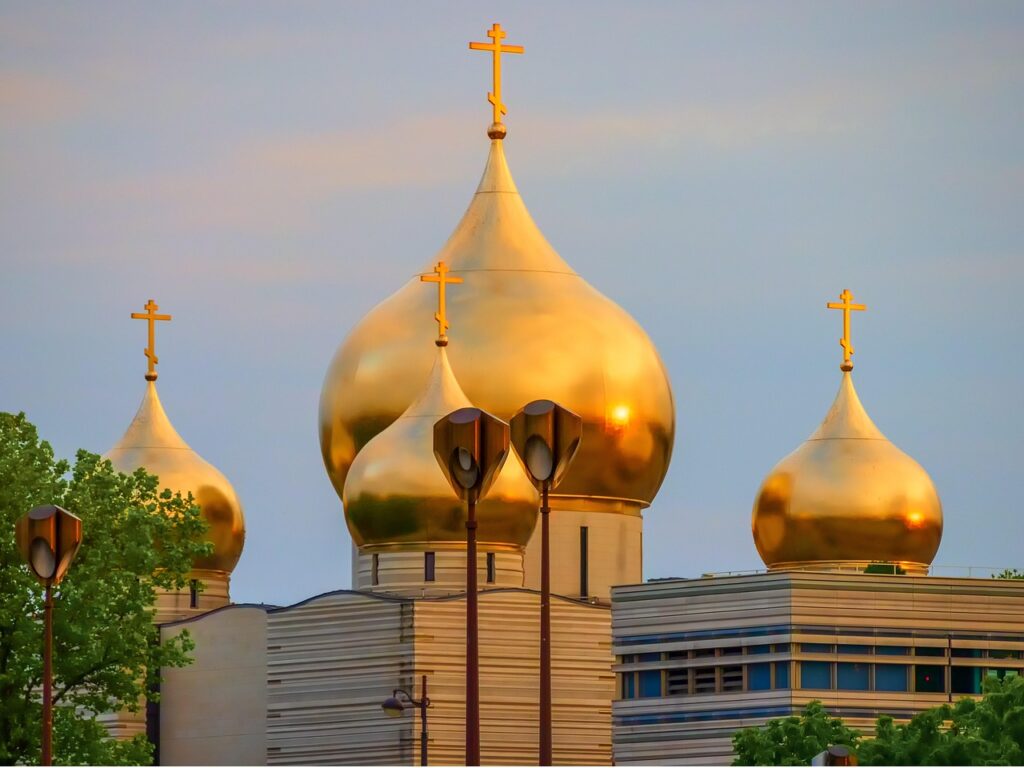
Russia’s identity, of course, is not confined to its books. Positioned at the crossroads of Europe and Asia, the nation has long been a cultural synthesis, a place where the ornate onion domes of St. Basil’s Cathedral stand in stark contrast to the austere concrete blocks of the Soviet era. This architectural dialogue is a reflection of a deeper psychological split: a people perpetually torn between Western aspirations and Eastern sensibilities. It’s a tension that pulses through the works of Russian artists and writers, who have forever wrestled with the push and pull of tradition versus modernity.
Even the nation’s symbols tell a story of layered meaning. The double-headed eagle, a relic of the 15th century, has morphed through the centuries, each transformation signaling a shift in political power and cultural self-perception. The hammer and sickle, too, carries a weight of ideology that transcends its simple design. A semiotic reading of these emblems reveals a complex web of associations—each one a button that, when pressed, unlocks a different chapter of Russian history.
Ultimately, Russian studies is not a dusty academic corner but a vibrant field of discovery. By fusing the rigor of mathematics with the nuance of cultural inquiry, we are peeling back layers of a nation that has always defied easy definition. And as these new methods illuminate the hidden patterns within its language and lore, we inch closer to grasping the elusive, enduring mystique of Russia itself.