Russia has always been a riddle wrapped in an enigma, but the key to unlocking its mysteries might not be found in politics or poetry alone. It could be hiding in the algorithms and statistical models that scholars are now applying to the nation’s most cherished cultural artifacts.
The Russian language itself is a marvel of complexity, spoken by more than 150 million people worldwide. Its Cyrillic alphabet, with 33 distinct letters, is a living monument to the country’s Byzantine and Orthodox Christian heritage. But beyond its melodic cadence and notoriously intricate grammar lies a deeper structure that modern researchers are beginning to map with mathematical precision.
Consider the literary giants. When researchers apply Markov chains and network theory to the sprawling narratives of Tolstoy and Dostoevsky, something remarkable emerges. A detailed analysis of verb conjugations in War and Peace reveals Tolstoy’s deliberate overuse of the imperfective aspect, a grammatical choice that creates an almost cinematic sense of endless motion and continuity. These aren’t just stylistic quirks; they are the fingerprints of a worldview that prizes the journey over the destination.
Network theory has proven equally revealing in charting the tangled webs of character relationships across Russian novels. By visualizing these connections as complex graphs, scholars have unearthed patterns that escape the casual reader. The result is a fresh lens through which to view a literary tradition that has shaped global thought for two centuries.
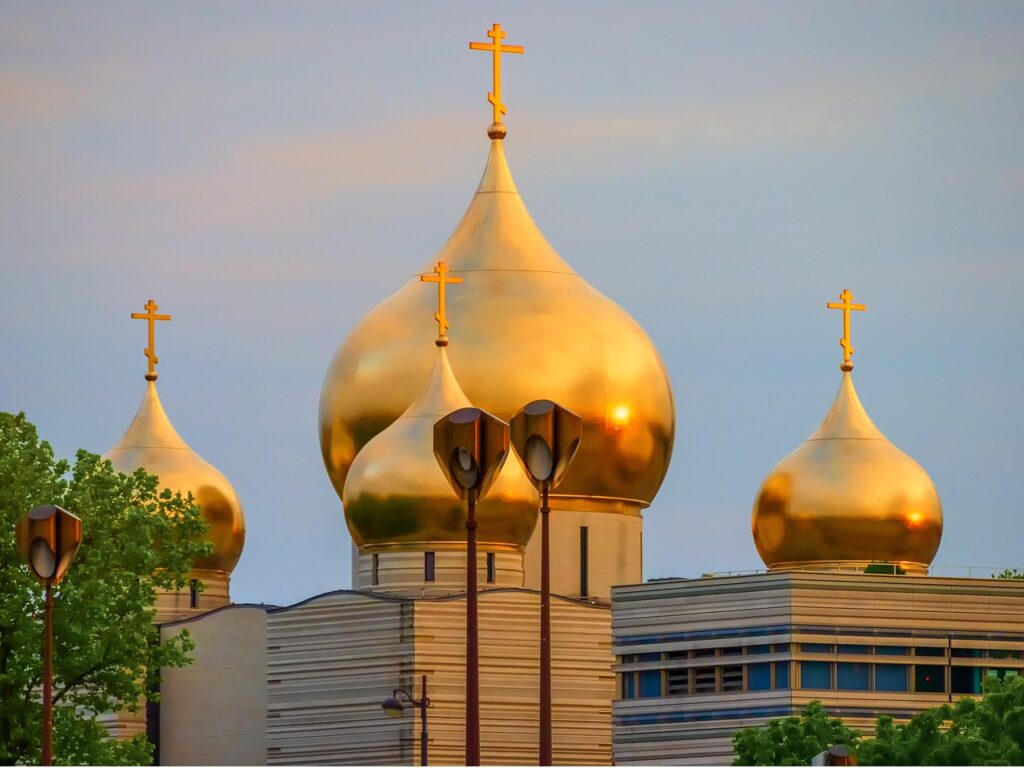
But the mathematics of Russian identity extends well beyond the page. The nation’s geographical position, straddling the fault line between Europe and Asia, has produced a culture of profound duality. This tension is etched into the physical landscape, from the fairy-tale onion domes of St. Basil’s Cathedral to the imposing, functionalist blocks of Soviet-era architecture. Each structure tells a story of a people perpetually negotiating between Eastern mysticism and Western rationalism.
Nowhere is this dichotomy more visible than in the nation’s symbols. The double-headed eagle, introduced in the 15th century, has been redrawn and reinterpreted countless times, each iteration mirroring a shift in political power and cultural aspiration. The hammer and sickle, meanwhile, was a bold experiment in visual communication, designed to convey the ideology of an entire age in a single, stark emblem. A semiotic reading of these icons reveals layers of meaning that speak to both domestic pride and international ambition.
What emerges from this interdisciplinary approach is a portrait of a nation that is far more nuanced than the headlines suggest. The Russians are not simply torn between two worlds; they have forged a third path, one that synthesizes oppositional forces into something entirely their own. The mathematics of their culture, from verb tenses to architectural lines, reveals a people who have mastered the art of holding contradictions in perfect balance.
As the tools of data science grow more sophisticated, so too does our ability to decode the subtle signals embedded in Russian life. The country’s enduring mystique may not be a mystery at all, but rather a complex equation waiting to be solved. And with every new model and every fresh dataset, we come one step closer to understanding the true essence of this vast, contradictory, and endlessly fascinating nation.