President Bola Tinubu has ordered Nigeria’s top military and intelligence leaders to produce a unified National Threat Assessment and a rolling five-year Strategic Defence Operations Plan within 90 days, aiming to close coordination gaps that have long hampered the country’s security response.
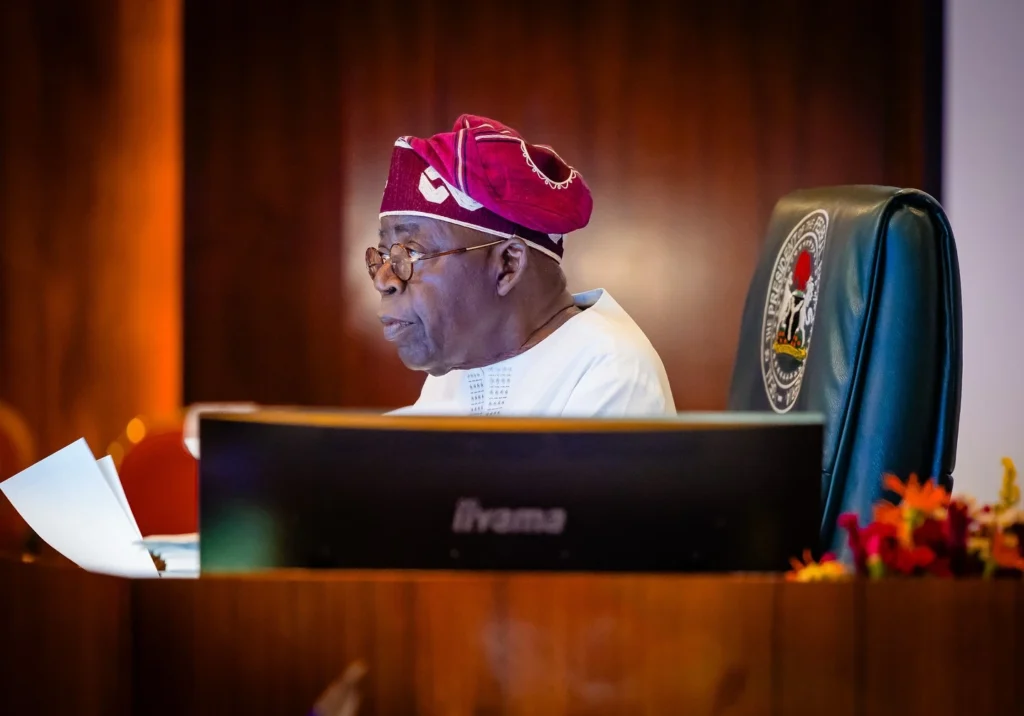
The directive was issued Wednesday during a Federal Executive Council meeting at the State House in Abuja. Tinubu constituted a nine-man committee under the coordination of his Special Adviser on Homeland Security, Major General Adeyinka Famadewa, who will also serve as its secretary.
The president said operational requirements are currently being considered separately across agencies, without a common threat assessment or medium-term plan. That fragmentation, he said, makes coordination more difficult and limits the efficient use of resources.
The National Threat Assessment will identify the principal threats facing Nigeria, determine their relative urgency, and establish operational objectives for addressing them. The Strategic Defence Operations Plan will translate that assessment into concrete priorities with clear resource and capability requirements.
“The operation demonstrated what can be achieved when our agencies work together with a clear objective and the necessary intelligence,” Tinubu said, citing the recent rescue of pupils and teachers abducted in Oriire Local Government Area of Oyo State as evidence of what coordinated security action can deliver.
He said the new framework would “provide a common understanding of the threats facing the nation, the operational objectives to be achieved and the capabilities required to address them.” The committee has been directed to commence work immediately and submit the completed documents for presidential consideration and approval within 90 days. Once approved, the plan will serve as the principal framework for coordinating military and defence operations over the medium term.
The committee comprises National Security Adviser Nuhu Ribadu, Minister of Defence General Christopher Musa, Minister of State for Defence Bello Muhammad Matawalle, Chief of Defence Staff General Olufemi Oluyede, Chief of Army Staff Lieutenant General Waidi Shaibu, Chief of Air Staff Air Marshal Sunday Kelvin Aneke, Chief of Naval Staff Vice Admiral Idi Abbas, Director-General of the Department of State Services Tosin Ajayi, and Director-General of the National Intelligence Agency Ambassador Muhammed Muhammed.
The committee may consult or co-opt representatives of other ministries, departments, and agencies where specialised expertise is required.
Once approved, the Strategic Defence Operations Plan will guide a corresponding multi-year defence spending and procurement plan, ensuring budgetary resources align with agreed national security priorities rather than individual agency requests. The President further directed the Secretary to the Government of the Federation and the Office of the National Security Adviser to take all necessary steps to give immediate effect to the directives.
The move comes as Nigeria continues to face significant security pressures across multiple fronts. Recent data from the Stockholm International Peace Research Institute placed Nigeria among the world’s fastest-growing military spenders in 2025, linking the rise to worsening security challenges including insurgency in the North-East, banditry in the North-West, and communal and separatist violence elsewhere.
In April, the federal government released a list of 48 individuals and entities allegedly linked to terrorism financing in Nigeria. The list was published by the Nigeria Sanctions Committee as part of efforts to disrupt terrorism-related activities and track suspected funding sources.