Every generation discovers new ways to defend democracy. Yesterday, it was the town square, then came newspapers, then radio, then television. Today, millions of ordinary citizens carry smartphones.
The August 15 Osun State gubernatorial election offered Nigeria more than another electoral outcome. It offered a glimpse into how democracy itself is changing. While political parties competed for votes, another contest quietly unfolded: the struggle between transparency and opacity, between collective vigilance and electoral manipulation. For decades, the protection of Elections rested primarily on institutions such as the electoral umpire, security agencies, party agents, and accredited observers.
Ordinary citizens cast their votes and returned home, hoping those institutions would faithfully protect the process. Digital technology has begun to change that relationship. Increasingly, voters remain, observe, document, verify, and share what they witness in real time. Democracy is becoming more participatory not only at the ballot box but also throughout the electoral process itself.
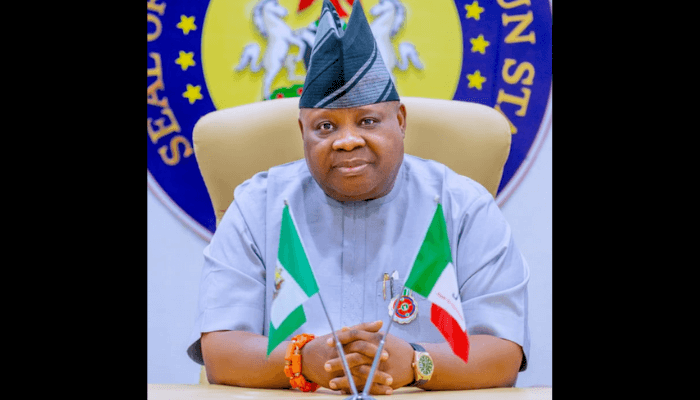
Congratulations to Governor Ademola Adeleke on his re-election. The people of Osun State have spoken. Now begins the far more important task of governing.
If Governor Adeleke uses this renewed mandate to pursue the kind of visible, people-centred transformation that has drawn national attention to Governor Alex Otti’s administration in Abia, he has an opportunity to become the leader remembered not simply for dancing moves and winning elections but for rebuilding Osun State. Electoral victories create mandates. Performance creates legacies. For too long, many Osun citizens have waited for governance that consistently improves infrastructure, education, Healthcare, economic opportunity, and public services. The campaign is over. The work now begins.
Yet beyond the victory itself lies a lesson the entire country should study carefully. This election demonstrated something many Nigerians have sensed for years. Democracy becomes harder to manipulate when citizens refuse to look away. Much has been said about the role musician Davido played throughout the campaign and election. Opinions will differ about celebrity participation in politics. They should. Democracy welcomes disagreement. But reducing his involvement to Davido’s celebrity status misses the larger story.
Read also: Adeleke’s victory in Osun signals political warning to Kwara APC – Araba
Davido represented something far more significant. He represents: Visibility, Influence and Attention. These have become among the scarcest resources today. In the digital age, visibility itself has become a democratic resource. Public attention raises the political cost of misconduct. When millions are watching simultaneously, secrecy becomes harder to maintain and accountability harder to avoid. Whether one agrees with his political preferences is beside the point. His enormous digital reach helped direct millions of eyes toward the electoral process. That matters because public attention is one of democracy’s most powerful safeguards.
History teaches that electoral manipulation thrives where few people are watching. Technology is changing that equation. One polling unit may once have existed in relative isolation. Today, it exists within a network of citizens capable of recording events in real time, uploading videos instantly, comparing results across locations, and alerting the nation whenever irregularities appear.
Rigging has always depended, in part, on darkness. Not merely physical darkness. Informational darkness. Election rigging succeeds where citizens cannot see, communicate, verify, or organise. Every smartphone pointed toward a polling unit reduces that darkness. Every accredited observer strengthens transparency. Every voter who remains to witness the counting contributes to public confidence. Every polling-unit result uploaded and verified makes manipulation more difficult. This new power also carries responsibility. The same platforms that can expose electoral malpractice can also spread misinformation, inflame tensions, and circulate fabricated results within minutes. Digital citizenship, therefore, demands more than participation. It requires verification, restraint, and a commitment to truth. Democracy is strengthened not simply by speaking, but also by ensuring that what we amplify is accurate.
The greatest lesson from Osun State is therefore not about one politician or one celebrity. It is about the power of collective vigilance. One citizen may be ignored. One thousand becomes difficult to dismiss. One million becomes impossible to silence. This is the mathematics of democracy. Social media deserves particular attention. For years, Nigerians have debated whether it helps or harms public life. The truth is that it does both. It spreads misinformation and evidence at extraordinary speed. It amplifies rumours and also amplifies accountability. Like every powerful technology, its impact ultimately depends on the people using it.
When citizens deploy social media to verify results, document events responsibly, discourage violence, expose irregularities, and encourage peaceful participation, it becomes one of democracy’s strongest allies. The danger lies not in the technology itself. It lies in how we choose to use it. There is another lesson worth reflecting upon.
For too long, many Nigerians have believed that protecting elections is the responsibility of INEC, security agencies, election observers, and the courts alone. Those institutions remain indispensable. But Osun State reminds us that democracy is strongest when ordinary citizens also accept responsibility.
Democracy cannot be outsourced. Neither can institutions. Citizens can strengthen democracy, but they cannot replace independent electoral bodies, security agencies, the judiciary, accredited observers, and election officials. The lesson from Osun State is not that institutions matter less. Informed and engaged citizens make institutions stronger by demanding transparency, accountability, and fidelity to the law.
Every vote cast peacefully matters, every polling unit observed matters, every lawful question asked matters, and every attempt to defend the integrity of the process matters. Citizenship does not end after dropping a ballot into the box. It continues until every lawful vote is counted and every legitimate result is declared.
This lesson extends well beyond Osun State. The governorship election is one chapter. The 2027 general election will be another.
Political parties, candidates, observers, and the media are already preparing. Citizens should prepare as well. Not for conflict, not for violence, but for vigilance, and peaceful vigilance at that. Democracy does not survive merely because constitutions exist. It survives because citizens insist…