

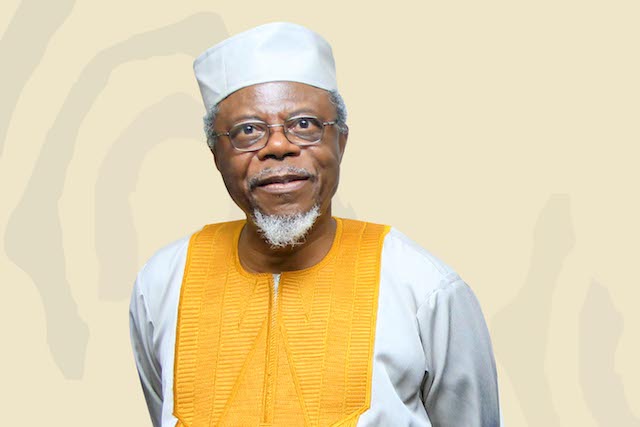
The forthcoming presidential election in Nigeria is expected to be unpredictable, according to the National Endowment for Democracy (NED), a United States-based election monitoring organization. NED has described the 2023 election as “a consequential election” and commended Nigeria for its technology-driven electoral process. The agency expressed optimism that Nigeria could become the second largest democracy in the world by 2050. Damon Wilson, the President and Chief Executive Officer of NED, shared these insights during an interview with journalists in Abuja, held in conjunction with a meeting organized by Yiaga Africa to discuss preparations for the upcoming general elections.
Established in 1983 by the American Congress, NED is a private, non-profit foundation dedicated to promoting and strengthening democratic institutions globally. Each year, it provides over 2,000 grants to support projects by non-governmental organizations in more than 100 countries that are working towards democratic goals. Wilson noted that Nigeria is currently the fifth largest democracy in the world and is on track to surpass the United States by 2050. He highlighted the significance of the upcoming election, which will take place in less than 40 days, and emphasized the progress made in Nigerian democracy, including the ousting of incumbents, enforcement of term limits, and peaceful transitions of power.
Wilson acknowledged the improvements made by the Independent National Electoral Commission (INEC) in enhancing the credibility of elections through technology. He remarked on the global challenges facing democracy and elections, stating that Nigeria serves as an example of progress and momentum. While he refrained from predicting the election’s outcome or the possibility of a runoff, he expressed concern about low voter turnout in previous elections. Wilson observed that the current presidential candidates have created uncertainty among Nigerians regarding the election’s outcome.
He noted a surge in youth voter registration, with INEC reporting that 70 percent of new registrants in the last six months were young people. This trend is seen as a positive development, reflecting a heightened level of engagement and interest among the electorate. Wilson emphasized that even in imperfect democracies, elections provide an opportunity for people to organize and express themselves. He found it exciting that, as Nigeria approaches the election, there is uncertainty about the results, which he views as a hallmark of democracy in action.
However, Wilson also raised concerns about the ongoing security challenges in Nigeria, including insurgency, terrorism, banditry, and kidnapping. He highlighted the alarming statistic of approximately 10,000 Nigerians who have died from security incidents in recent years, creating a difficult environment for voters. He pointed out that election-related violence, while less frequent, remains a serious issue, with political actors facing intimidation and attacks on INEC offices.
Despite these challenges, Wilson noted that many Nigerians are actively organizing to document and report incidents of violence, aiming to ensure a safer electoral process. He expressed hope that while security will be a significant issue in the upcoming election, it will not be so disruptive as to prevent citizens from exercising their right to vote. Ultimately, he emphasized that feeling secure is essential for individuals to express their votes, which is a fundamental aspect of any democracy.


Comments are closed for this story.