

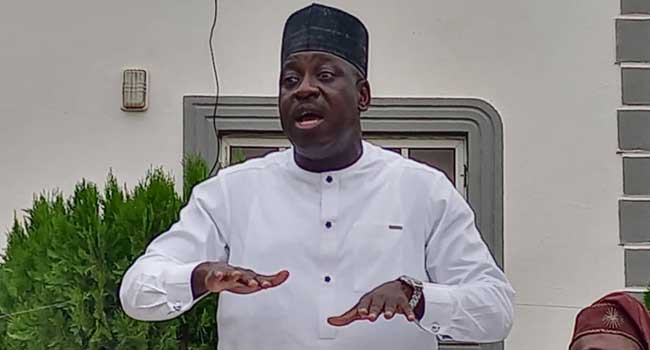
The Governor of Kaduna State, Malam Nasir El‑Rufai, made a statewide broadcast on Thursday night titled “Let us stand up strongly for democracy, peace and national unity.” He began by acknowledging that, with about 100 days left in his term and elections looming, he had intended to hold another media chat to interact with the people of Kaduna. While he still hopes to do so, he felt compelled to address the unprecedented hardships inflicted on citizens over the past two to three weeks by the Federal Government’s decisions, actions, and inactions.
On behalf of the Kaduna State government, the Governor expressed deep regret for the needless suffering caused by the prolonged fuel shortage and the “currency redesign” policy of the Central Bank of Nigeria (CBN). He assured the public that, as governor, he has been working with his colleagues to alleviate these pains. Although publicly supportive of the policy’s objectives, the state engaged privately with the President and CBN leadership to review its implementation and reduce its negative impact. When no progress was made, the government went public two weeks ago, demanding an end to the suffering.
The Governor emphasized the duty to protect ordinary people from the fallout of such policy fiascos. He noted that many citizens have seen the money they kept in banks effectively confiscated, leaving them unable to purchase food and basic necessities, while traders suffer as customers lack cash. The official rationale for the redesign is to curb money laundering and render useless the high‑denomination notes allegedly hoarded by corrupt officials. The state supports this goal but raised concerns about the timing and unrealistic implementation timeline, fearing a repeat of India’s demonetisation experience that hurt the poorest and small businesses most.
In briefings to the President, the CBN repeatedly suggested that the policy also targets politicians with large war chests for vote‑buying. The Governor now believes the President was misled by the CBN and elements of his government into accepting this narrative under the guise of ensuring free and fair 2023 elections. He asserts that the policy was conceived by officials who lost out in the APC primaries of June 2022 and was designed to deprive the APC presidential candidate of a “humongous war chest.” The alleged objectives include creating a nationwide cash shortage to sway votes against APC candidates, inducing a severe cash crunch and fuel shortage to derail the 2023 elections, and fostering unrest that could pave the way for a military takeover.
The Governor argued that the policy’s architects have convinced the President that it is acceptable for ordinary citizens to be dispossessed of their hard‑earned money while politicians remain insulated. He pointed out that two presidential candidates and an opposition running mate have access to licensed banks and, through clandestine arrangements, to hundreds of millions of new notes, whereas traders, merchants, and students queue for days to withdraw a few thousand naira.
Within weeks of implementation, it became clear that the policy’s victims are the people, not the politicians. The Governor cited an opposition candidate’s criticism of the governors’ recommendation to extend the implementation timeline so that old and new notes could circulate side by side until the cash shortage ended. He explained that the total currency in circulation at the end of 2022 was estimated at N3.2 trillion, yet the CBN claimed only N700 billion was needed for a “cash‑less” economy—a figure disputed by the President’s chief economic adviser and other experts who argue that at least N1.2–2.0 trillion is required.
The CBN informed the President that the Nigerian Mint could print the needed cash within six weeks, but by early February only N400 billion of new notes had been printed. This shortfall, combined with the decision to make most of the printed notes unavailable to banks, suggests deliberate economic sabotage. The Governor warned that curtailing economic activity and creating a cash shortage is both bad economics and insensitive, as it paints commercial banks as public enemies while the regulator fails to ensure adequate cash supply.
Kaduna State repeatedly appealed to the Federal Government to allow old notes to circulate concurrently with new ones and to accelerate printing of additional notes. When these recommendations were ignored, Kaduna, together with Kogi and Zamfara states, declared a dispute with the Federal Government and invoked the Supreme Court’s original jurisdiction. On 8 February, the Court rescinded the 10 February deadline for old notes to cease being legal tender, applying to the Federal Government, the CBN, and all commercial banks. The Governor expressed gratitude for the ruling but noted that the policy’s architects continued to inflict pain to achieve their objectives.
The Governor hoped the Federal Government would view the injunction as an opportunity to mitigate human suffering, but the CBN persisted with its agenda despite the Court order and the Council of State’s unanimous resolution. He condemned the President’s morning address limiting legal tender status to N200 notes as a blatant violation of the Supreme Court’s order, attributing it to the Attorney‑General’s misleading advice. The proposed settlement that recognized only N200 notes was rejected after evidence showed that higher‑denomination old notes had not been destroyed.
Turning to Kaduna State, the Governor urged calm and peaceful support for lawful solutions. He assured residents that none will lose the value of their old notes and warned against any artificial deadline. He reminded citizens that the Central Bank of Nigeria Act 2007 and the Bills of Exchange Act obligate the CBN to recognize old notes and exchange them for new ones indefinitely. The state government, in collaboration with legislators, traditional institutions, local councils, markets, and traders’ associations, will assist citizens in collecting, documenting, and delivering old notes to the Kaduna branch of the CBN for conversion, free of hardship or expense, from March until December 2023 if necessary.
All old and new notes will remain legal tender in Kaduna until the Supreme Court decides otherwise. The state will enforce this by sealing any facility that refuses old notes and prosecuting offenders. The Governor called on residents to resist the “antics of the enemies of Nigeria,” remain patient, and prepare their PVCs for the 25 February presidential and National Assembly elections. He urged a massive vote for the APC and its candidates, whom he described as the intended victims of the disruptive policies.
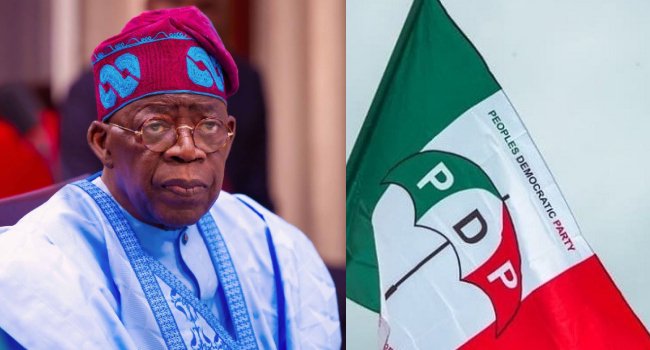
In conclusion, the Governor conveyed President Asiwaju Bola Ahmed Tinubu’s greetings, empathy, and encouragement to the people of Kaduna, urging patience, prayer, and vigilance in pursuit of renewed hope. He thanked the audience, invoking blessings for Kaduna State and the Federal Republic of Nigeria.
Comments are closed for this story.