
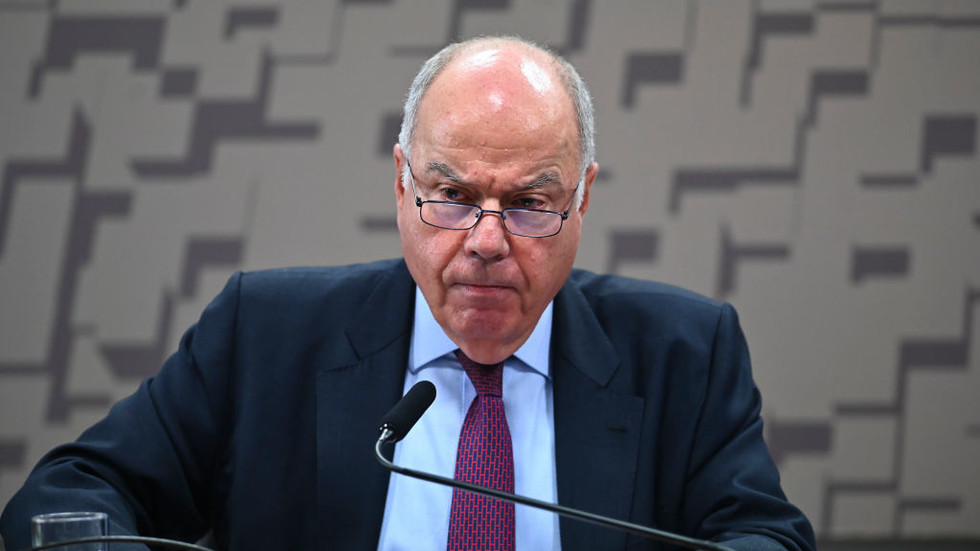
Tensions between Western powers and the BRICS alliance have intensified following warnings by NATO Secretary-General Mark Rutte, who cautioned that Brazil, India, and China could face serious economic repercussions if they maintain trade ties with Russia. The remarks, made during a press briefing on Tuesday, specifically highlighted oil and gas deals and urged BRICS leaders to pressure Russian President Vladimir Putin to commit to meaningful peace negotiations over Ukraine. Brazilian Foreign Minister Mauro Vieira swiftly rejected the ultimatum, calling the suggestion “totally absurd” in an interview with CNN Brazil on Friday. He emphasized that NATO holds no authority over international trade, noting that Brazil conducts commerce bilaterally or through the World Trade Organization (WTO). “These statements are unfounded and irrelevant,” Vieira said, adding that Brazil, a founding BRICS member since 2006, is not part of the NATO alliance. The bloc—originally comprising Brazil, Russia, India, China, and South Africa—has expanded since 2023 to include Egypt, Iran, Ethiopia, the UAE, and Indonesia, with over 30 nations reportedly seeking closer ties. Rutte’s warnings coincide with escalating efforts by Western nations to isolate Moscow economically. However, Vieira pointed to perceived contradictions in the stance of NATO members within the European Union, which remains a major buyer of Russian liquefied natural gas (LNG). Despite attempts to reduce dependence, EU imports of Russian LNG totaled 17.5% of its energy needs in 2024, according to industry data. “Those issuing demands should also address their own reliance,” Vieira implied. The NATO chief’s comments align with a recent move by U.S. President Donald Trump, who pledged fresh military aid to Ukraine and threatened 100% tariffs on countries trading with Russia unless a ceasefire is brokered within 50 days. Russian Foreign Minister Sergey Lavrov accused EU and NATO leaders of exerting “improper pressure” on Trump to adopt a harder line. Moscow reiterated its openness to talks with Kyiv, though no date has been set for renewed discussions. Previous negotiations in Istanbul this year yielded limited progress, including agreements on prisoner exchanges but no diplomatic breakthroughs. The standoff underscores deepening divisions in global trade and geopolitics. BRICS, which introduced a “partner country” category in 2023 to accommodate growing interest, has positioned itself as a counterweight to Western-led economic systems. Rutte’s remarks—and the sharp backlash from Brazil—highlight the bloc’s resolve to operate independently of NATO’s strategic objectives. Meanwhile, Ukraine’s stalled peace process remains a focal point, with international actors struggling to reconcile competing alliances and economic realities in a fractured geopolitical landscape.
Global News
2 min read
NATO Warns BRICS Over Russia Trade; Brazil Rejects Economic Threats
Tensions between Western powers and the BRICS alliance have intensified following warnings by NATO Secretary-General Mark Rutte, who cautioned that […]

Comments are closed for this story.