
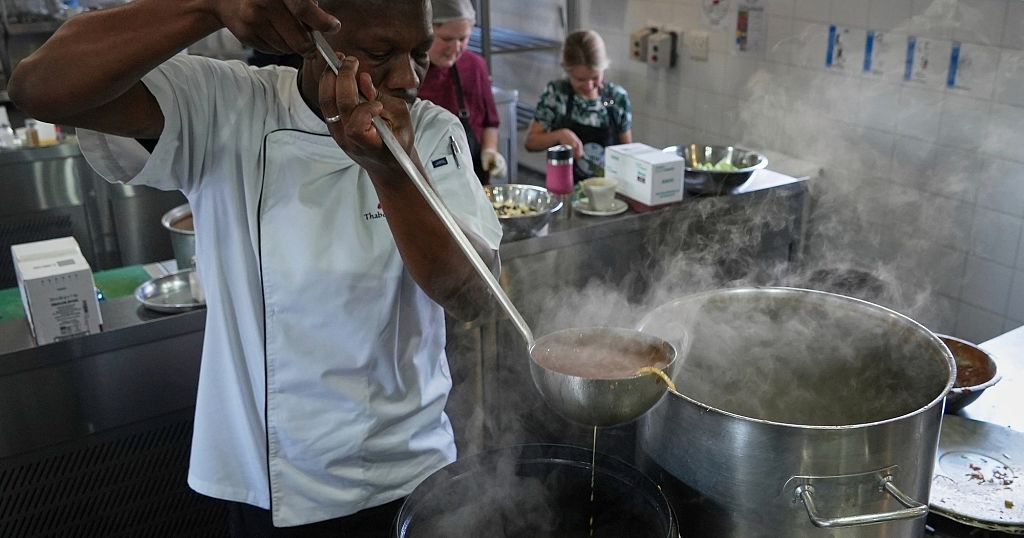
In kitchens across South Africa, chefs, community cooks, and culinary students have united for Mandela Day, transforming rescued produce into tens of thousands of liters of soup to address the nation’s deepening hunger crisis. The annual event, observed every July 18, commemorates Nelson Mandela’s 67 years of public service by encouraging citizens to dedicate 67 minutes to community work. This year, volunteers with the grassroots initiative Chefs with Compassion aim to prepare at least 67,000 liters of nourishing meals—though organizers note they’ve repeatedly surpassed this target in recent years. “In 2020, our first large-scale effort, we exceeded 67,000 liters,” said Hanneke Van Linge, head of Nosh Food Rescue, a partner organization. “Last year, we produced 104,000 liters in a single day.” The project taps a nationwide network of hotels, culinary schools, and community kitchens, using donated ingredients that might otherwise go to waste. These include imperfect vegetables rejected by retailers and surplus stock from food suppliers. Founded during the COVID-19 pandemic, Chefs with Compassion has become a lifeline as economic pressures intensify. Executive chef James Khoza, the NGO’s chairman, cited soaring food prices and unemployment rates exceeding 32% as key drivers of food insecurity. “Grocery costs have gone through the roof,” Khoza said. “Mandela Day reminds us that chefs can use their skills not just to cook, but to make a real difference.” South Africa’s hunger paradox underscores the urgency. Despite ranking among Africa’s leading food producers, over 20 million people—roughly a third of the population—face daily food shortages, according to the 2024 National Food and Nutrition Security Survey. Concurrently, 10.3 million tons of food are discarded annually, a waste crisis linked to supply chain inefficiencies, climate-related farming disruptions, and stark income inequality. Mandela Day’s soup initiative highlights these contrasts while offering a blueprint for action. Volunteers prioritize nutrient-rich recipes, often incorporating legumes and seasonal vegetables, to maximize impact. While the campaign’s scale has grown yearly, organizers stress that systemic challenges require sustained effort. “This isn’t just about one day,” Van Linge said. “It’s about showing what’s possible when communities mobilize resources creatively.” As the smell of simmering broth spreads through participating kitchens, the project serves as both a tribute to Mandela’s legacy and a stark reminder of the inequities that persist three decades after apartheid’s end. With millions trapped in cycles of poverty, the act of repurposing surplus food into meals has become a quiet act of resistance—and a call for broader change.
Metro News Africa
2 min read
Chefs Combat Hunger with 67K Soup Liters for Mandela Day
In kitchens across South Africa, chefs, community cooks, and culinary students have united for Mandela Day, transforming rescued produce into […]
More stories like this

Metro News Africa
The Flat Screen Revolution: How We Learned to See the World in Pixels

Metro News Africa
Beyond the Double Helix: How Functional Genomics Is Rewriting the Blueprint of Life

Metro News Africa
Reno Omokri Wishes NDC Presidential Candidate a Happy Birthday

Metro News Africa
Comments are closed for this story.