
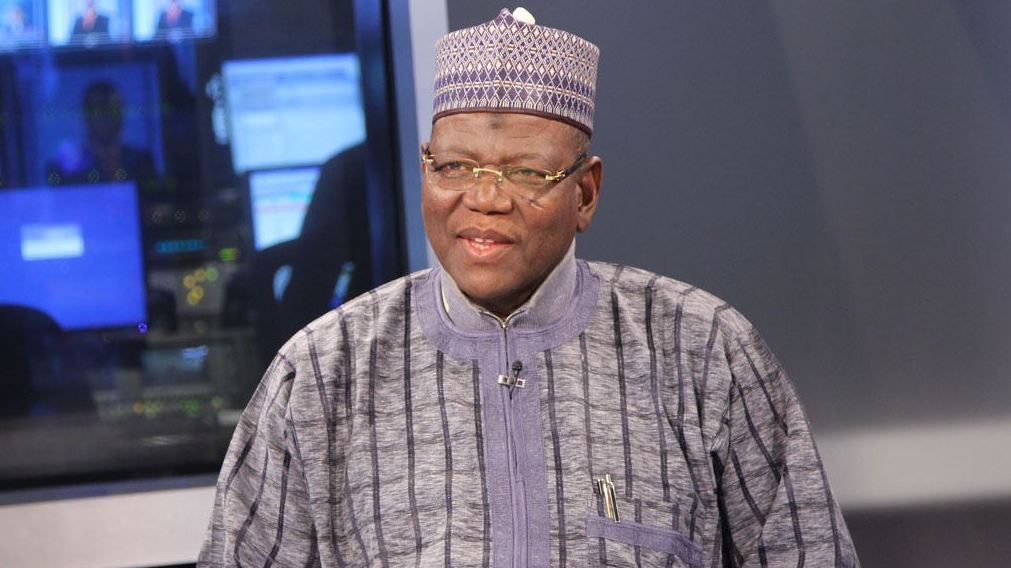
A former Nigerian state governor has defended high-profile political defections as a pragmatic strategy rather than an ethical breach, citing former Vice President Atiku Abubakar’s recent party switch as part of a longstanding pattern in the country’s politics. Sule Lamido, who led Jigawa State from 2007 to 2015, described the pursuit of alternative platforms to achieve presidential ambitions as a routine practice during an interview with Channels Television’s Politics Today.
“Looking for another platform is not a crime in Nigeria,” Lamido stated, referencing Atiku’s departure from the Peoples Democratic Party (PDP), the main opposition group, to join a coalition that recently aligned with the African Democratic Congress (ADC). The former vice president’s move follows months of speculation about his potential fifth presidential bid, with analysts suggesting internal PDP disputes over candidate selection may have influenced his decision.
Lamido framed party-switching as an established feature of Nigeria’s political landscape, noting that prominent figures have frequently changed affiliations over the past two decades. He highlighted the 2014 exodus of PDP members to the All Progressives Congress (APC) – now the ruling party – which enabled then-opposition leader Muhammadu Buhari to secure the presidency in 2015. The former governor also cited Samuel Ortom, a one-time PDP minister and national executive committee member, who defected to the APC in 2014 to campaign successfully for the governorship of Benue State.
“When political platforms fail to offer fairness and openness in selecting candidates, ambitious individuals naturally seek alternatives,” Lamido explained, suggesting Atiku’s move reflected dissatisfaction with nomination processes rather than party loyalty. His comments come amid heightened scrutiny of Nigeria’s electoral framework ahead of 2027 polls, with critics arguing that weak party institutions and personalized politics often overshadow policy debates.
The ADC, positioned as a coalition of smaller opposition groups, formally adopted its banner in June, raising speculation it could become a vehicle for Atiku’s reported presidential aspirations. While the 77-year-old has not officially declared his intentions, his political team has hinted at ongoing strategic consultations.
Lamido’s remarks underscore the fluidity of Nigeria’s party system, where ideological distinctions often blur and alliances shift rapidly. Observers note that such realignments have historically influenced electoral outcomes, though critics argue they prioritize individual ambitions over voter interests. As campaigns begin to take shape, analysts will watch whether Atiku’s latest maneuver reignites his political fortunes or further fragments Nigeria’s opposition bloc.




Comments are closed for this story.