
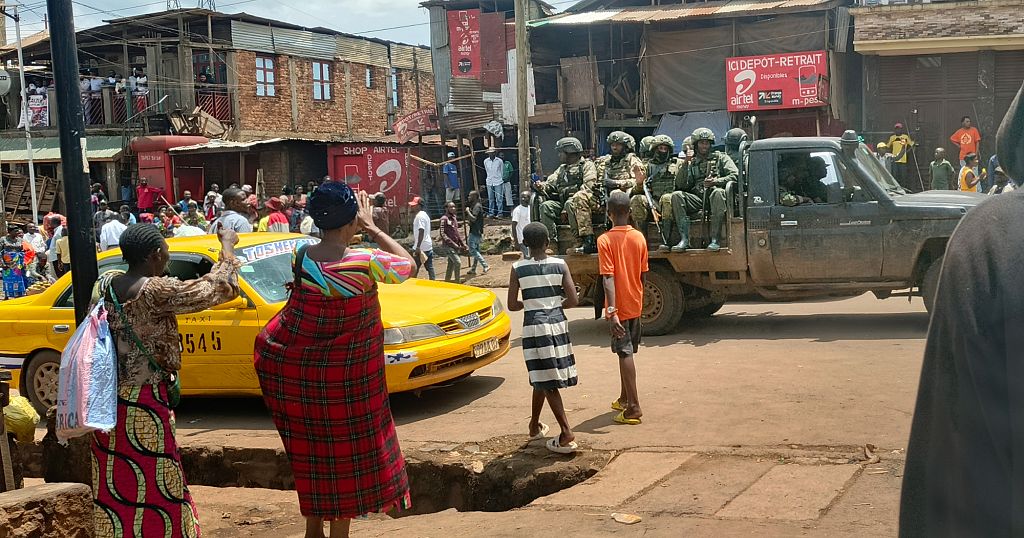
In the eastern Congolese city of Bukavu, residents are grappling with a severe shortage of usable banknotes. Since the rebel group M23 seized control in February, damaged and mutilated notes—often glued or taped together—have become a common sight in markets, creating confusion and tension between buyers and sellers. The shortage stems from the closure of the city’s banks by Congolese authorities before the M23 takeover, leaving people without cash and without any regulatory oversight of the money supply. Consequently, many have resorted to using old, torn, and patched‑up banknotes that banks had originally intended to destroy. While the exact origin of these damaged notes is unclear, some residents suspect they were stolen from banks during the M23’s advance.
The circulation of both damaged and regular banknotes has complicated trade. Some sellers accept the mutilated notes, while others refuse them, leaving many residents struggling to make ends meet. Alain Mukumiro, a 36‑year‑old fridge technician, often finds his money rejected by shopkeepers because of its condition, forcing him to go to sleep without food. David Kyanga, a professor of economics at Bukavu’s Higher Institute of Commerce, argues that the damaged notes should be considered valid given the city’s isolation from the central government. He calls for rebel authorities to clearly communicate that these notes are acceptable.
In Kinshasa, the Congolese government has made no official statements about supplying banknotes to the eastern territories under M23 control. In response to the crisis, the M23‑appointed governor of South Kivu Province, Patrick Busu Bwasingwi Nshombo, announced the opening of a bank to exchange damaged notes for new ones. However, the operation was suspended after an overwhelming number of residents queued for the service.
As the situation unfolds, Bukavu’s residents remain uncertain about their financial future, underscoring the need for a stable and reliable monetary system. The crisis reflects the broader conflict between the Congolese government and armed groups, which has displaced over seven million people and caused thousands of deaths. Until a resolution is reached, the city’s banking system and economy are likely to stay in turmoil, leaving inhabitants to confront the daily challenges of life in a war‑torn region.



Comments are closed for this story.