
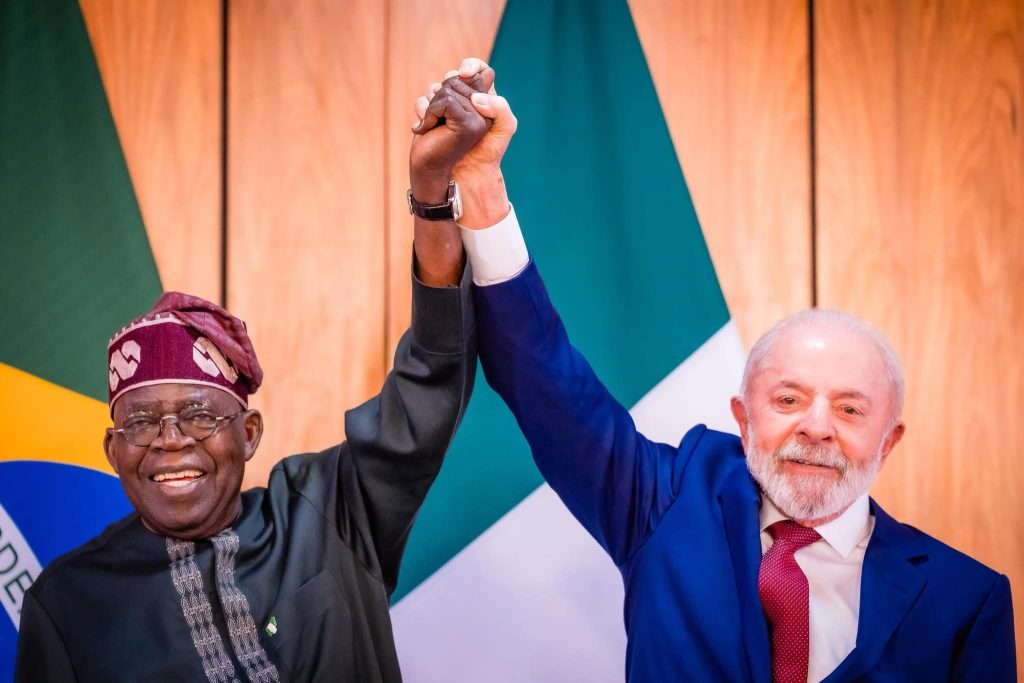
Nigeria and Brazil have signed several key agreements aimed at strengthening ties between the two countries. The move is expected to enhance cooperation in aviation, trade, energy, agriculture, and science and technology. The agreements were signed during a two‑day state visit by Nigerian President Bola Tinubu to Brazil, where he met his Brazilian counterpart, President Luiz Inácio Lula da Silva.
One of the most significant accords is a Bilateral Air Services Agreement (BASA), which will enable direct flights between Nigeria and Brazil for the first time in decades. Nigeria’s Minister of Aviation and Aerospace Development, Festus Keyamo, called the BASA a “game‑changer” for the nation’s aviation industry, saying it will open new opportunities for business, tourism, and diplomatic ties. Air Peace, Nigeria’s designated carrier for the Lagos‑São Paulo route, is expected to launch direct flights by November 2025.
In addition to the BASA, the two countries signed memoranda of understanding (MoUs) covering trade, energy, agriculture, and science and technology. These agreements aim to boost bilateral commerce, enhance food security, and promote clean‑energy projects. Brazil has pledged to support Nigeria in scaling up solar, wind, and other clean‑energy initiatives. President Tinubu highlighted Brazil as a natural partner for Nigeria in agriculture, citing complementary resources and expertise, and invited Petrobras, Brazil’s oil giant, to return to Nigeria to explore opportunities in the oil and gas sector.
The visit is seen as a significant step toward deepening Nigeria‑Brazil relations, with potential investment pledges in agriculture, energy, and infrastructure estimated at over $30 billion. The agreements also aim to promote cultural and educational exchanges, reviving historical ties that date back to the 19th century. Overall, the accords are expected to have a substantial impact on the development of both nations, particularly in trade, energy, and agriculture. Their success will depend on swift implementation by Nigeria’s ministries and agencies; full execution could unlock jobs, technology, and investment, advancing Nigeria’s goal of becoming a trillion‑dollar economy by 2030.


Comments are closed for this story.