
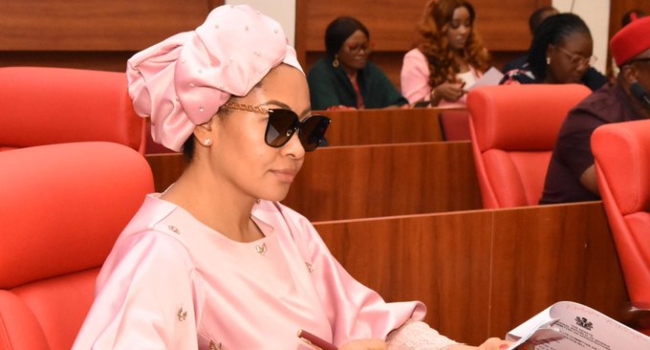
The Nigerian Senate’s decision to suspend Senator Natasha Akpoti‑Uduaghan for six months has drawn criticism from former Nigeria Bar Association Publicity Secretary Douglas Ogbankwa, who called it a case of “double standards.” Appearing on Channels Television’s breakfast program, Ogbankwa argued that the Senate acted improperly by suspending the lawmaker while her case was still pending in court.
The suspension was imposed on March 6, 2025, after a heated confrontation in the chamber in which the Senate accused Akpoti‑Uduaghan of breaching its rules. Representing Kogi Central, the senator has since challenged the action in court, insisting that both her rights and those of her constituents were violated.
Ogbankwa maintained that, although the senator’s conduct in the chamber was unbecoming, the Senate lacks constitutional authority to suspend her. He pointed to the 1999 Constitution, as amended, which requires continuous representation for each of Nigeria’s 109 senatorial districts—a principle undermined by the suspension. He also cited a 2017 Court of Appeal judgment that voided the suspension of members of the Kaduna State House of Assembly, affirming that elected legislators cannot be barred from parliament by their colleagues.
According to Ogbankwa, Akpoti‑Uduaghan ignored Senate rules during the confrontation, noting that parliamentary procedure requires a lawmaker to occupy the seat assigned by the Senate President before speaking on the floor. The latest development came after the senator attempted to return to the National Assembly on July 22, 2025, in line with a court judgment, despite an appeal by Senate President Godswill Akpabio.
With the six‑month suspension period ending on September 4, Akpoti‑Uduaghan wrote to the Senate to inform it of her intention to resume duties. The Senate acknowledged her notification and said the matter would be treated pending the outcome of the court case. The ongoing saga highlights the complexities of parliamentary procedures and the constitutional rights of elected legislators in Nigeria.


Comments are closed for this story.