
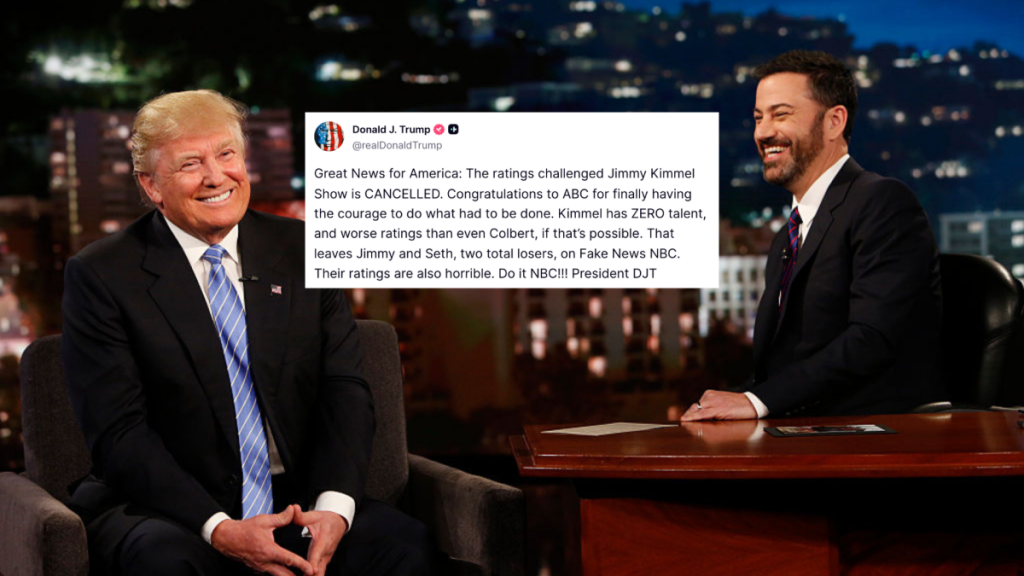
President Donald Trump welcomed ABC’s decision to suspend *Jimmy Kimmel Live!* after the host’s remarks about a recent murder and its alleged ties to right‑wing ideology. ABC pulled the show from the schedule indefinitely following Republican objections to Kimmel’s live comments on the killing of Charlie Kirk. Kimmel had suggested that some people were trying to portray the perpetrator as anything other than a supporter of the MAGA movement and were using the incident to score political points.
In response, Trump wrote on Truth Social that ABC had finally shown the courage to act. This is not the first time Trump has targeted Kimmel; he called for the host to be taken off the air just two weeks earlier. Trump has also urged the Federal Communications Commission to revoke ABC’s broadcasting license, accusing the network of bias against him. FCC Chairman Brendan Carr threatened ABC’s license and called for action against Kimmel.
After the suspension, Trump urged that other talk shows—*The Tonight Show Starring Jimmy Fallon* and *Late Night with Seth Meyers*—be suspended as well. The move has drawn criticism from commentators who warn of its implications for free speech. Some argue the suspension exemplifies state repression, with the government using its power to suppress lawful expression. Democratic FCC member Anna Gómez posted on X that a single act of violence should not justify broader censorship. Atlantic writer David Frum told CNN that the suspension reflects government suppression of speech, not “cancel culture,” and represents state repression.
The suspension of *Jimmy Kimmel Live!* carries significant implications for the U.S. media landscape, raising questions about the limits of free speech and the role of government in regulating the press. As the situation unfolds, the long‑term consequences for the broader debate on free speech and censorship remain uncertain.



Comments are closed for this story.