
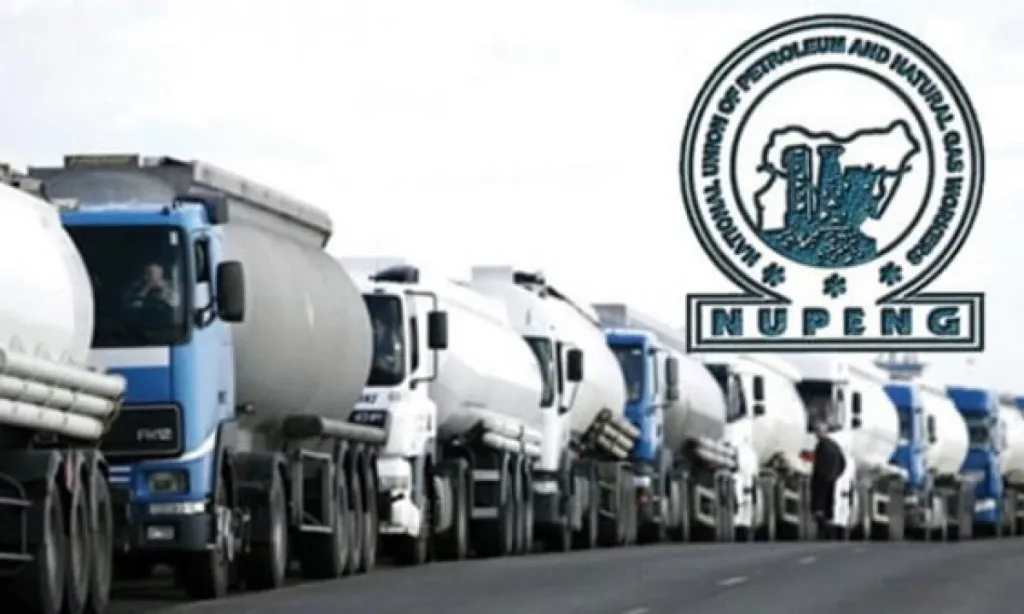
A coalition of civil society organizations has thrown its weight behind Dangote Petroleum Refinery in its ongoing dispute with the Nigeria Union of Petroleum and Natural Gas Workers (NUPENG) over workers’ rights to join trade unions. The CSOs have threatened legal action against NUPENG, accusing the union of employing “economic terrorism” and coercive tactics to force workers into its ranks.
The coalition, which includes the Civil Rights Defenders Advocates, Citizens for Economic Justice, and Nigeria Freedom Network, addressed journalists on Wednesday to condemn NUPENG’s alleged strong‑arm tactics. Dr. Agabi Emmanuel, the coalition’s convener, said NUPENG has been pressuring refinery workers—including truck drivers—to join the union under threats of blockades and intimidation.
The CSOs argue that NUPENG’s actions violate Section 40 of the 1999 Constitution, which protects the right to freely associate or abstain from unions. They also cite breaches of the Trade Unions Act and the Trade Disputes Act, pointing to incidents such as obstructing non‑union workers from loading fuel and affixing seals on trucks to assert control.
The coalition praised Dangote Refinery for upholding voluntarism and ensuring a safe working environment, contrasting this with NUPENG’s tactics, which they claim sabotage Nigeria’s energy security. Dr. Emmanuel warned that the coalition would file lawsuits if Dangote or any other entity forces workers into union membership, emphasizing that “the right to choose is non‑negotiable.”
The CSOs have called on the Department of State Services to investigate NUPENG’s sponsors and alleged high‑profile intimidation involving the Navy and helicopter flyovers. They urged the federal government, civil society, and international labor bodies to denounce NUPENG’s “economic blackmail” and support industrial harmony.
The dispute between Dangote Refinery and NUPENG has significant implications for Nigeria’s energy sector, as the refinery is a crucial component of the country’s energy security. The CSOs’ intervention highlights the need for a balanced approach to workers’ rights and union activities—one that promotes voluntarism while protecting the rights of all stakeholders. As the situation unfolds, it remains to be seen how the parties will respond to the CSOs’ demands and what impact this will have on Nigeria’s broader energy landscape.




Comments are closed for this story.