

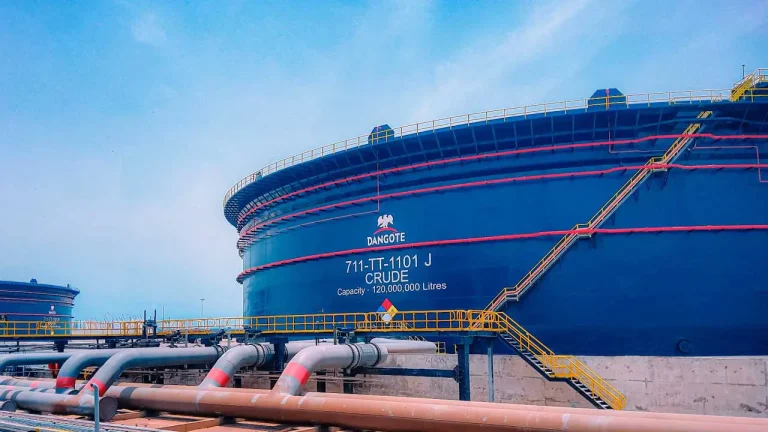
Nigerian business magnate Femi Otedola has urged members of the Depot and Petroleum Products Marketers Association of Nigeria (DAPPMAN) to adapt to the changing downstream oil sector, especially in light of the Dangote Refinery’s operations. His comments come amid a dispute between DAPPMAN and the refinery that has prompted government intervention. With the Dangote Refinery now producing fuel locally, the traditional model of fuel importation and depot‑based arbitrage has become obsolete.
Otedola, who founded DAPPMAN in 2002, explained that the association was originally created to give independent depot owners a platform to compete with major marketers. The launch of local fuel production has collapsed that model, leaving much of the country’s four million metric tons of storage capacity idle. He emphasized that domestic fuel supply has become efficient and reliable, rendering large storage facilities redundant. Otedola also dismissed claims that depots are major job creators, arguing that filling stations generate more employment for Nigerians.
He warned that demanding a N1.5 trillion subsidy from the Dangote Refinery for DAPPMAN would unfairly burden consumers. Drawing a parallel with Nigeria’s cement industry—where local production made import‑based infrastructure redundant—Otedola urged depot owners to consider selling, restructuring, or investing in new value chains. He suggested that, if they truly believe in competition, they could acquire and operate the Port Harcourt Refinery.
Otedola’s advice underscores the need for adaptation in the downstream oil sector. With the Dangote Refinery’s capacity and the government’s push for increased local fuel production, the role of depots is evolving. Refusing to adapt could render DAPPMAN members irrelevant and lead to bankruptcy; instead, they should focus on creating sustainable value and embracing the new era of self‑sufficiency and transparency in the industry.



Comments are closed for this story.