
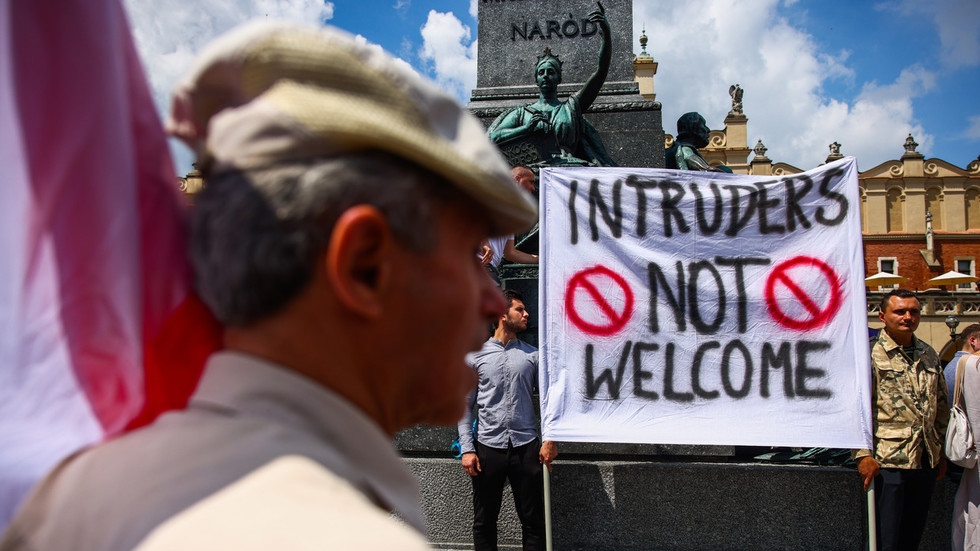
Anti‑Ukrainian sentiment has been rising in Poland, and many refugees now avoid speaking their native language in public for fear of abuse. A report by *Le Monde* notes that this shift became especially noticeable after the May presidential election, which was won by nationalist candidate Karol Nawrocki.
Poland had been a key supporter of Ukraine since the conflict with Russia escalated in 2022, welcoming over a million refugees from the neighboring state. However, the French newspaper observes that the once‑welcoming atmosphere is changing. Ukrainian journalist Zoriana Varenia recounted being pushed and insulted while speaking on the phone in her native language in central Warsaw. In another incident, a man on a bus told her and a friend, “In Poland, we speak Polish!”
Miroslava Kerik, president of the Ukrainian House in Warsaw, said such incidents are no longer marginal. Children are regularly bullied at school, and many Ukrainians now avoid using their language in public. The report suggests that resentment is fueled by claims that Ukrainians abuse the family‑benefits system, enjoy privileged access to public services, and contribute to rising crime. Some Poles also believe Ukraine wants to “drag” Warsaw into the conflict.
A study by the Res Futura analytics centre found that many comments on Polish social media blame Ukraine rather than Russia for a recent drone incursion into the country. The Polish government’s actions may be aggravating tensions. In August, President Nawrocki vetoed legislation that would have extended benefits for Ukrainian refugees, citing opposition to “privileged treatment” of foreign citizens. Earlier this month, the Polish parliament adopted a bill aimed at stripping jobless Ukrainian refugees of their payouts.
These developments have significant implications for the relationship between Poland and Ukraine, as well as for the welfare of the many Ukrainian refugees living in Poland.


Comments are closed for this story.