
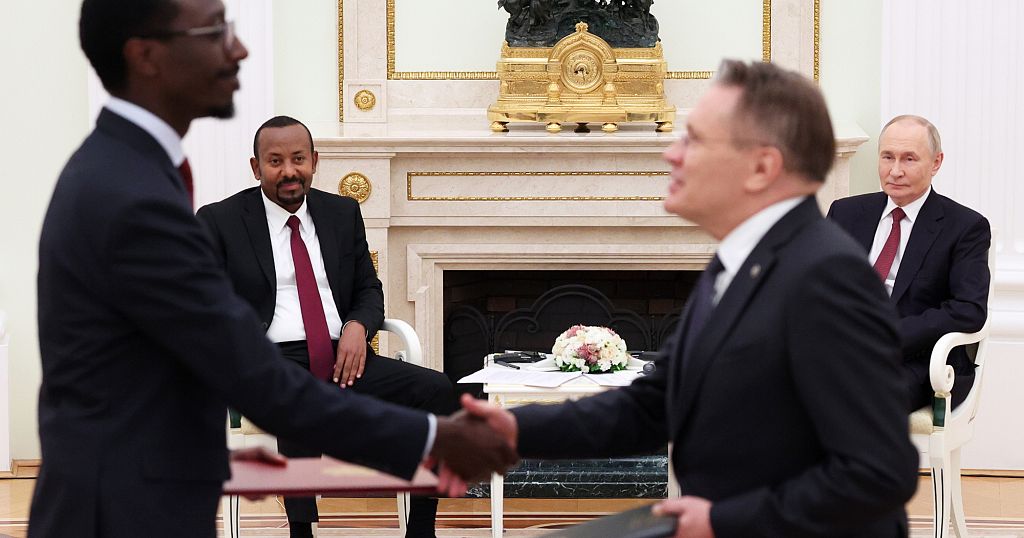
Ethiopia has signed an agreement with Russia to construct a nuclear power plant, marking a significant development in the East African nation’s energy sector. The deal was finalized between the Ethiopian Electric Power Company and the Russian state‑owned entity Rosatom during a nuclear energy forum in Moscow. Under the agreement, the two parties will create a detailed construction plan and a roadmap for the technical and economic foundation of the project, as well as an intergovernmental accord to move forward. It also includes provisions for training staff to operate the plant and develop Ethiopia’s nuclear sector, a step expected to boost the country’s energy generation capacity and reduce reliance on traditional sources.
Russia has been expanding its presence in Africa, and this deal is part of a broader effort to strengthen bilateral agreements with countries on the continent. In a related development, Niger’s mining minister, Ousmane Abarchi, announced that his country plans to build two 2,000‑megawatt nuclear reactors in partnership with the Russian nuclear corporation. Niger, the world’s eighth‑largest producer of uranium, aims to harness this mineral asset to increase power generation. The projects will be overseen by the International Atomic Energy Agency, ensuring compliance with international safety and security standards.
Russian President Vladimir Putin emphasized his country’s commitment to fulfilling its nuclear contract obligations, regardless of the political situation. He stressed that ensuring nuclear safety and the physical security of nuclear facilities is an absolute priority for Russia. Putin also announced plans to launch the world’s first nuclear energy system with a closed fuel cycle by 2030, which would reuse over 90 % of spent fuel and help solve the problems of radioactive waste and uranium supply.
These agreements reflect a growing trend of cooperation in Africa’s energy sector. As African nations seek to diversify their energy mix and increase power generation, partnerships with international players like Russia are becoming increasingly important. The development of nuclear energy on the continent is expected to play a significant role in meeting energy needs and promoting economic growth. With these agreements in place, the stage is set for substantial advancements in the energy sector, and their impact will be closely watched in the coming years.

Comments are closed for this story.