
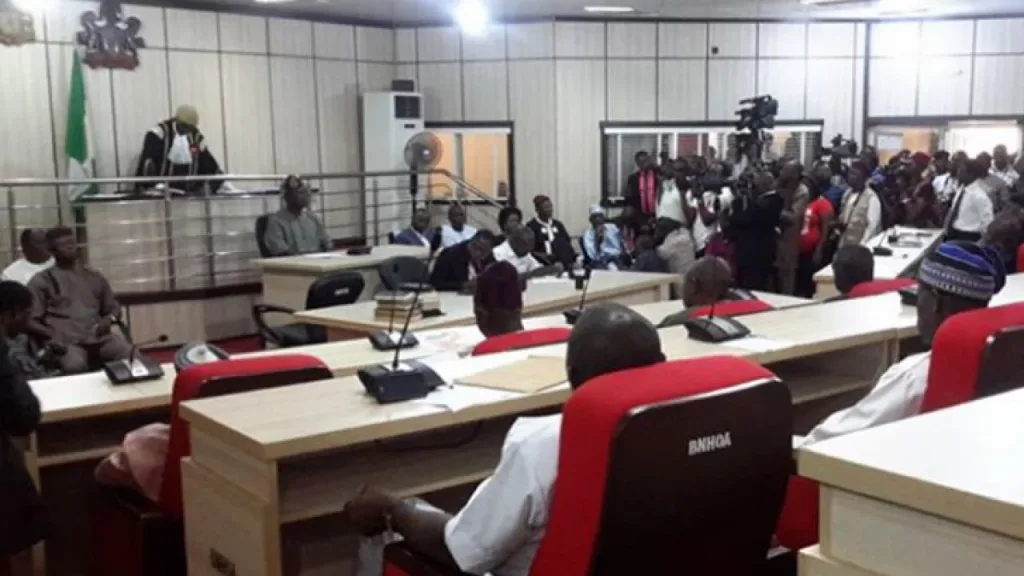
The Benue State House of Assembly has approved an amended calendar for its legislative activities, outlining a schedule of 187 sitting days for the 2025‑2026 legislative year. The decision was made during a plenary session presided over by Speaker Aondoaver Berger Alfred Emberga. According to Majority Leader Pharm. Sir Thomas Dugeri, the amended calendar complies with the 1999 Constitution, which requires state assemblies to sit for at least 181 days in a legislative year. The calendar provides a clear schedule of activities for the year, including three sittings and recess periods between July 2025 and June 2026.
The motion to adopt the amended calendar was seconded by Minority Leader Abu Umoru, who noted that the change would enhance the efficiency and accuracy of the Assembly’s operations.
During the same session, the House received reports from the Committee on Higher Education and the Committee on Food Security and Nutrition, which were referred to the relevant committees for further action. In addition, the House adopted a motion to recognize and reward outstanding academic performances by students in the state. The motion, moved by Hon. Onah Blessed Emmanuel, resolved that the Benue State Examinations Board, in collaboration with examination bodies, should publish the names of top‑performing students annually.
A bill to establish a unique identity and symbol for the state also scaled second reading during the plenary. The proposed legislation seeks to create a distinctive emblem and anthem for Benue State, promoting a sense of pride and identity among its citizens.
The adoption of the amended calendar and the proposed legislation demonstrate the Assembly’s commitment to effective governance and the promotion of the state’s interests. The new calendar will guide legislative activities for the next year, while the proposed symbol and anthem aim to foster unity and identity among the people of Benue State. As the Assembly continues to deliberate on these and other matters, its actions are expected to have a significant impact on the development and well‑being of the state.



Comments are closed for this story.