
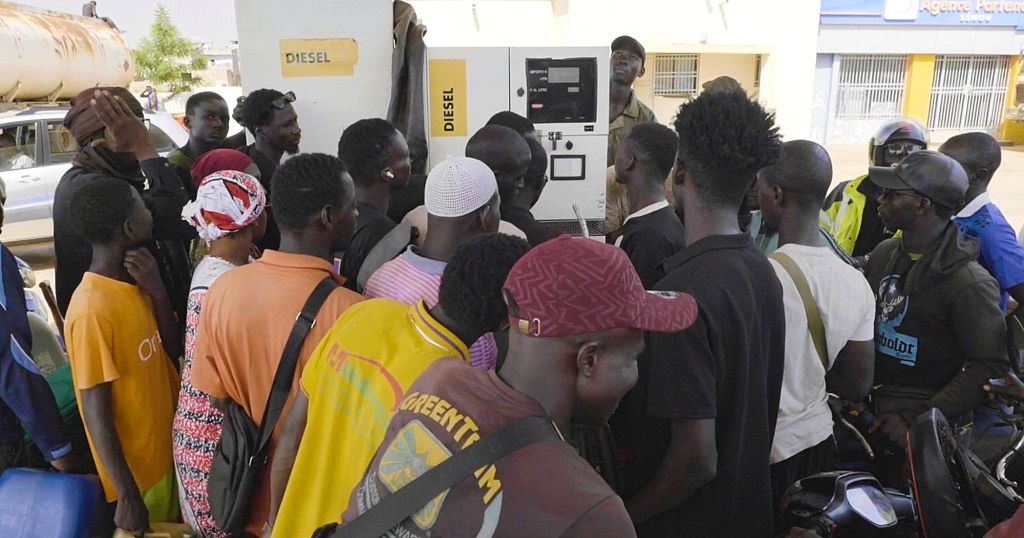
Fuel shortages are gripping Mali’s capital, Bamako, as militants from Jama’at Nusrat al‑Islam wal‑Muslimin (JNIM) continue to blockade fuel tankers. The al‑Qaida‑affiliated group announced the blockade in early September, and its effects are being deeply felt by residents. Long lines have formed at gas stations, with commuters desperate to find fuel for their daily needs. Only a few stations have supplies, and Bakary Coulibaly, a gas reseller, said it is increasingly difficult to obtain gasoline and the situation is becoming dire. Motorcycles and cars crowd the few operational stations, leading to arguments and fights over access.
The crisis is affecting many aspects of life in Bamako, including the livelihoods of people like Douga Barry, who drives motorcycle taxis for a living. Despite the challenges, Barry expressed determination to help the country navigate the crisis, saying, “We know we are at war, whatever the situation, and we are ready to take it on.” Mali, one of Africa’s top gold producers, is ranked the sixth‑least‑developed nation globally, with nearly half its population living below the national poverty line. The blockade poses significant risks to the fragile local economy and is a setback for the military junta, which took power in 2021 promising to improve security.
Instead, attacks from militants linked to al‑Qaida and the Islamic State have intensified in recent months. JNIM is one of several armed groups operating in the Sahel, a vast semi‑arid strip stretching from North Africa to West Africa, where an insurgency is spreading rapidly. The Malian Petroleum Importers Association reported that over 100 tanker trucks have been burned and destroyed by JNIM fighters. In response, the Malian army has begun escorting some truck convoys on the roads between Bamako and the borders with Senegal and Ivory Coast. The army recently destroyed the hideouts of JNIM fighters responsible for an attack on a tanker convoy near the Ivory Coast border.
As the situation continues to unfold, the impact of the blockade on the local economy and residents’ lives remains a pressing concern. The Malian government and the international community will need to work together to find a solution to the crisis and ensure the stability of the region.



Comments are closed for this story.