
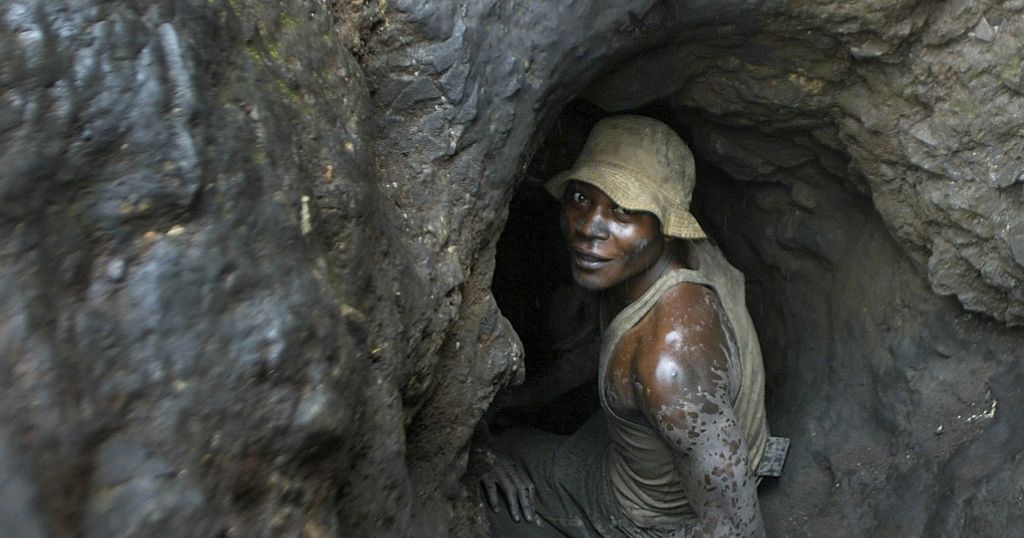
A recent state audit in the Democratic Republic of Congo has uncovered a significant discrepancy in revenue reporting by mining companies. Between 2018 and 2023, these firms failed to report an estimated $16.8 billion in revenue, potentially depriving the government and local communities of crucial funds for development projects.
The audit, conducted by the Court of Auditors and made public in October, revealed that while companies declared $81.4 billion for a community‑development fund, they reported only $98.2 billion to tax authorities, resulting in an estimated loss of $50.4 million in contributions. Under the 2018 mining code, firms must allocate 0.3 % of their annual revenue to local development funds that finance essential infrastructure such as schools, clinics, and water systems.
The report found that several major producers of cobalt and copper, including subsidiaries of Glencore and CMOC, underreported earnings by a collective $10 billion. Glencore’s Kamoto Copper Company claimed full compliance, attributing the discrepancy to a “differing interpretation” of the law’s effective date, while CMOC did not respond to requests for comment.
Congolese authorities are calling for action. Attorney General Jean Chris Mubanga Musuyu stated that “practically 70 % of companies didn’t adhere to this regulation,” leading to a “significant loss of revenue.” The Court of Auditors has recommended suspending non‑compliant companies and launching legal proceedings. Civil‑society groups are also demanding accountability, emphasizing that the community levy is intended to transform mining from mere extraction into a force for local upliftment, directly improving living conditions in a country where the average annual income is just $580.
The Democratic Republic of Congo is one of the world’s poorest nations, with a large portion of its population relying on mining for their livelihood. The sector is critical to the country’s economy, and cobalt and copper are essential metals for the global green‑energy transition. The underreporting of revenue by mining companies has serious implications for development, as the lost funds could have financed essential infrastructure and improved living standards.
The next steps will be crucial as Congolese authorities and civil‑society groups work to hold mining companies accountable and ensure compliance with the 2018 mining code. The international community will be watching closely, because the outcome has significant implications for the global mining industry and the development of one of the world’s most vulnerable nations.



Comments are closed for this story.