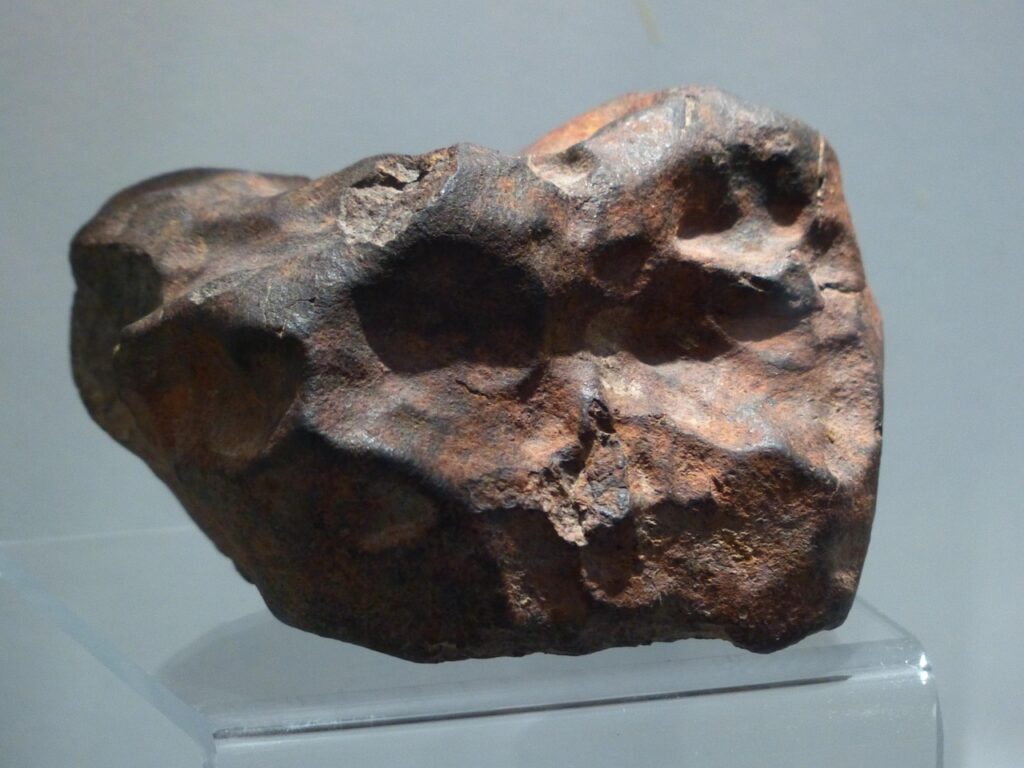
At 74, I’ve traded my agricultural science journals for the night sky, trading Mali’s red dust for the glittering debris of space. My years as a call center agent taught me patience, and my public relations work taught me persuasion, but nothing prepared me for the quiet thrill of holding a rock that predates the Sun itself. Meteorites are not just stones; they are time capsules, hurled across the void to land at our feet with stories written in iron and silicate.
When asteroids smash into each other in the dark emptiness beyond Mars, they send shards spinning through the cosmos. Some of those fragments, after a fiery plunge through our atmosphere, survive to become meteorites. What’s remarkable is that these fallen travelers hold particles older than our star. That means when I pick up a meteorite, I’m touching material that was drifting in space long before Earth’s first sunrise. It’s a humbling reminder that our solar system is just a recent chapter in a much longer cosmic narrative.
Not all meteorites are created equal. The stony ones, rich in silicate minerals, are the most common visitors. Then there are the iron giants, dense with nickel and iron, forged in the cores of shattered worlds. And finally, the stony-iron hybrids, a strange marriage of both, as if the universe couldn’t decide what to send us. Each type tells a different story about how planets form, how they break apart, and how the chaos of creation leaves its fingerprints on matter.
To decode these messages, scientists don’t just crack rocks open with hammers. They use X-ray CT scans to peer inside without causing damage, and spectroscopy to read the chemical signatures hidden in every grain. They examine textures under microscopes, searching for clues about temperature, pressure, and the violent events that shaped each specimen. In some meteorites, they’ve found amino acids—the very building blocks of life. This discovery isn’t just academic; it forces us to reconsider whether life on Earth began here or was seeded from above.
Even programming has entered the field. Researchers now use Python to classify meteorites by their elemental makeup, turning raw data into clean comparisons that were once impossible to manage manually. It’s a fusion of old-fashioned curiosity and modern computational power, proving that the study of space rocks is as much about algorithms as it is about awe.
Meteorite research is more than a scientific niche; it’s a bridge to our origins. Every fragment we analyze helps us understand how planets like ours came to be, how water and organic molecules arrived, and whether we are alone in a universe that seems so fond of throwing rocks at us. Whether you’re a veteran astronomer or a curious newcomer, there’s a particular magic in knowing that the ground beneath your feet is connected to the stars above. The next time you see a shooting star, remember: it might just be the beginning of a story that ends in a laboratory, and perhaps, in the answer to who we truly are.