
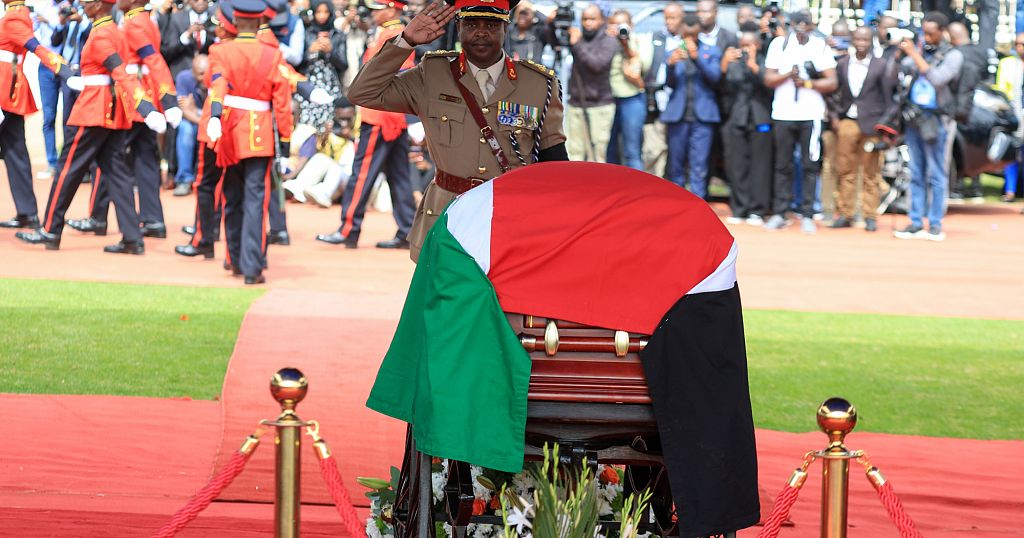
Kenya has bid a final farewell to former Prime Minister Raila Odinga, who died in India at the age of 80. Thousands of mourners, including presidents and representatives of African heads of state, gathered for a state funeral service in Nairobi to pay their respects to the democratic reformer. Odinga’s casket, draped in the national flag, was placed in a soccer stadium where an Anglican Church service was held, reflecting his significant influence on Kenya’s political landscape.
Mourners chanted, held up portraits of Odinga, and carried twigs—a traditional symbol of peace and unity. The stadium was heavily secured after a public viewing the previous day turned violent, resulting in three deaths and at least ten injuries. Earlier on Friday morning, Odinga’s body lay in state in Parliament, an honor usually reserved for the president and former presidents.
President William Ruto acknowledged Odinga’s contributions to Kenya’s democracy, noting his 15 years of service as a legislator. Their relationship had been complex: they campaigned together in 2007, later became rivals in subsequent elections, and yet signed an agreement earlier this year that allowed opposition party members to be appointed to cabinet positions.
Odinga’s family announced that he will be buried on Sunday in his rural home in Bondo, near the western city of Kisumu, honoring his wish for a swift burial—ideally within 72 hours, an unusual request for a popular Kenyan leader. As the nation prepares for his interment, it reflects on his legacy as a champion of democracy and reform. Although his five presidential bids over three decades never resulted in the presidency, his activism helped shape Kenya’s vibrant multiparty democracy.
Leaders from across Africa have gathered to tribute a man who dedicated his life to public service and the pursuit of a more just, equitable society. On Saturday, Kenyans will have one last opportunity to view Odinga’s body in Kisumu before his burial on Sunday.

Comments are closed for this story.