
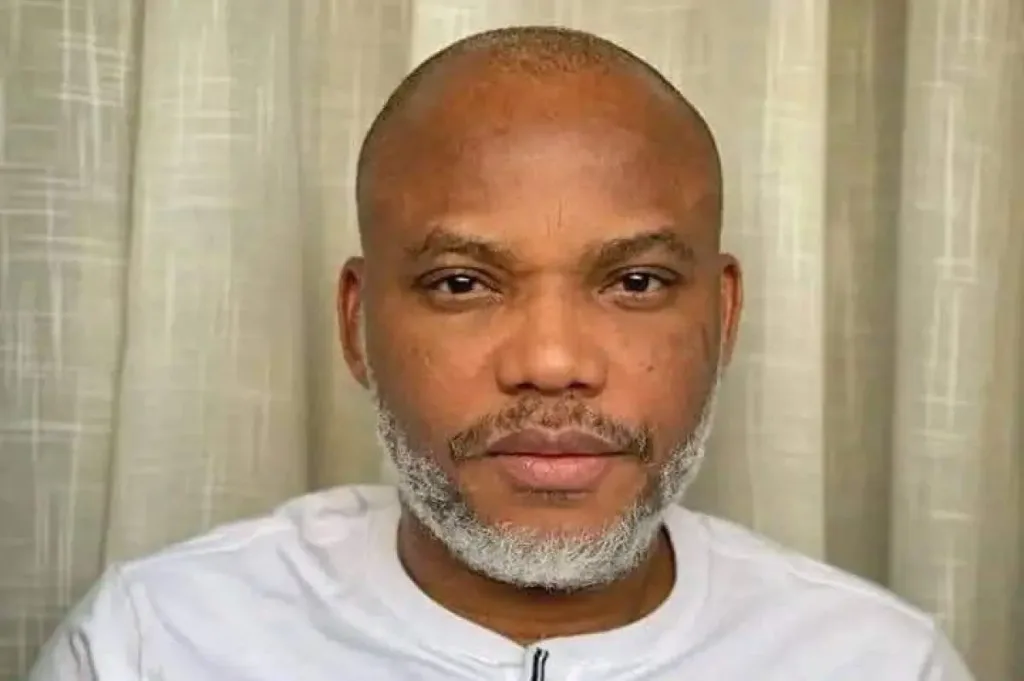
The Nigerian government is facing criticism for its continued detention of Nnamdi Kanu, the leader of the Indigenous People of Biafra (IPOB), despite a court order for his release. Kanu was acquitted and discharged by the Court of Appeal on 13 October 2022, yet he remains in custody. Ahead of the #ReleaseNnamdiKanuNow protest scheduled for Monday, 20 October, Barrister Njoku Jude Njoku, a member of Kanu’s defence team, accused the government of disobeying its own courts.
The Nigeria Police Force has warned against the planned protest, which aims to occupy the Presidential Villa in Abuja to demand Kanu’s release. Organisers, led by activist Omoyele Sowore, have vowed to proceed, insisting on Kanu’s unconditional release. Njoku argued that the government’s actions constitute a national disgrace and a clear disregard for the Constitution. He noted that the Supreme Court’s decision to reverse Kanu’s acquittal violates the Doctrine of Finality, which makes an acquittal final and unappealable.
Njoku also pointed out that the IPOB leader is being tried under the repealed Terrorism Act of 2013, a “dead law” that no longer exists. He contended that retrying Kanu after his acquittal would amount to double jeopardy, prohibited by Section 36(9) of the Constitution. The #ReleaseNnamdiKanuNow protest is therefore not only about Kanu’s release but also about broader issues of freedom, dignity and justice for all Nigerians.
Njoku urged Nigerians to support the calls for Kanu’s release, emphasizing that the fight concerns every citizen’s right to justice, dignity and freedom. The protest is expected to draw attention to the government’s handling of Kanu’s case and the need for authorities to respect the rule of law and the independence of the judiciary.

Comments are closed for this story.