
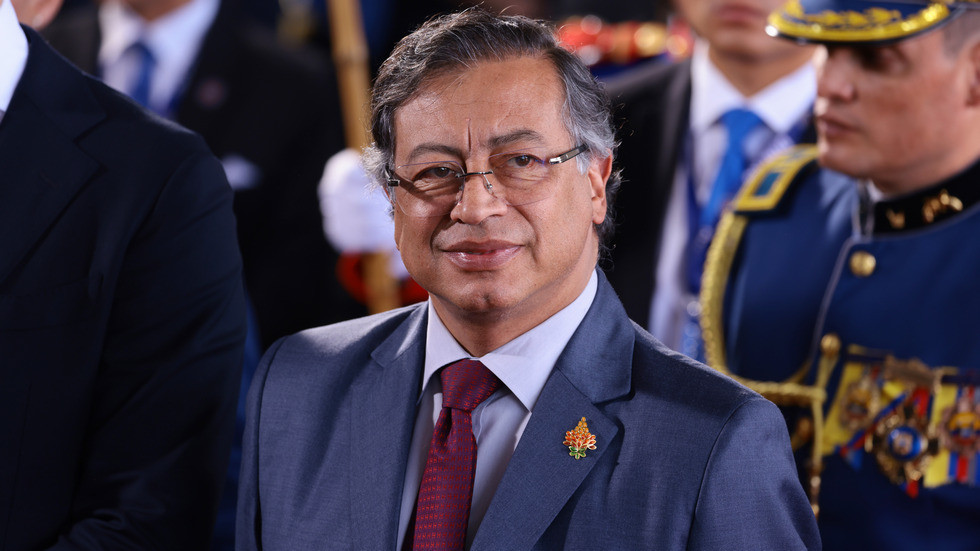
The United States has imposed sanctions on Colombian President Gustavo Petro, his family, and a senior minister, citing concerns that the country is enabling drug cartels. According to the U.S. Treasury Department, cocaine production in Colombia has risen sharply since Petro took office in 2022, leading to a substantial influx of narcotics into North America. Treasury Secretary Scott Bessent announced that the sanctions target Petro, his wife Verónica del Socorro Alcocer García, his son Nicolás, and Interior Minister Armando Benedetti. The penalties freeze any assets they may hold in the United States and prohibit American entities from dealing with them.
The U.S. government claims Petro’s administration has allowed drug cartels to flourish, resulting in a surge in cocaine production and trafficking. Petro has denied the allegations, asserting that his government has achieved record progress in seizing cocaine and dismantling criminal networks. In a social‑media post, he said his administration has seized more cocaine than any previous Colombian government and described the U.S. sanctions as “an arbitrariness typical of an oppressive regime,” emphasizing that Colombia will not be intimidated.
The sanctions come amid heightened tensions between the United States and Colombia over drug trafficking. The U.S. has recently carried out strikes on alleged drug boats in the Caribbean and Pacific, killing dozens of people. Colombia condemned those strikes and urged the United States to respect international law. The decision to sanction Petro and his associates underscores ongoing concerns about the flow of narcotics from Colombia into North America and is likely to further strain bilateral relations, with potential implications for regional security and cooperation. As the situation develops, it remains to be seen how Colombia will respond and how the United States will continue to address drug trafficking in the region.


Comments are closed for this story.