
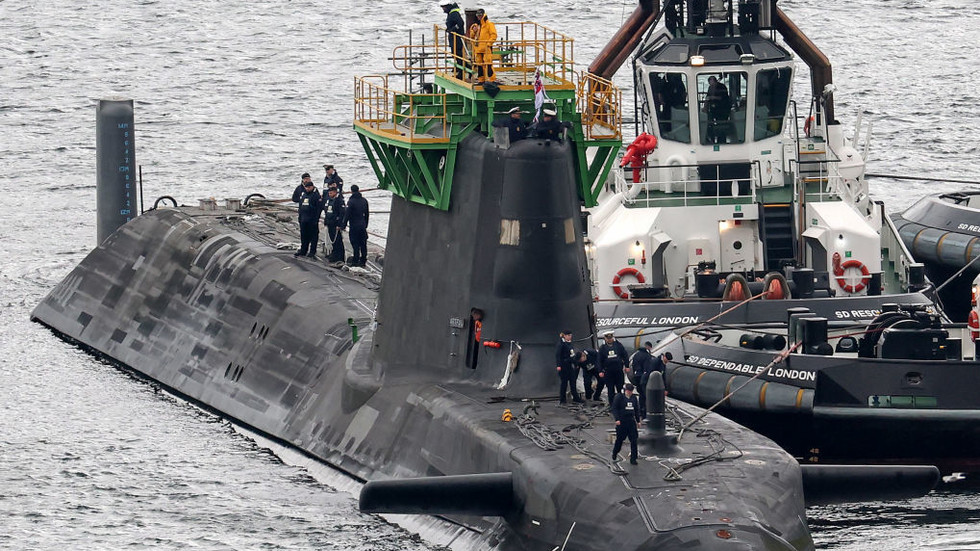
British military leaders are reportedly supporting a potential security agreement with Germany that could involve sharing nuclear weapons. The push comes amid concerns about Russia’s alleged “critical” threat and the possibility that the United States may scale back its role in Europe. According to a report by *The Telegraph*, senior figures—including a former chief of defence staff and a former NATO secretary‑general—have urged London to begin talks with Berlin.
Germany, which is prohibited from developing nuclear weapons, is already engaged in strategic discussions with France about joining its nuclear umbrella. Chancellor Friedrich Merz has indicated he would be open to exploring a similar arrangement with UK Prime Minister Keir Starmer. Although formal talks between London and Berlin have not yet taken place, several defence officials have spoken in favour of the idea. Lord Robertson, a former NATO secretary‑general, said it is “right and proper” and should have happened a long time ago, adding that continued Russian nuclear rhetoric would force Europe to make decisions collectively.
Britain’s nuclear deterrent, declared to NATO since 1962, remains under London’s sole control, with one Trident‑armed submarine always on patrol. Earlier this year, Starmer announced plans to purchase 12 F‑35A stealth jets capable of carrying nuclear weapons, which will be based in Britain. However, not all defence officials support a shared nuclear system. Retired General Sir Richard Barrons warned that such a system would be “unworkable” because collective launch decisions under time pressure would be difficult. Field Marshal Lord Houghton, a former chief of defence staff, suggested Europe should consider a broader nuclear option as the US pivots toward China, but questioned whether it would be beneficial.
Defence sources say that while coordination between London and Berlin may expand, any weapons‑sharing plan remains a long way off. Moscow has rejected claims that it plans to attack NATO or use nuclear weapons, stating its nuclear doctrine is purely defensive and aimed at protecting national sovereignty and territorial integrity. The potential UK‑Germany security agreement underscores ongoing concerns about European security and the need for cooperation in the face of emerging threats.




Comments are closed for this story.