
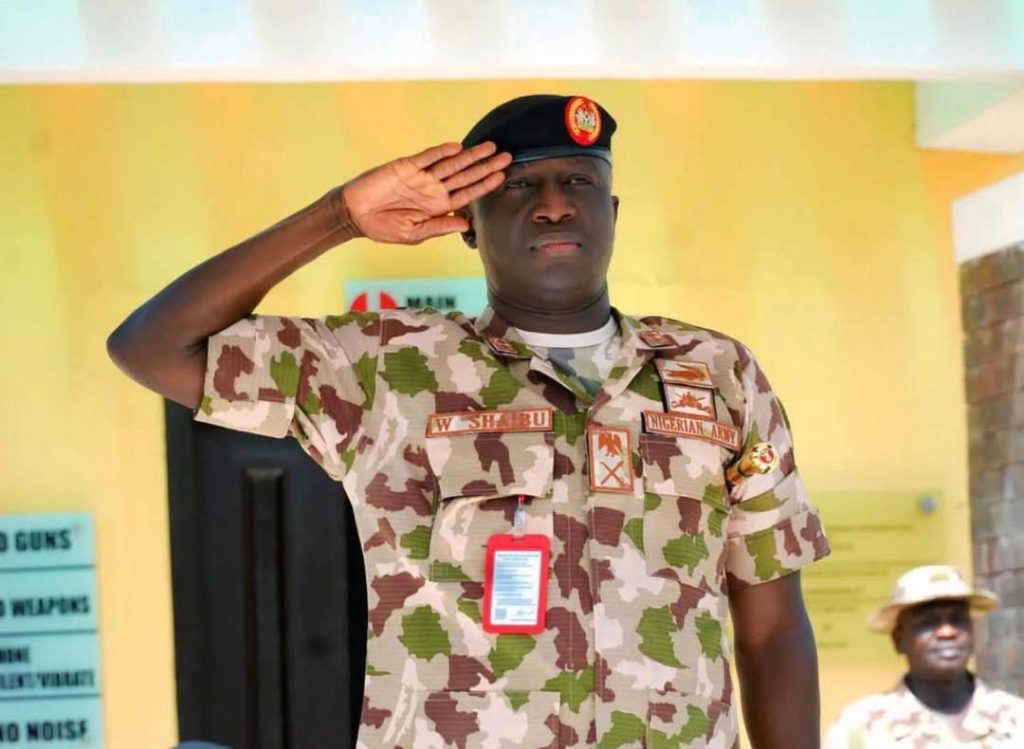
The Nigerian Army has announced a major reshuffle of its senior officers, approved by Chief of Army Staff Lt‑Gen. Waidi Shaibu. The posting and appointment of key personnel to command, staff, and instructional positions aim to revitalize leadership, strengthen command structures, and enhance operational effectiveness across the service.
The exercise affects several major generals and brigadier generals in strategic roles. Maj‑Gen. Bamidele Alabi has been redeployed to the Army Headquarters Department of Policy and Plans as Chief of Policy and Plans, while Maj‑Gen. Jamal Abdulsalam will move to Defence Headquarters as Chief of Defence Operations. Maj‑Gen. Peter Mala has been transferred from the Office of the National Security Adviser to Headquarters Training and Doctrine Command as its commander. Other notable appointments include Maj‑Gen. Mayirenso Saraso as Chief of Operations, Maj‑Gen. Isa Abdullahi as Chief of Administration, and Maj‑Gen. Musa Etsu‑Ndagi as Chief of Civil‑Military Affairs. Maj‑Gen. Abubakar Haruna has been named commander of the Nigerian Army Training Centre, and Maj‑Gen. Philip Ilodibia will head the Defence Space Administration.
The reshuffle also impacts corps commanders. Maj‑Gen. Godwin Mutkut becomes Corps Commander Infantry, Maj‑Gen. Umar Abubakar leads the Armour Corps, and Maj‑Gen. John Adeyemo heads the Artillery Corps. Maj‑Gen. Taofik Sidick has been redeployed to the Nigerian Army Finance Corps, while Maj‑Gen. Abdullahi Ibrahim assumes the role of Corps Commander Ordnance.
At training institutions, Maj‑Gen. Oluyemi Olatoye is appointed Commandant of the Nigerian Defence Academy, and Maj‑Gen. Emmanuel Mustapha will lead the Nigerian Army Signal School. The COAS has also named Maj‑Gen. Saidu Audu as Force Commander of the Multi‑National Joint Task Force and Maj‑Gen. Warrah Idris as Commander of the Joint Task Force North West.
The newly appointed officers are tasked with applying their experience and strategic foresight to advance a disciplined, combat‑ready army capable of confronting contemporary security challenges. They are expected to sustain operational momentum, strengthen inter‑agency collaboration, and uphold the army’s core values of loyalty, selfless service, integrity, and excellence. This reshuffle is seen as a significant step toward enhancing the Nigerian Army’s effectiveness in addressing the country’s security challenges.

Comments are closed for this story.